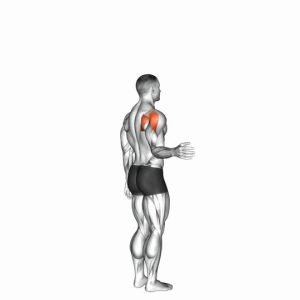
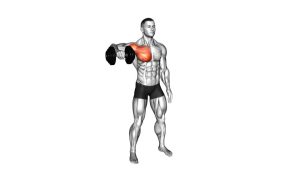
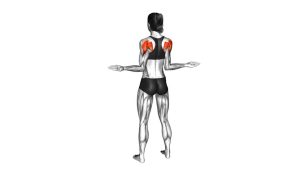
Dumbbell Side-Lying Internal Rotation (Bench): Form, Rotator Cuff Tips, Sets & FAQ
Strengthen your rotator cuff with the dumbbell side-lying internal rotation on a bench. Learn proper setup, step-by-step form, sets by goal, common mistakes, FAQs, and recommended gear.
Dumbbell Side-Lying Internal Rotation (On a Bench)
This is an isolation exercise. The goal is to strengthen the rotator cuff without the torso, traps, or chest taking over. Use a weight that allows you to move slowly and keep the elbow position stable. You should feel controlled effort around the front-deep shoulder, not pinching at the top of the joint.
Quick Overview
| Body Part | Shoulders |
|---|---|
| Primary Muscle | Subscapularis (rotator cuff / internal rotation) |
| Secondary Muscle | Anterior deltoid (light), pec major (minimal), scapular stabilizers (isometric) |
| Equipment | Light dumbbell, flat bench (optional: small towel under elbow) |
| Difficulty | Beginner (best as prehab/rehab or warm-up accessory) |
Sets & Reps (By Goal)
- Shoulder prehab (2–4×/week): 2–3 sets × 12–20 reps (slow tempo, 30–60 sec rest)
- Warm-up before pressing: 1–3 sets × 10–15 reps (easy effort, focus on control)
- Rehab-style strengthening: 2–4 sets × 8–15 reps (2–3 sec down, 45–75 sec rest)
- Stability + endurance block: 2–3 sets × 15–25 reps (very light load, strict form)
Progression rule: Add reps first, then slow the eccentric (lowering) phase. Increase dumbbell weight only when your elbow stays fixed and every rep looks identical.
Setup / Starting Position
- Lie on your side on a bench: Keep your spine neutral and shoulders stacked.
- Working arm position: Bottom arm with the elbow bent ~90°, tucked close to your ribs.
- Support the elbow: Keep the elbow on the bench or place a small towel between elbow and bench to find a stable groove.
- Grip the dumbbell lightly: Wrist neutral (no bending back).
- Start in comfortable external rotation: Forearm angled slightly away from the torso—no forcing range.
Tip: If the elbow drifts or you can’t stay strict, the weight is too heavy—drop it and prioritize control.
Execution (Step-by-Step)
- Brace gently: Exhale, keep ribs stacked, and relax your neck/upper traps.
- Pin the elbow: Keep the elbow glued to your side (no sliding forward/back).
- Rotate slowly: Move the forearm toward your torso using the shoulder—avoid wrist bending.
- Pause briefly: 0.5–1 second at the top in a controlled position (no cranking).
- Lower with control: Take 2–3 seconds back down, stopping before the shoulder loses position.
Pro Tips & Common Mistakes
Pro Tips
- Go lighter than you think: Rotator cuff training rewards strict control, not heavy weight.
- Own the eccentric: Slow lowering builds tendon capacity and shoulder control.
- Keep the wrist neutral: Don’t let the wrist “help” the rotation.
- Pair it with external rotation: Balance internal rotation work with band/cable external rotations.
Common Mistakes
- Elbow drifting: If the elbow moves away from your ribs, the shoulder changes leverage and cheats.
- Torso rolling: Rotating the body turns it into a whole-body movement instead of rotator cuff work.
- Too much range: Forcing end-range can irritate the shoulder—stay smooth and pain-free.
- Going too fast: Speed hides compensation and reduces time-under-tension.
FAQ
Where should I feel this exercise?
You’ll typically feel it deep in the front/inside of the shoulder (subscapularis) and as a steady stabilizing effort. You should not feel sharp pinching at the top of the shoulder joint.
How heavy should the dumbbell be?
Usually very light—many people use 1–5 lb (0.5–2.5 kg). Choose a load that lets you keep the elbow fixed, move slowly, and control the lowering phase.
How often can I do it?
For most lifters, 2–4 times per week works well (especially as prehab or warm-up). If you’re rehabbing, follow your clinician’s guidance and prioritize symptom-free reps.
Should I do this if my shoulder clicks?
Mild, painless clicking can be normal, but you should avoid painful catching or pinching. Reduce range, slow down, and keep the elbow stable. If symptoms persist, get assessed by a professional.
What should I pair it with for healthier shoulders?
Great pairings include band external rotations, face pulls, and scapular control drills (like wall slides). This helps balance the rotator cuff and upper-back support.
Recommended Equipment (Optional)
- Light Neoprene Dumbbells (e.g., 1–5 lb) — ideal for strict rotator cuff training and controlled tempo work
- Flat / Adjustable Workout Bench — stable support for side-lying positioning and consistent elbow placement
- Over-the-Door Shoulder Pulley — useful for gentle shoulder mobility and rehab-style range-of-motion work
- Resistance Band Set (Tubes/Handles) — great for pairing internal rotation with external rotation, rows, and pull-aparts
- Physical Therapy Shoulder Pulley (Alternative Option) — another popular tool for controlled shoulder mobility and home rehab routines
Tip: If any tool increases symptoms, stop and reassess your range and load. Shoulder progress is best built with pain-free control and consistency.