Shoulder Lateral Rotation (External Rotation): Form, Muscles Worked, Sets & Tips
Learn how to perform Shoulder Lateral Rotation (External Rotation) with proper form to strengthen the rotator cuff, improve shoulder stability, and support injury prevention. Includes setup, execution, sets and reps, common mistakes, FAQs, and recommended equipment.
Shoulder Lateral Rotation (External Rotation)
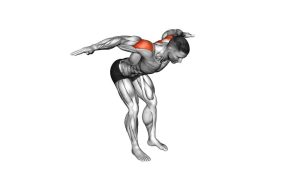
This exercise is excellent for improving shoulder stability, reinforcing rotator cuff strength, and helping balance pressing-heavy training. It works best when the upper arm stays close to the torso and the shoulder does not roll forward or shrug upward. You should feel focused work in the back of the shoulder, not neck tension or whole-body twisting.
Quick Overview
| Body Part | Shoulders |
|---|---|
| Primary Muscle | Infraspinatus and Teres Minor |
| Secondary Muscle | Posterior deltoid, scapular stabilizers, deep shoulder stabilizers |
| Equipment | Resistance band, cable machine, or light dumbbell |
| Difficulty | Beginner (excellent for warm-ups, shoulder health, and rehab-style strength work) |
Sets & Reps (By Goal)
- Shoulder warm-up / activation: 2–3 sets × 12–15 reps per side with light resistance and smooth tempo
- Rotator cuff strength: 3–4 sets × 8–12 reps per side with controlled reps and 45–75 sec rest
- Rehab-style control: 2–3 sets × 10–15 reps per side with very light resistance and strict form
- Posture / shoulder-health accessory: 2–4 sets × 12–20 reps per side after upper-body training
Progression rule: Increase reps or control first, then add small amounts of resistance. If your shoulder starts rolling forward or your elbow drifts, the load is too heavy.
Setup / Starting Position
- Select your setup: Use a resistance band anchored at elbow height, a cable handle set low-to-mid height, or a light dumbbell variation.
- Stand tall: Keep your chest up, ribs stacked, and shoulders relaxed without shrugging.
- Set the arm: Bend the elbow to roughly 90 degrees and keep the upper arm close to your torso.
- Brace lightly: Keep the wrist neutral and the forearm starting across the body or slightly in front, depending on the setup.
- Lock in alignment: Think “rotate from the shoulder,” not “move the whole arm and torso.”
Tip: Placing a small towel between the elbow and torso can improve positioning and help keep the upper arm from drifting.
Execution (Step-by-Step)
- Start stable: Brace your core lightly and keep the elbow pinned near your side.
- Rotate outward: Move the forearm away from the midline by rotating at the shoulder, not by swinging the elbow out.
- Pause briefly: Stop when you reach your strongest pain-free end range and squeeze the back of the shoulder.
- Control the return: Slowly bring the forearm back to the starting position without losing posture.
- Repeat evenly: Keep the tempo smooth and match the same range and control on every rep.
Pro Tips & Common Mistakes
- Keep the elbow fixed: If the elbow drifts away from the body, you lose the isolation and turn it into a different movement.
- Use light resistance: External rotation responds better to precision than heavy loading.
- Avoid torso twisting: Stay square and let the shoulder do the work.
- Don’t shrug: Upper traps should stay quiet while the rotator cuff works.
- Control both directions: The lowering phase matters just as much as the outward rotation.
- Stay in a pain-free range: Stop short of pinching or joint discomfort.
FAQ
What muscles does shoulder external rotation work?
The main muscles are the infraspinatus and teres minor, which are part of the rotator cuff. The posterior deltoid and scapular stabilizers also assist with control and positioning.
Should I use bands, cables, or dumbbells for this exercise?
Bands and cables are the most common options because they make it easier to keep constant tension through the movement. Light dumbbell versions can work too, but they usually change the strength curve and are often better for specific variations.
How heavy should external rotations be?
Lighter than most people expect. The goal is smooth shoulder rotation and stable elbow positioning, not maximal loading. If you need to twist, shrug, or shorten the range, reduce the weight.
Is this exercise good for shoulder rehab?
It is commonly used in shoulder-health and rehab-style programs because it targets the rotator cuff with controlled resistance. Keep the movement pain-free and follow professional guidance if you are returning from injury.
Where should I feel it?
Most people feel it in the back of the shoulder near the rotator cuff. You should not feel dominant tension in the neck or a sharp pinch in the front of the joint.
Recommended Equipment
- Resistance Bands for Shoulder Rehab — ideal for controlled external rotation, warm-ups, and rotator cuff accessory work
- Over-the-Door Shoulder Pulley — useful for shoulder mobility and rehab support alongside strengthening drills
- Single Cable Handle Attachment — helpful for cable-based external rotation variations with stable grip and better line of pull
- Light Dumbbells — useful for low-load shoulder accessory work and select external rotation progressions
- Door Anchor for Resistance Bands — makes home shoulder-rotation setups easier by creating a consistent anchor point
Tip: For rotator cuff work, choose equipment that lets you stay precise. Better control with light resistance usually beats heavier resistance with sloppy mechanics.