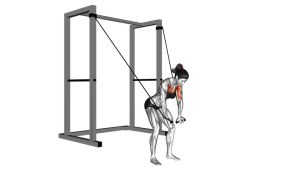
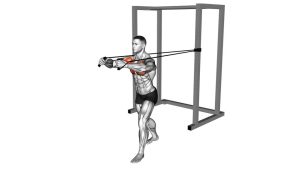
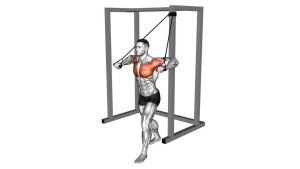
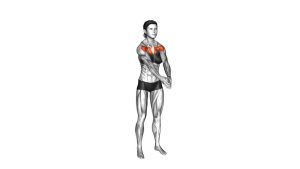
Band Alternate Low Chest Fly: Form, Sets & Reps, Tips, Mistakes & FAQ
Learn how to do the Band Alternate Low Chest Fly with perfect low-to-high fly mechanics for lower-to-mid chest activation. Includes setup, step-by-step form cues, sets by goal, common mistakes, FAQs, and recommended Amazon gear.
Band Alternate Low Chest Fly
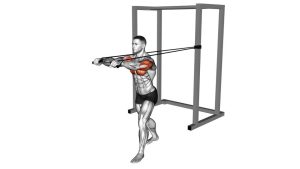
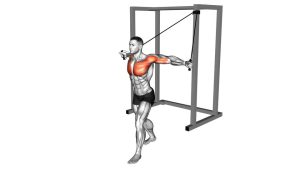
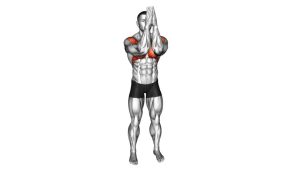
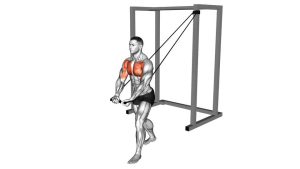
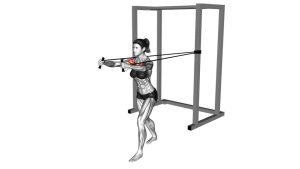
This fly works best when you treat it like a precision chest isolation drill. Your torso stays still, your elbows keep a gentle bend, and your hands sweep forward on a diagonal path. You should feel the chest doing most of the work—not your traps shrugging, your shoulders pinching, or your lower back arching.
Quick Overview
| Body Part | Chest |
|---|---|
| Primary Muscle | Pectoralis major (lower-to-mid fibers) |
| Secondary Muscle | Anterior deltoid; serratus anterior; rotator cuff (stability) |
| Equipment | Resistance bands + low anchor point (door anchor, rack, sturdy post) |
| Difficulty | Beginner to Intermediate (easier to feel than cables, but requires control) |
Sets & Reps (By Goal)
- Muscle gain (hypertrophy): 3–5 sets × 10–20 reps/side (45–75 sec rest)
- Chest activation (warm-up): 2–3 sets × 8–12 reps/side (light band, smooth tempo)
- Endurance / pump finisher: 2–4 sets × 15–25 reps/side (short rests, strict form)
- Shoulder-friendly chest work: 2–4 sets × 12–18 reps/side (shorter range, slower eccentric)
Progression rule: First add reps or slow the lowering phase (2–3 seconds). Then increase band resistance. Keep the shoulders down and the ribcage stacked—if you start pressing or twisting, the load is too heavy.
Setup / Starting Position
- Anchor low: Attach the bands behind you at a low point (around knee to hip height).
- Step forward: Walk out until you feel tension with hands slightly behind your torso line.
- Stance: Feet hip-width (or staggered for stability). Knees soft, core braced.
- Shoulders set: Shoulder blades down and slightly back; chest tall without over-arching.
- Arm position: Elbows softly bent (~15–25°). Wrists neutral. Hands start low and slightly out.
Tip: If balance is challenging, use a staggered stance and keep your hips square (no rotation).
Execution (Step-by-Step)
- Brace and breathe: Exhale slightly to stack ribs over hips. Keep the neck long.
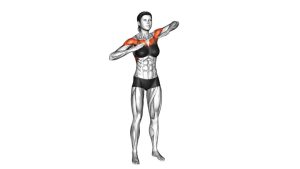
- Fly one arm forward: Sweep the hand in a low-to-high arc toward mid-chest height (do not lock the elbow).
- Pause and squeeze: Briefly hold at the front—think “bring the biceps toward the chest” to feel pec contraction.
- Control the return: Lower the hand back along the same arc for 2–3 seconds until you feel a comfortable chest stretch.
- Alternate sides: As one arm returns, the other arm begins its fly. Keep the torso still and rhythm smooth.
Pro Tips & Common Mistakes
Pro Tips
- Own the eccentric: A slow return (2–3 seconds) is where fly variations shine.
- Keep elbows “soft”: A small bend protects the shoulder and keeps tension on the pecs.
- Stay stacked: Ribs down, glutes lightly engaged—don’t arch for extra range.
- Use a stable stance: Staggered feet reduces twisting and makes reps cleaner.
- Match the arc: Low-to-high path biases lower-to-mid chest—adjust the finish height to your comfort.
Common Mistakes
- Shrugging the shoulders: Turns it into traps/neck work and can irritate the shoulder.
- Turning it into a press: Elbows drifting forward too much reduces fly stimulus.
- Over-crossing at the top: Excessive crossover can strain the front of the shoulder.
- Rotating the torso: Steals tension from the pecs—keep hips and ribs square.
- Too much band tension: If you can’t control the return, the band is too heavy.
FAQ
Where should I feel the Band Alternate Low Chest Fly?
Mostly in the chest—especially the lower-to-mid pec fibers—with a light shoulder contribution. If you mainly feel the front of the shoulder, reduce range, lower the finish height, and keep the shoulder blades stable.
Should my hands meet in the middle?
They can come close, but you don’t need to aggressively cross over. Aim for a strong chest squeeze at the front while keeping the shoulder comfortable. A small crossover is fine if it’s pain-free and controlled.
What’s the best anchor height for the “low” fly?
Typically knee to hip height. Lower anchors increase the low-to-high angle. If the shoulder feels pinchy, raise the anchor slightly and shorten the stretched position.
Is alternating better than doing both arms at once?
Alternating can feel more stable and helps reduce torso sway while improving side-to-side control. Both-arm versions can be great too—choose the one that lets you keep the cleanest fly path.
How can I make it harder without going heavier?
Add a 2–3 second eccentric, pause 1 second at the squeeze, or do a 1.5-rep style: fly up, go halfway back, then fly up again before returning fully.
Recommended Equipment (Optional)
- Resistance Bands with Handles — best for comfortable grip and consistent fly tension
- Door Anchor for Resistance Bands — simple way to set a low anchor at home
- Band Anchor Strap (Post/Rack Anchor) — wraps around poles/racks for stable low-to-high fly setups
- Band Handles / Grip Attachments — reduces hand fatigue and improves control on higher reps
- Non-Slip Exercise Mat — improves footing and stability during alternating reps
Tip: Prioritize a secure anchor and a band level you can control on the way back. The fly is only as good as your ability to keep it smooth and stable.