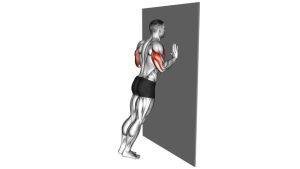
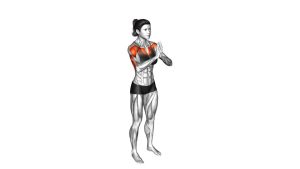
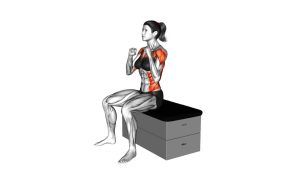
Bodyweight Standing Straight-Arm Chest Low Fly: Form, Muscles Worked, Sets & Tips
Learn how to perform the Bodyweight Standing Straight-Arm Chest Low Fly with proper form. Discover muscles worked, setup, execution steps, sets and reps by goal, common mistakes, FAQs, and optional equipment.
Bodyweight Standing Straight-Arm Chest Low Fly
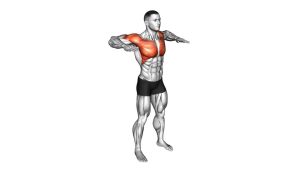
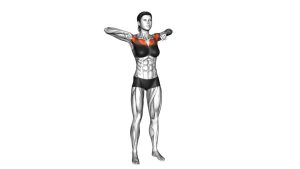
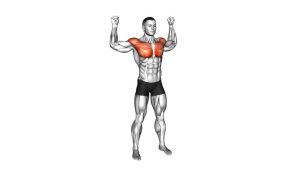
This exercise is best used as a bodyweight chest activation drill, a light finisher, or a technique-builder for fly mechanics. Because there is little external resistance, the value comes from tempo, range control, posture, and peak contraction. Keep the elbows softly unlocked, the shoulders down, and the torso stable while the arms travel in a low semicircle toward the midline of the body.
Quick Overview
| Body Part | Chest |
|---|---|
| Primary Muscle | Pectoralis major |
| Secondary Muscle | Anterior deltoids, serratus anterior, biceps long head (stabilization) |
| Equipment | None |
| Difficulty | Beginner to Intermediate |
Sets & Reps (By Goal)
- Warm-up / activation: 2–3 sets × 10–15 reps with slow tempo and a 1–2 second squeeze
- Muscle endurance: 2–4 sets × 15–25 reps with continuous tension and short rest
- Technique practice: 2–3 sets × 8–12 controlled reps focusing on arc quality and chest engagement
- Finisher / burnout: 1–3 sets × 20–30 reps or near technical fatigue
Progression rule: First improve control, squeeze quality, and tempo. Then add reps, pauses, or use light resistance bands if you want more challenge.
Setup / Starting Position
- Stand tall: Place your feet about shoulder-width apart with a soft bend in the knees.
- Brace lightly: Keep your ribs stacked over the hips and avoid arching the lower back.
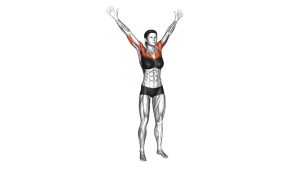
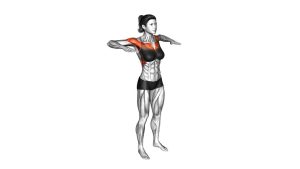
- Open the arms wide: Extend the arms out to the sides with a slight bend at the elbows.
- Set shoulder position: Keep the shoulders down and slightly back without over-squeezing the shoulder blades.
- Choose the low path: The hands should travel toward the front of the lower chest or upper-ab area, not straight across at neck level.
Tip: Imagine you are about to wrap your arms around a large barrel positioned slightly below chest height.
Execution (Step-by-Step)
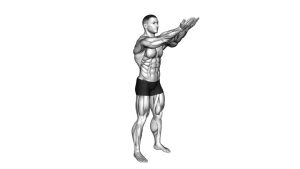
- Start from the stretched position: Keep the chest open, elbows soft, and arms extended wide.
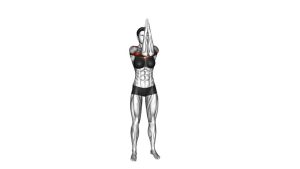
- Sweep inward in a curved arc: Bring both arms forward and slightly downward in a hugging motion.
- Keep the elbows nearly fixed: Do not turn the exercise into a press by bending too much at the elbows.
- Squeeze at the front: Bring the hands close together in front of the lower chest and contract the pecs hard for 1–2 seconds.
- Return with control: Reverse the same arc slowly until you feel a comfortable stretch across the chest.
- Repeat smoothly: Maintain steady posture and avoid using momentum or torso rocking.
Pro Tips & Common Mistakes
- Use a hugging path: The fly should be an arc, not a straight punch forward.
- Keep a soft elbow bend: Locked elbows can create unnecessary joint stress.
- Don’t shrug: Elevating the shoulders shifts tension away from the chest.
- Keep the torso quiet: Avoid leaning forward, swinging, or bouncing through reps.
- Squeeze, don’t rush: The front position is where the chest should actively shorten.
- Stay within a pain-free stretch: More range is not better if the shoulder feels unstable.
- Use tempo for difficulty: Slower reps and longer peak squeezes can make this exercise much more effective.
FAQ
What muscles does the Bodyweight Standing Straight-Arm Chest Low Fly work?
The main target is the pectoralis major. The anterior deltoids and serratus anterior assist, while the biceps and shoulder stabilizers help control the movement.
Is this exercise good for the lower chest?
The slightly downward arc can help bias the movement toward the lower-to-mid chest fibers, especially when you actively squeeze at the end of each rep.
Can beginners use this exercise?
Yes. It is beginner-friendly because it uses bodyweight only, but good results depend on controlled form and a strong mind-muscle connection.
Why don’t I feel this much in my chest?
Usually that happens when the shoulders shrug, the elbows bend too much, or the arms move too fast. Slow the movement down and focus on bringing the upper arms inward with the pecs.
How can I make it harder without weights?
Use slower eccentrics, longer pauses at peak contraction, higher reps, or light resistance bands to increase tension while keeping the same fly pattern.
Recommended Equipment (Optional)
- Resistance Bands Set — useful for progressing from bodyweight-only chest activation to band-resisted fly patterns
- Door Anchor for Resistance Bands — helps recreate a more cable-like chest fly angle at home
- Resistance Bands with Handles — a practical upgrade if you want smoother grip comfort for standing fly variations
- Home Gym Mirror — useful for checking arm path, shoulder position, and symmetry during chest isolation work
- Exercise / Yoga Mat — optional for warm-ups, mobility drills, and chest accessory work before or after this exercise
Tip: This exercise does not require equipment, but these tools can improve setup, progression, and form feedback.