Push-Up to Side Plank: Form, Sets & Reps, Tips, Muscles + FAQ
Master the Push-Up to Side Plank for stronger chest, shoulders, triceps, and obliques. Learn setup, step-by-step form, sets by goal, common mistakes, FAQs, and recommended gear.
Push-Up to Side Plank
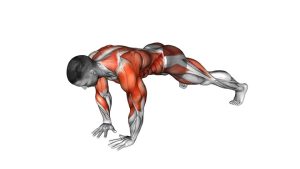
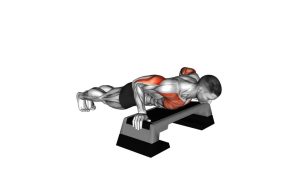
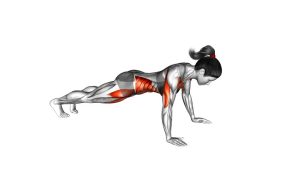
This move is most effective when every rep is clean. Keep your body in a straight line during the push-up, then rotate as one unit—shoulders and hips turn together. If your lower back arches or your hips sag, scale the exercise (knees down) or reduce the depth of the push-up.
Quick Overview
| Body Part | Chest |
|---|---|
| Primary Muscle | Pectoralis major (chest) |
| Secondary Muscle | Obliques, anterior deltoids, triceps, serratus anterior, glutes |
| Equipment | None (optional: exercise mat, push-up handles) |
| Difficulty | Intermediate (requires solid plank control + comfortable push-ups) |
Sets & Reps (By Goal)
- Strength (chest + triceps): 3–5 sets × 4–8 reps per side (60–120 sec rest)
- Muscle/conditioning: 3–4 sets × 6–12 reps per side (45–90 sec rest)
- Core stability focus: 2–4 sets × 5–10 reps per side (add a 2–5 sec side plank hold)
- Beginner progression: 2–3 sets × 4–8 reps per side (knees down or incline)
Progression rule: Add reps first, then add a brief side plank hold. Only progress to harder variations when your hips stay stacked and your push-up remains strict.
Setup / Starting Position
- Hands & shoulders: Place hands slightly wider than shoulder-width. Stack shoulders directly over wrists.
- Feet stance: Start with feet hip-width (wider feet = more stable; closer feet = harder).
- Brace: Squeeze glutes and tighten abs as if preparing for a punch.
- Body line: Keep a straight line from head to heels—no sagging hips or rib flare.
- Head/neck: Neutral neck; eyes a bit ahead of your hands.
Tip: If wrists are sensitive, use push-up handles or dumbbell grips to keep wrists neutral.
Execution (Step-by-Step)
- Lower into a push-up: Bend elbows and descend under control while keeping your torso rigid.
- Press up: Drive the floor away and return to a strong high plank (don’t lose your brace).
- Rotate to side plank: Shift weight to one hand, pivot feet, and open hips and chest to the side.
- Stack & stabilize: Raise the top arm toward the ceiling, keep hips lifted, and shoulders stacked.
- Return smoothly: Bring the top arm down and rotate back to plank with control. Repeat on the other side.
Pro Tips & Common Mistakes
- Move as one unit: Rotate shoulders and hips together—avoid twisting only through the low back.
- Hips high in side plank: The top position should feel like obliques + glutes working hard.
- Don’t rush the rotation: Fast reps usually mean collapsed shoulders or sloppy hip stacking.
- Elbow angle: Keep elbows at a comfortable path (not flared straight out, not pinned tight).
- Control your ribs: If ribs pop up, you’ll lose core tension—brace and exhale gently.
- Scale smart: Use knees-down, incline, or remove the push-up and practice side plank transitions first.
FAQ
Where should I feel this exercise most?
You should feel the chest during the push-up and the obliques (side abs) during the side plank. Shoulders and triceps assist throughout, and glutes help keep hips stacked.
Should I hold the side plank at the top?
A short hold (2–5 seconds) is great for core stability. If holding causes shoulder wobble, reduce the hold time or widen your foot stance.
What if I can’t do full push-ups yet?
Use an incline (hands on a bench/box) or go knees-down. You can also practice the rotation separately: high plank → side plank → high plank.
Is this safe for wrists and shoulders?
It can be, if you keep the shoulder stacked over the wrist and rotate slowly. If wrists bother you, use push-up handles or neutral grips. If shoulders pinch, reduce range and focus on stability first.
Recommended Equipment
- Non-Slip Exercise Mat — improves comfort and grip for push-ups and planks
- Push-Up Handles (Neutral Grip) — reduces wrist extension and can improve pressing range
- Wrist Wraps (Support) — helpful if wrists fatigue early during planks and push-ups
- Mini Resistance Bands Set — great for shoulder warm-ups (external rotations, pull-aparts)
- Yoga Blocks — useful for incline scaling and improving range comfort
Tip: Choose the variation that keeps your reps smooth and your shoulder stable. Quality beats difficulty every time.