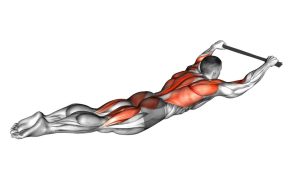
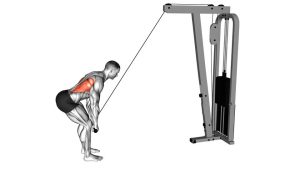
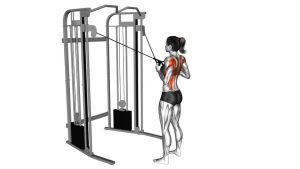
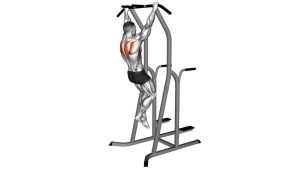
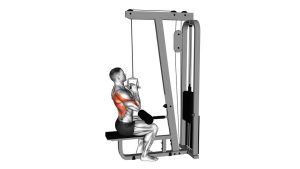
Cable Straight-Arm Pulldown (Rope Attachment): Form, Muscles Worked, Sets & Tips
Learn how to do the Cable Straight-Arm Pulldown with a rope attachment for better lat activation, back width, and shoulder control. Includes form tips, sets and reps, mistakes, FAQs, and recommended equipment.
Cable Straight-Arm Pulldown (Rope Attachment)
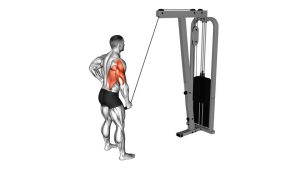
This exercise works best when the torso stays stable and the lats control the full arc of motion. You should feel tension along the sides of the back and under the armpits, especially near the bottom of the rep. The elbows stay softly unlocked, but they should not bend much. If the movement starts feeling like a triceps pushdown, you are probably using too much elbow flexion or too much weight.
Quick Overview
| Body Part | Back |
|---|---|
| Primary Muscle | Latissimus dorsi |
| Secondary Muscle | Teres major, rear deltoids, long head of the triceps (stabilizing), rhomboids, lower traps, core |
| Equipment | High-pulley cable machine with rope attachment |
| Difficulty | Beginner to Intermediate |
Sets & Reps (By Goal)
- Lat activation / warm-up: 2–3 sets × 12–15 reps with slow control and a light to moderate load
- Muscle growth: 3–4 sets × 10–15 reps, focusing on full tension and a hard squeeze near the thighs
- Technique practice: 2–3 sets × 8–12 reps with a very controlled eccentric and strict torso position
- Back-finisher work: 2–3 sets × 15–20 reps using smooth rhythm and clean form
Progression rule: Add reps before adding load. The best progress on this exercise comes from better lat control, cleaner reps, and a stronger contraction rather than chasing heavy weight.
Setup / Starting Position
- Attach the rope to a high pulley: Set the cable above head level so the line of pull starts high and slightly in front of you.
- Take your stance: Stand facing the machine with feet about hip-width apart. You can use a small staggered stance if it helps balance.
- Grip the rope ends: Hold one end in each hand with a neutral grip and step back until the cable is taut.
- Set your torso: Hinge slightly forward from the hips, brace the core, keep the chest tall, and let the shoulders sit down naturally.
- Start with long arms: Raise the arms in front of the body with a soft elbow bend. This bend stays nearly the same throughout the set.
Tip: The setup should feel stable and athletic. You want enough distance from the machine to create tension at the top without losing posture.
Execution (Step-by-Step)
- Brace and lock in: Tighten your midsection, keep the neck neutral, and resist the urge to lean backward.
- Pull through shoulder extension: Sweep the rope down in an arc by driving your upper arms toward your sides.
- Keep the elbows nearly fixed: Maintain only a slight bend so the lats stay loaded instead of shifting the work to the triceps.
- Finish near the thighs: Bring the rope toward the upper thighs or hips and slightly separate the rope ends at the bottom.
- Squeeze the lats: Pause briefly in the contracted position without shrugging the shoulders upward.
- Return under control: Let the rope travel back up slowly until you feel a stretch in the lats, then begin the next rep.
Pro Tips & Common Mistakes
- Think “arms are hooks”: This cue helps you keep the elbows quiet and lets the lats do the work.
- Use a slight forward hinge: It usually creates a better line of pull and helps the lats stay loaded through the full rep.
- Pull toward the thighs, not the floor: That path usually produces a cleaner lat contraction.
- Do not swing the torso: Using body English turns a great isolation movement into a sloppy momentum rep.
- Avoid shrugging: Keep the upper traps relaxed so the lats and lower scapular stabilizers can contribute properly.
- Control the eccentric: The return phase is where a lot of the training value comes from, so do not let the weight stack yank you upward.
- Do not overload too early: Heavy weight often causes elbow bend, rib flare, and lower-back compensation.
FAQ
What muscles does the Cable Straight-Arm Pulldown work most?
The main target is the latissimus dorsi. It also involves the teres major, rear deltoids, and scapular stabilizers while the core helps keep the body steady.
Should my elbows stay completely straight?
Not completely locked. Keep a small, soft bend and hold that bend fairly constant. The important part is avoiding large elbow flexion that turns the movement into a pressdown.
Is this exercise good for building back width?
Yes. It is especially useful for training the lats through shoulder extension, which can support better lat development and improve your mind-muscle connection for other pulling exercises.
Where should I feel it?
Most people should feel it along the sides of the back, under the armpits, and into the lower portion of the lats near the bottom of the rep. If you mostly feel the triceps, adjust your technique.
Can I use this before pull-ups or rows?
Absolutely. It works very well as a lat activation drill before heavier back work because it helps you feel shoulder extension without a lot of biceps involvement.
Recommended Equipment
- Rope Cable Attachment — the most direct tool for this variation, giving a comfortable neutral grip and a clean finish position
- Lat Pulldown Bar — useful if you want to rotate between rope and bar-based pulldown variations for back training
- Straight Pull-Down Bar — a solid alternative attachment for straight-arm pulldowns when you prefer a fixed overhand grip
- Lifting Straps — helpful when grip fatigue limits your back work before your lats are fully challenged
- Cable Attachment Set — a practical option if you want multiple handles and attachments for a home cable station
Tip: For the straight-arm pulldown specifically, prioritize a quality rope attachment first. It usually gives the best freedom of movement and makes it easier to finish each rep with a strong lat squeeze.