Kettlebell Alternating Renegade Row: Form, Muscles Worked, Sets, Tips & FAQ
Learn how to do the Kettlebell Alternating Renegade Row with proper form. Discover muscles worked, setup, step-by-step execution, sets and reps by goal, common mistakes, FAQs, and recommended equipment.
Kettlebell Alternating Renegade Row
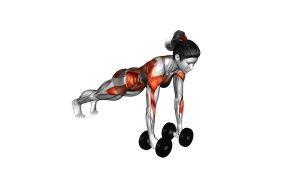
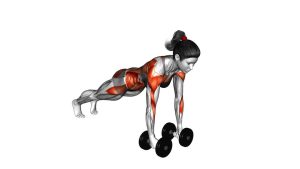
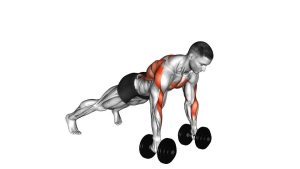
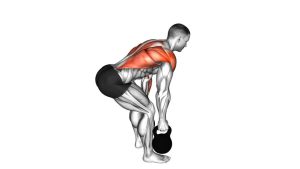
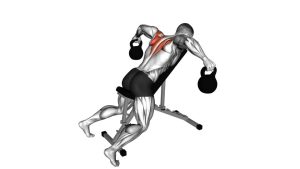
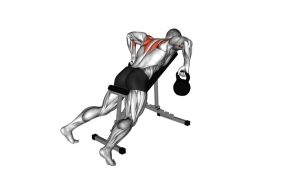
This exercise is best performed with a focus on control, tension, and symmetry rather than speed. Each rep asks your back to pull, your shoulders to stabilize, and your abs and obliques to resist twisting. You should feel the row in the upper back and lats, with constant tension through the core, glutes, and supporting shoulder. If your hips rock side to side or your lower back sags, reduce the load, widen your stance, or slow the tempo.
Quick Overview
| Body Part | Back |
|---|---|
| Primary Muscle | Latissimus dorsi |
| Secondary Muscle | Rhomboids, middle trapezius, rear deltoids, biceps, rectus abdominis, obliques, glutes, and shoulder stabilizers |
| Equipment | 2 kettlebells |
| Difficulty | Intermediate (requires upper-body strength, plank stability, and anti-rotation control) |
Sets & Reps (By Goal)
- Strength focus: 3–5 sets × 4–6 reps per side with heavier kettlebells, 75–120 sec rest
- Muscle building: 3–4 sets × 6–10 reps per side, 60–90 sec rest
- Core stability & control: 2–4 sets × 6–8 reps per side with slower tempo, 45–75 sec rest
- Conditioning circuits: 2–3 sets × 8–12 alternating reps per side using moderate load and clean form
Progression rule: First improve plank stability and eliminate hip rotation. Then increase reps, slow the lowering phase, or use heavier kettlebells.
Setup / Starting Position
- Place two kettlebells on the floor about shoulder-width apart with the handles lined up evenly.
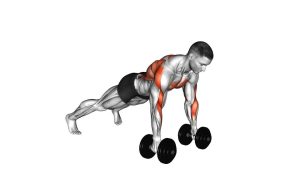
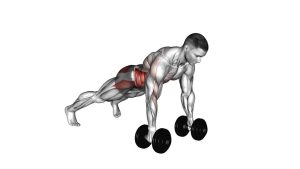
- Grip the handles firmly and step back into a high plank position.
- Set your feet wider than hip width to create a more stable base and reduce torso rotation.
- Stack the shoulders over the kettlebells and keep the wrists neutral as much as possible.
- Brace the core and squeeze the glutes so your body forms a straight line from head to heels.
- Keep the neck neutral and eyes slightly ahead of the kettlebells rather than looking straight up.
Tip: A slightly wider stance makes it easier to keep the hips level and the torso quiet during the row.
Execution (Step-by-Step)
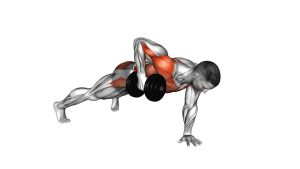
- Lock in the plank: Before you row, create full-body tension through the abs, glutes, legs, and shoulders.
- Row one kettlebell toward your rib cage: Drive the elbow back while keeping it close to the torso.
- Pause briefly at the top: Squeeze the upper back without turning the chest open to the side.
- Lower the kettlebell under control: Return it to the floor without dropping or bouncing it.
- Re-stabilize the plank: Regain full control before starting the next side.
- Row the opposite kettlebell: Repeat the same motion on the other arm while keeping the hips square.
- Continue alternating sides for the prescribed reps, maintaining the same tempo and body position throughout.
Pro Tips & Common Mistakes
- Widen the feet for more control: A narrow stance makes anti-rotation much harder and often leads to hip shifting.
- Keep the hips square: Avoid rotating the pelvis toward the rowing side.
- Pull the elbow back, not up: Think of rowing toward the lower ribs or hip pocket.
- Do not rush the lowering phase: The eccentric portion helps build control and keeps the movement clean.
- Brace before every rep: Reset your plank between sides rather than swinging from one row into the next.
- Avoid sagging through the lower back: Keep the ribs down and glutes active.
- Use kettlebells with stable handles: This helps maintain a safer wrist position and a stronger base on the floor.
FAQ
What muscles does the kettlebell alternating renegade row work?
It primarily trains the lats, while also challenging the rhomboids, middle traps, rear delts, biceps, abs, obliques, glutes, and shoulder stabilizers. It is both a back exercise and a core-stability exercise.
Is this more of a back movement or a core movement?
It is both, but the row is driven by the back while the core works hard to stop rotation. If done correctly, you should feel the pulling muscles and your plank stability at the same time.
Should my feet be close together or wide apart?
Most lifters do better with a wider stance, especially when learning. Wider feet improve balance and make it easier to keep the hips level.
Can beginners do renegade rows?
Beginners can learn the pattern, but this variation is usually best once you already have good plank control and basic rowing strength. A lighter dumbbell plank row or a bench-supported one-arm row can be a better starting point.
What is the biggest mistake in this exercise?
The most common mistake is rotating the torso to lift the kettlebell. That turns the rep into a cheat row and reduces the anti-rotation benefit of the exercise.
Recommended Equipment
- Adjustable Kettlebell — useful for progressive overload without buying multiple kettlebell sizes
- Standard Strength Training Kettlebells — ideal if you prefer a fixed, stable kettlebell for rows, carries, and presses
- Push-Up Handles — a helpful accessory for wrist comfort and extra pushing work paired with plank-based training
- Exercise Mat — adds comfort and traction under the feet during floor-based kettlebell work
- Lifting Chalk — helps maintain grip when sweat makes kettlebell handles slippery
Tip: Choose kettlebells with handles that feel secure and stable on the floor. Good grip and a consistent base matter a lot for renegade rows.