Dumbbell Plank Row: Form, Core Stability, Sets, Tips & FAQ
Learn the Dumbbell Plank Row to build back strength, core stability, and anti-rotation control with proper setup, form cues, mistakes, FAQs, and equipment.
Dumbbell Plank Row
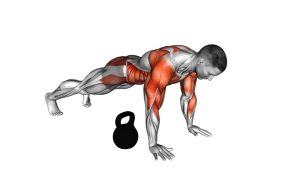
This exercise works best when the row is performed with strict plank control. Instead of twisting the hips or pulling the dumbbell with momentum, focus on bracing the core, pressing the support hand into the floor, and pulling the elbow toward the ribs. A wider foot stance makes the movement more stable, while a narrower stance increases the anti-rotation challenge.
Quick Overview
| Body Part | Back |
|---|---|
| Primary Muscle | Latissimus dorsi, rhomboids, middle traps |
| Secondary Muscle | Core, obliques, shoulders, triceps, glutes, spinal stabilizers |
| Equipment | Pair of dumbbells, preferably hex dumbbells |
| Difficulty | Intermediate |
Sets & Reps (By Goal)
- Core stability: 3 sets × 6–8 reps per side with slow control.
- Back strength: 3–4 sets × 8–10 reps per side using moderate dumbbells.
- Full-body conditioning: 3–5 rounds × 8–12 reps per side with short rest.
- Beginner progression: 2–3 sets × 5–6 reps per side from a wide-stance plank.
Progression rule: Master hip control before adding weight. If your hips twist on every rep, widen your stance, reduce the load, or perform the row from your knees.
Setup / Starting Position
- Place two dumbbells on the floor: Set them about shoulder-width apart with handles parallel.
- Grip the handles firmly: Place your hands directly under or slightly wider than your shoulders.
- Step into a high plank: Extend both legs behind you and keep your feet wider than hip-width for balance.
- Brace your core: Tighten your abs, squeeze your glutes lightly, and keep your ribs stacked over your pelvis.
- Set your head and spine: Keep your neck neutral and look slightly ahead of your hands.
Tip: The wider your feet are, the easier it is to resist rotation. Start wide, then narrow your stance only when your form stays clean.
Execution (Step-by-Step)
- Lock in the plank: Press both dumbbells into the floor and create full-body tension.
- Shift minimally: Transfer just enough weight into the support arm to keep balance.
- Row one dumbbell: Pull the elbow back toward your hip while keeping it close to the body.
- Pause at the top: Squeeze the back briefly without rotating the chest open.
- Lower with control: Return the dumbbell softly to the floor instead of dropping it.
- Reset your plank: Re-brace before performing the next rep or switching sides.
Pro Tips & Common Mistakes
- Pull the elbow toward the hip: This helps target the lats instead of turning the movement into a shoulder shrug.
- Do not rush the lowering phase: A controlled return builds strength and keeps the plank stable.
- Avoid hip rotation: Keep your belt line facing the floor throughout the row.
- Do not let the lower back sag: Brace your abs and keep your glutes lightly active.
- Avoid flaring the elbow too wide: Keep the row path tight and strong.
- Use stable dumbbells: Hex dumbbells are safer and easier to control than round dumbbells.
- Start lighter than normal rows: This movement is limited by core stability, not only back strength.
FAQ
Is the Dumbbell Plank Row the same as a Renegade Row?
Yes. The Dumbbell Plank Row is commonly called the Renegade Row. Both names describe a high-plank position combined with a single-arm dumbbell row.
What muscles does the Dumbbell Plank Row work?
It primarily works the lats, rhomboids, and middle traps. It also strongly trains the abs, obliques, shoulders, triceps, glutes, and spinal stabilizers.
Why do my hips twist during the exercise?
Hip twisting usually happens when the dumbbell is too heavy, the feet are too narrow, or the core is not braced enough. Use a wider stance and focus on slow, controlled reps.
Can beginners do Dumbbell Plank Rows?
Beginners can perform a modified version from the knees or with very light dumbbells. However, the full plank version is usually better for intermediate trainees because it requires strong core control.
Should I alternate sides or finish one side first?
Alternating sides is better for core stability and balanced control. Completing all reps on one side can be useful for strength focus, but it increases fatigue and may cause more rotation.
Recommended Equipment
- Hex Dumbbells — stable dumbbells that reduce rolling during plank rows.
- Adjustable Dumbbells — useful for progressing weight while saving space at home.
- Non-Slip Exercise Mat — improves floor grip and comfort during plank-based exercises.
- Wrist Wraps — optional support for lifters who need extra wrist stability.
- Push-Up Handles — useful for plank and push-up progressions when not rowing with dumbbells.
Choose equipment that allows a stable grip and controlled plank position. For this exercise, stability is more important than using heavy weight.