Dumbbell Upright Shoulder External Rotation: Form, Muscles Worked, Sets, Tips & FAQ
Learn how to do the Dumbbell Upright Shoulder External Rotation with proper form. Discover muscles worked, setup, step-by-step execution, sets and reps by goal, mistakes to avoid, FAQs, and recommended equipment.
Dumbbell Upright Shoulder External Rotation
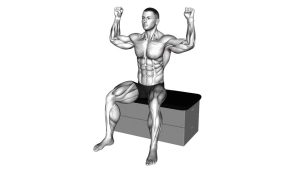
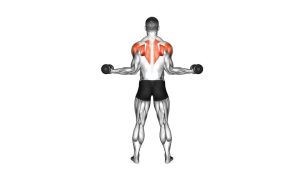
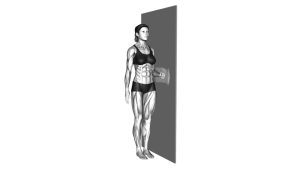
This exercise is best performed with a very light dumbbell and a high level of control. Even though the range of motion looks small, it places meaningful demand on the rotator cuff. Done correctly, you should feel the work in the back of the shoulder rather than in the upper traps, neck, or lower back. Precision matters more than load.
Quick Overview
| Body Part | Rear Shoulders |
|---|---|
| Primary Muscle | Infraspinatus and teres minor |
| Secondary Muscle | Posterior deltoid, middle trapezius, rhomboids, scapular stabilizers |
| Equipment | One light dumbbell |
| Difficulty | Beginner to Intermediate; technique-focused and best with light resistance |
Sets & Reps (By Goal)
- Shoulder activation / warm-up: 2–3 sets × 10–15 reps per side with light resistance and smooth tempo
- Rotator cuff strengthening: 3–4 sets × 8–12 reps per side with full control and 45–75 sec rest
- Rehab-style stability work: 2–3 sets × 10–15 reps per side using very light weight and slow eccentrics
- Movement quality / posture support: 2–3 sets × 12–15 reps per side, focusing on clean rotation and no compensation
Progression rule: Increase control before increasing load. Add reps first, then a very small weight jump only when every rep stays smooth, pain-free, and stable.
Setup / Starting Position
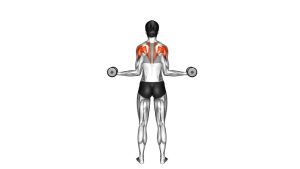
- Stand tall: Place your feet about hip-width apart and brace your core lightly.
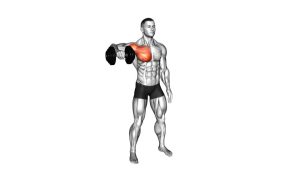
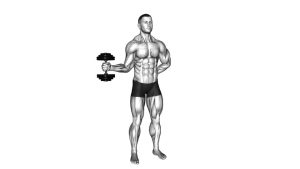
- Lift the working arm: Raise your upper arm out to the side until it is roughly parallel to the floor, or slightly below if needed.
- Bend the elbow: Keep the elbow at about 90 degrees so the forearm points forward or slightly downward.
- Set the shoulder blade: Keep the shoulder down and stable—do not shrug toward the ear.
- Start with a light dumbbell: Choose a load that allows full control without swinging or wrist collapse.
Tip: If holding the upper arm fully level feels unstable, lower it slightly and stay in a pain-free range while learning the movement.
Execution (Step-by-Step)
- Lock in your upper arm position: Keep the elbow lifted and bent while maintaining a still torso.
- Rotate the shoulder outward: Move the forearm backward and upward by externally rotating the shoulder joint.
- Pause briefly at the top: Stop when you reach a controlled end range without pain, pinching, or torso movement.
- Lower slowly: Bring the forearm back down with control rather than letting gravity pull the dumbbell down.
- Repeat smoothly: Perform each rep with a steady tempo and consistent elbow position.
Pro Tips & Common Mistakes
- Use lighter weight than you think: Rotator cuff muscles respond best to precision and control.
- Keep the elbow fixed: If the elbow drops or drifts, the exercise turns into something else.
- Do not shrug: Upper trap dominance reduces the quality of shoulder rotation.
- Avoid torso twisting: Your ribs and chest should stay mostly still while the shoulder rotates.
- Control the lowering phase: The eccentric portion is valuable for shoulder stability.
- Stay in a pain-free range: More range is not better if it creates pinching or loss of control.
- Keep the wrist neutral: Do not bend the wrist backward to help move the dumbbell.
FAQ
What muscles does the Dumbbell Upright Shoulder External Rotation work?
It mainly targets the infraspinatus and teres minor, which are key rotator cuff muscles. It also challenges the posterior deltoid and other shoulder-stabilizing muscles.
Should I use a heavy dumbbell for this exercise?
No. This movement is usually most effective with a light dumbbell. Heavy loading often causes shrugging, torso rotation, and poor joint mechanics.
Is this exercise good for shoulder health?
Yes, when performed correctly and within a pain-free range, it can help improve rotator cuff strength, shoulder control, and stability for other upper-body exercises.
What is the biggest mistake people make?
The most common mistake is turning the exercise into a swing or lift instead of a true external rotation. The elbow should stay in position while the shoulder rotates.
Can beginners do this exercise?
Yes. Beginners can start with a very light dumbbell or even no weight at all until they can control the motion cleanly.
Recommended Equipment
- Light Neoprene Dumbbell Set — ideal for precise shoulder external rotation work and low-load rotator cuff training
- Fractional Dumbbell Micro Plates — helpful for very small load increases when standard jumps feel too big
- Shoulder Resistance Bands — great for warm-ups, rehab-style external rotation drills, and higher-rep shoulder stability work
- Rotator Cuff Physical Therapy Equipment — useful for supportive prehab and accessory shoulder-mobility routines
- Exercise Pad or Foam Support Pad — useful if you also perform floor-based shoulder drills, mobility work, or supported rehab exercises
Tip: For rotator cuff training, choose equipment that supports small, smooth progressions rather than aggressive loading.