Cable Rope Seated Row: Proper Form, Muscles Worked, Sets, Tips & FAQ
Learn how to do the Cable Rope Seated Row with proper form to build lats, rhomboids, and mid-back strength. Includes setup, execution steps, sets and reps by goal, common mistakes, FAQ, and recommended equipment.
Cable Rope Seated Row
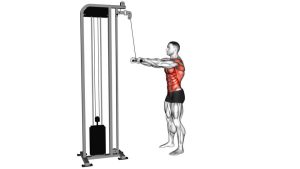
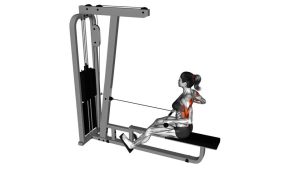
This variation works best when you stay smooth and controlled from start to finish. At the stretched position, allow the shoulder blades to move naturally forward without collapsing your posture. During the pull, drive the elbows back and squeeze through the mid-back instead of yanking with the arms. The rope makes it easier to use a neutral grip and slightly separate the hands at the end of the rep for a fuller contraction.
Quick Overview
| Body Part | Back |
|---|---|
| Primary Muscle | Latissimus dorsi, rhomboids, middle trapezius |
| Secondary Muscle | Rear deltoids, biceps, brachialis, forearms, spinal erectors, core stabilizers |
| Equipment | Low cable row station, rope attachment, weight stack, seated row platform |
| Difficulty | Beginner to Intermediate |
Sets & Reps (By Goal)
- Muscle growth: 3–4 sets × 8–12 reps, 60–90 sec rest
- Strength-focused rowing: 4–5 sets × 5–8 reps, 90–120 sec rest
- Technique and control: 2–3 sets × 10–15 reps, light-to-moderate load, 45–75 sec rest
- Posture / upper-back accessory: 2–4 sets × 12–15 reps, controlled squeeze on every rep
Progression rule: Add reps first, then increase weight once you can keep the chest lifted, elbows tracking cleanly, and the tempo under control without torso swinging.
Setup / Starting Position
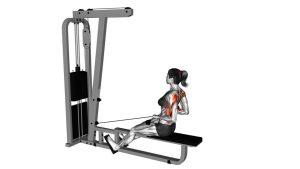
- Attach the rope: Connect a rope handle to the low pulley of a seated cable row station.
- Set your base: Sit on the bench with both feet braced securely on the foot platform.
- Grab the rope neutrally: Use a palms-facing grip with both hands on the rope ends.
- Start with long arms: Extend the arms forward while keeping a slight bend in the elbows.
- Brace posture: Keep the chest up, ribs stacked, core engaged, and spine neutral.
- Allow a slight forward reach: Let the shoulders move naturally forward without rounding excessively through the low back.
Tip: Your torso can lean slightly forward in the stretch, but your posture should still look organized and controlled.
Execution (Step-by-Step)
- Initiate with the back: Begin the rep by pulling the shoulder blades back and down slightly.
- Drive the elbows behind you: Pull the rope toward your lower ribs or upper abdomen.
- Stay tall through the chest: Let the torso come upright naturally, but do not over-lean backward.
- Separate the rope slightly: At the finish, let the rope ends move apart just enough to maximize the back squeeze.
- Pause briefly: Hold the contracted position for 1 second while keeping the shoulders away from the ears.
- Lower under control: Extend the arms slowly and allow the shoulder blades to glide forward into a full stretch.
- Repeat smoothly: Maintain tension and avoid bouncing the weight stack between reps.
Pro Tips & Common Mistakes
- Lead with the elbows: Think about pulling your elbows back rather than curling the rope with your hands.
- Keep the chest proud: A lifted chest helps you hit the mid-back more effectively.
- Use the rope to your advantage: The neutral grip is wrist-friendly and the slight split at the end can improve contraction.
- Don’t turn it into a low-back swing: A small natural torso shift is fine, but avoid using momentum to move the stack.
- Control the stretch: The return phase is where a lot of back-building stimulus happens.
- Don’t shrug: Keep the upper traps quiet and the shoulders down as you row.
- Avoid short reps: Use a full comfortable range of motion so the back works through both stretch and contraction.
- Match load to purpose: Heavier sets can build strength, but moderate loads often make it easier to feel the lats and rhomboids properly.
FAQ
What muscles does the Cable Rope Seated Row work most?
It mainly targets the lats, rhomboids, and middle traps. The rear delts, biceps, brachialis, and forearms also assist throughout the movement.
Is a rope better than a straight bar for seated rows?
Not always better, but different. A rope attachment allows a more natural neutral grip and can make it easier to finish with a strong contraction through the mid-back.
Where should I pull the rope?
In most cases, pull toward the lower ribs or upper abdomen. That path usually lines up well with the lats and mid-back while keeping the shoulders in a solid position.
Should I lean back during the row?
A small natural torso shift is acceptable, but you should not swing backward aggressively. The back muscles should move the load, not momentum.
Can beginners use this exercise?
Yes. It is a very beginner-friendly back exercise because the cable path is stable, the seated position is controlled, and the resistance is easy to adjust.
Recommended Equipment
- Rope Cable Attachment — the main handle used for this variation; great for neutral-grip rows and cable pulling work
- Cable Attachment Set — useful if you want multiple handle options for rows, pulldowns, curls, and triceps work
- Resistance Bands Set — helpful for warm-ups, scapular activation, and home back training when a cable station is not available
- Seated Row Machine — a good home-gym option if you want a dedicated horizontal rowing setup
- Lat / Low Row Cable Machine — versatile home-gym equipment for seated rows, pulldowns, straight-arm work, and many other cable exercises
Tip: For most lifters, a rope attachment plus a general cable system gives the best mix of comfort, versatility, and back-training value.