Kettlebell Two-Arm Row: Proper Form, Muscles Worked, Sets, Tips & FAQ
Learn how to perform the Kettlebell Two-Arm Row with proper form to build lats, rhomboids, and upper-back strength. Includes setup, execution, sets by goal, common mistakes, FAQs, and recommended equipment.
Kettlebell Two-Arm Row
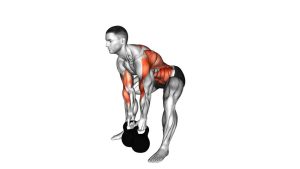
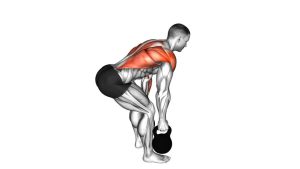
This movement works best when you stay locked into a solid bent-over position and let the back muscles do the work. Each rep should look deliberate and balanced. You should feel the load in the mid-back, upper back, and lats, not in the lower back through excessive swinging or jerking. A moderate range with excellent torso stability usually builds more quality tension than trying to yank the bells higher.
Quick Overview
| Body Part | Back |
|---|---|
| Primary Muscle | Latissimus dorsi, rhomboids, middle trapezius |
| Secondary Muscle | Rear delts, biceps, forearms, spinal erectors, core, glutes, hamstrings |
| Equipment | Two kettlebells |
| Difficulty | Beginner to Intermediate |
Sets & Reps (By Goal)
- Muscle building: 3–4 sets × 8–12 reps with controlled tempo and 60–90 sec rest
- Strength focus: 4–5 sets × 5–8 reps with heavier kettlebells and 90–150 sec rest
- Technique and control: 2–3 sets × 10–15 reps using moderate weight and smooth form
- Conditioning circuit: 2–4 sets × 12–20 reps with lighter kettlebells and short rest
Progression rule: Add reps before adding load, and only increase weight when you can maintain a steady hip hinge, a neutral spine, and a clean squeeze at the top of every rep.
Setup / Starting Position
- Place the kettlebells: Set two kettlebells on the floor directly below your shoulders.
- Take your stance: Stand with feet about hip-width apart or use a light staggered stance for extra balance.
- Hinge at the hips: Push the hips back and bend the knees slightly until your torso is angled forward.
- Brace your trunk: Keep the chest open, core tight, and spine neutral from head to pelvis.
- Grip both bells: Let the arms hang straight down with shoulders packed and neck relaxed.
Tip: Your torso should stay fixed throughout the set. If you keep drifting upright, the weight is probably too heavy.
Execution (Step-by-Step)
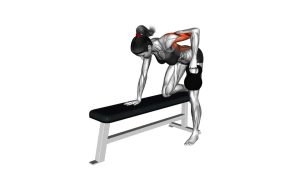
- Lock in the hinge: Set your body first by tightening the core and keeping the back flat.
- Start the pull: Drive both elbows back while keeping them close to the torso.
- Row toward the body: Pull the kettlebells toward the lower ribs or upper waist, not up toward the shoulders.
- Squeeze at the top: Retract the shoulder blades and pause briefly without shrugging.
- Lower under control: Extend the arms slowly until the bells return to the bottom position.
- Repeat smoothly: Keep your torso still and avoid bouncing or using momentum between reps.
Pro Tips & Common Mistakes
- Keep the spine neutral: Avoid rounding through the lower or upper back as fatigue builds.
- Row with the elbows: Think about pulling your elbows back rather than curling the kettlebells up.
- Do not shrug: Let the upper traps stay quiet so the lats and mid-back can do more of the work.
- Hold the hinge: Do not rise up each rep or turn the movement into a partial upright row.
- Control the descent: The lowering phase builds useful tension and keeps the set honest.
- Use straps only if needed: If grip fails before your back does, straps can help on higher-rep sets.
- Do not jerk the bells: Swinging the load reduces tension on the target muscles and stresses the lower back.
FAQ
What muscles does the kettlebell two-arm row work most?
The main drivers are the lats, rhomboids, and middle traps. The rear delts, biceps, forearms, and spinal stabilizers also help.
Is this better than a single-arm kettlebell row?
Both are useful. The two-arm version lets you train both sides together and build a strong, stable hinge. The single-arm version can be better for fixing side-to-side imbalances and allowing a longer range of motion.
How bent over should I be?
Most lifters do well with the torso angled roughly 30 to 60 degrees forward. The key is keeping the back flat and the hinge stable rather than chasing a specific number.
Why do I feel this in my lower back?
A little isometric lower-back effort is normal because you are holding a hinge. Too much strain usually means the kettlebells are too heavy, your torso is not braced well, or you are losing your neutral spine.
Can beginners use this exercise?
Yes. Beginners should start with light kettlebells, a shorter set length, and a strong focus on body position, tempo, and smooth elbow drive.
Recommended Equipment
- Adjustable Kettlebell — space-saving option that lets you progress load without buying multiple bells
- Fixed-Weight Kettlebell Pair — ideal if you want a dedicated pair for bilateral rowing and other strength work
- Lifting Straps — useful when grip becomes the limiting factor before your back muscles are fully challenged
- Exercise Mat — helps protect flooring and creates a more comfortable home-gym training area
- Workout Gloves / Grip Gloves — optional grip support for longer sessions or high-volume back training
Tip: Choose load and accessories that improve control, not shortcuts that hide weak technique. Good rowing mechanics matter more than heavy kettlebells.