Sphinx Back Extension: Form, Benefits, Sets, Tips & FAQ
Learn how to perform the Sphinx Back Extension with proper form to improve spinal extension, lower-back endurance, posture, and mobility. Includes setup, step-by-step execution, sets by goal, mistakes, FAQs, and recommended equipment.
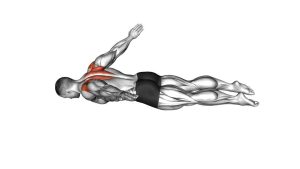
Sphinx Back Extension
This exercise works best when you focus on slow extension, even pressure through the forearms, and a comfortable range of motion. You should feel light muscular work through the back of the torso and a stretch across the front of the trunk. The movement should feel controlled and open, not jammed, pinched, or forced.
Quick Overview
| Body Part | Lower Back |
|---|---|
| Primary Muscle | Erector spinae |
| Secondary Muscle | Multifidus, glutes, upper-back stabilizers, deep spinal stabilizers |
| Equipment | None (optional: exercise mat, towel, yoga block) |
| Difficulty | Beginner |
Sets & Reps (By Goal)
- Mobility / warm-up: 2–3 sets × 6–10 reps with a 2–3 second pause at the top
- Posture / movement quality: 2–4 sets × 8–12 reps with slow, controlled tempo
- Recovery / low-intensity activation: 1–3 sets × 5–8 reps using a comfortable range only
- Rehab-style practice: 2–3 sets × 6–10 reps with very light effort and smooth breathing
Progression rule: First improve control, smoothness, and tolerance. Then gradually increase reps or hold time. Do not progress by forcing a bigger arch through the lower back.
Setup / Starting Position
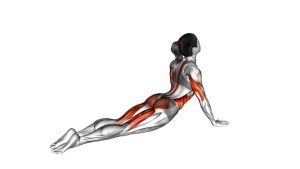
- Lie face down: Position yourself on the floor or mat with your legs extended behind you and feet relaxed.
- Place the forearms down: Set your elbows under or slightly in front of your shoulders with forearms flat on the floor.
- Keep the hips grounded: Let the pelvis and thighs stay relaxed against the floor throughout the movement.
- Brace lightly: Gently engage the trunk without squeezing hard. Keep the glutes lightly active, not clenched aggressively.
- Set the neck neutral: Keep your gaze slightly forward and down so the neck follows the spine naturally.
Tip: If the floor feels uncomfortable, place a folded towel or soft mat under the hips or elbows for better support.
Execution (Step-by-Step)
- Press gently into the forearms: Use the forearms to guide the chest upward without shrugging the shoulders.
- Lift the chest gradually: Extend the spine in a smooth arc, allowing the upper body to rise while the hips stay in contact with the floor.
- Open the front of the torso: Think about lengthening through the chest and abdomen rather than sharply bending only at the lower back.
- Pause briefly: Hold the top for 1–3 seconds while breathing steadily and keeping the shoulders down.
- Lower with control: Return slowly to the start position and repeat without bouncing or collapsing.
Pro Tips & Common Mistakes
- Lead with the chest, not the chin: Avoid throwing the head back to fake extra range.
- Keep shoulders away from the ears: Do not shrug as you rise.
- Maintain hip contact with the floor: Lifting the hips changes the exercise and reduces the intended spinal-extension pattern.
- Use a pain-free range: More height is not always better. Controlled range beats forced range.
- Move through the whole spine: Try to distribute extension across the upper and mid back instead of dumping everything into the lumbar spine.
- Breathe normally: Holding your breath often increases unnecessary tension.
- Avoid fast reps: This is a quality movement, not a momentum exercise.
FAQ
What muscles does the Sphinx Back Extension work?
It mainly targets the erector spinae and other spinal stabilizers while also involving the multifidus, upper-back support muscles, and light glute stabilization.
Is this exercise more for mobility or strength?
It is primarily a mobility and activation exercise. It can help build basic back endurance and movement control, but it is not a heavy strength-builder like loaded back extensions or deadlift variations.
Should I feel a stretch in the abs during this movement?
Yes. Many people feel a gentle stretch across the abdominals and front of the torso while the back muscles work to support the position. That is normal as long as it is comfortable and not painful.
Can beginners do the Sphinx Back Extension?
Yes. It is a beginner-friendly movement when done with a small range of motion and controlled tempo. Start conservatively and only move into ranges that feel smooth and tolerable.
What is the difference between a Sphinx Back Extension and a full Cobra?
The Sphinx variation keeps the elbows bent and forearms on the floor, which usually makes it more controlled and less aggressive than a full cobra-style press-up. It is often the better starting point for mobility work and gentle back extension practice.
Recommended Equipment (Optional)
- Thick Non-Slip Exercise Mat — adds comfort under the hips, elbows, and torso during floor-based mobility work
- Yoga Block Set — useful for modified mobility drills, support variations, and positioning feedback
- High-Density Foam Roller — helpful for pairing with thoracic mobility work and soft-tissue prep before extension drills
- Peanut Massage Ball — useful for upper-back soft-tissue work before mobility and posture sessions
- Light Resistance Bands Set — great for pairing with rows, pull-aparts, and other posture-supporting upper-back exercises
Tip: Keep the setup simple. For most people, a comfortable mat and consistent practice are more valuable than chasing too many tools.