Suspender Weighted Inverted Row: Form, Muscles Worked, Sets & Tips
Learn how to perform the Suspender Weighted Inverted Row with proper form. Discover muscles worked, setup, execution steps, sets and reps by goal, common mistakes, FAQs, and recommended equipment.
Suspender Weighted Inverted Row
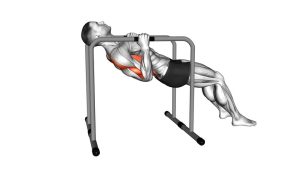
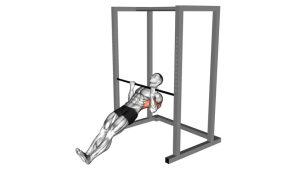
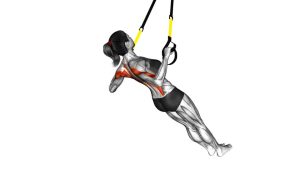
This exercise works best when each rep is controlled from start to finish. The goal is to pull with the back muscles first, not to jerk the body upward with momentum. You should feel the lats, rhomboids, middle traps, rear shoulders, and biceps doing most of the work, while the abs and glutes help keep the torso straight. Because the feet are elevated and resistance is added, even small technique errors can reduce tension on the target muscles.
Quick Overview
| Body Part | Back |
|---|---|
| Primary Muscle | Latissimus dorsi, rhomboids, middle trapezius |
| Secondary Muscle | Posterior deltoids, biceps brachii, brachialis, forearms, core stabilizers, glutes |
| Equipment | Suspension trainer, flat bench or platform, additional weight plate or weighted vest |
| Difficulty | Intermediate to Advanced |
Sets & Reps (By Goal)
- Strength: 4-5 sets × 4-6 reps with heavier loading, 90-150 sec rest
- Hypertrophy: 3-4 sets × 8-12 reps with controlled tempo, 60-90 sec rest
- Bodyweight strength progression: 3-4 sets × 6-10 reps, focus on strict form and full-body tension
- Back-focused accessory work: 2-4 sets × 10-15 reps with moderate load and smooth control
Progression rule: Add reps first, then increase load gradually. Only make the exercise harder when you can keep the torso rigid, pause near the top, and lower under control on every rep.
Setup / Starting Position
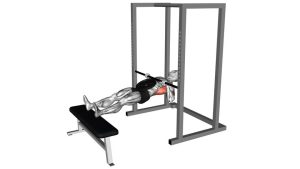
- Anchor the suspension straps securely: Set the handles so you can hang underneath them with your body nearly parallel to the floor.
- Position the bench: Place a flat bench or sturdy platform in front of you so your heels can rest on top of it.
- Grip the handles: Use a neutral grip with palms facing each other and arms fully extended.
- Elevate the feet: Place your heels on the bench and straighten the legs.
- Add resistance: Carefully place a weight plate across the hips or wear a weighted vest if available.
- Brace the body: Tighten the abs and glutes so your head, torso, hips, and legs stay in one straight line.
Tip: Before the first rep, pull the shoulders slightly down and back so you start from a controlled, stable position instead of hanging passively.
Execution (Step-by-Step)
- Start from full extension: Let the arms straighten fully while keeping the chest lifted and the core tight.
- Initiate with the upper back: Begin the rep by drawing the shoulder blades back and down before bending the elbows hard.
- Pull the chest toward the handles: Drive the elbows back close to the torso and row until your chest approaches the handles.
- Squeeze at the top: Pause briefly when the shoulder blades are fully retracted and the upper back is tight.
- Lower under control: Extend the arms slowly and return to the starting position without losing body alignment.
- Repeat smoothly: Keep every rep strict, with no swinging, hip popping, or neck jutting.
Pro Tips & Common Mistakes
- Keep a straight body line: Avoid letting the hips drop or the lower back overarch during the pull.
- Lead with the chest, not the chin: Pull the chest to the handles instead of craning the neck forward.
- Control the eccentric: Lowering too fast reduces time under tension and makes the exercise less effective.
- Do not shrug the shoulders: Keep the traps from taking over by depressing the shoulder blades as you row.
- Avoid excessive swinging: Momentum shifts the work away from the back and turns the movement sloppy.
- Use manageable loading: Too much weight often leads to shortened range of motion and poor scapular control.
- Pause near the top: A brief squeeze improves contraction quality and reinforces strong back mechanics.
FAQ
What muscles does the Suspender Weighted Inverted Row work the most?
It mainly targets the lats, rhomboids, and middle traps. The rear delts, biceps, brachialis, forearms, abs, and glutes also contribute strongly to pulling and stabilization.
Is this better than a regular inverted row?
It is not automatically better, but it is harder. The elevated feet and added resistance make it a stronger option for lifters who have already mastered standard inverted rows with strict form.
Should I use a weight plate or a weighted vest?
Both can work. A weighted vest usually feels more stable and balanced, while a weight plate can add resistance easily if you have a training partner or a safe way to position it.
How high should I pull on each rep?
Pull until your chest comes close to the handles while your shoulders stay packed and your body stays straight. Do not shorten the range just to use more weight.
Who should avoid this exercise?
Beginners, or anyone with shoulder instability, acute elbow pain, or poor core control, should first master easier rowing variations before attempting this advanced setup.
Recommended Equipment (Optional)
- Suspension Trainer Straps — the key tool for creating a stable but adjustable suspension row setup
- TRX GO Suspension Trainer — a popular portable option for home, gym, or travel-based suspension training
- Adjustable Weighted Vest — distributes resistance more evenly than balancing a plate on the body
- Flat Weight Bench — useful for elevating the feet and creating a stronger body angle
- Resistance Bands Set — great for warm-ups, shoulder activation, and lighter rowing assistance work
Tip: Choose stable, gym-quality equipment first. The more secure the anchor and the more balanced the loading, the safer and more effective this exercise becomes.