Kettlebell Around Head Rotation: Form, Muscles Worked, Sets, Tips & FAQ
Learn how to perform the Kettlebell Around Head Rotation with safe form. Improve shoulder mobility, upper-back control, and core stability with step-by-step instructions, sets by goal, tips, FAQs, and recommended equipment.
Kettlebell Around Head Rotation
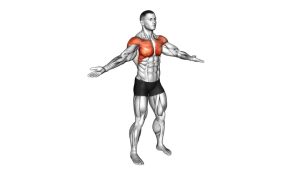
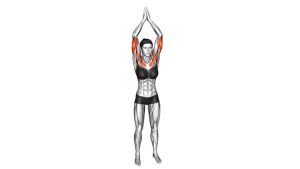
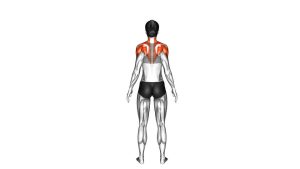
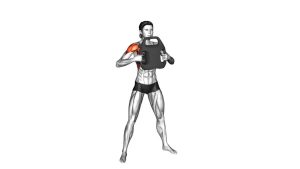
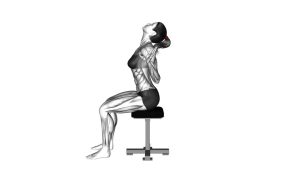
This exercise is excellent as a warm-up drill, movement prep tool, or light accessory exercise for healthier shoulders and better upper-body coordination. When performed well, it challenges the shoulders through a controlled range of motion while the upper back and core work to keep the body stable. You should feel the movement around the shoulders and upper back, not in the lower back or neck.
Quick Overview
| Body Part | Shoulders |
|---|---|
| Primary Muscle | Deltoids |
| Secondary Muscle | Rotator cuff, trapezius, rhomboids, serratus anterior, forearms, and core stabilizers |
| Equipment | Kettlebell |
| Difficulty | Beginner to Intermediate, depending on shoulder mobility and kettlebell load |
Sets & Reps (By Goal)
- Warm-up / movement prep: 2–3 sets × 5–8 reps per direction with light weight
- Shoulder mobility and control: 2–4 sets × 6–10 reps per direction with smooth tempo
- Accessory stability work: 3–4 sets × 8–12 total reps per direction with moderate control-focused loading
- Recovery / technique practice: 1–3 sets × 4–6 slow reps per direction, keeping the kettlebell close and the torso stable
Progression rule: Increase range quality and control before increasing weight. A lighter kettlebell with perfect circles is better than a heavier kettlebell that forces shrugging or torso movement.
Setup / Starting Position
- Stand tall: Place your feet about hip- to shoulder-width apart and keep a soft bend in the knees.
- Grip the kettlebell by the horns: Hold it in front of the chest with both hands, elbows slightly bent.
- Brace the core: Keep the ribs stacked over the hips and avoid flaring the chest.
- Set the shoulders: Keep them active but not shrugged, with the neck long and relaxed.
- Start close: The kettlebell should stay near the head throughout the movement instead of making a wide swinging arc.
Tip: Start with a light kettlebell so you can keep the circle smooth behind the head without leaning or rushing.
Execution (Step-by-Step)
- Begin from the front: Hold the kettlebell in front of your chest and keep your posture tall.
- Move toward one shoulder: Guide the kettlebell around one side of the head with both hands while keeping the elbows moving naturally.
- Pass behind the head: Let the kettlebell travel closely behind the head in a controlled arc, keeping the neck neutral and the torso still.
- Finish on the opposite side: Continue the circle until the kettlebell returns to the front-chest position.
- Reverse direction: Complete all reps one way or alternate directions evenly to train both sides of the shoulder girdle.
Pro Tips & Common Mistakes
- Keep the kettlebell close: A tight circular path improves control and reduces unnecessary shoulder strain.
- Move slowly behind the head: This is where many people rush and lose posture.
- Stay tall through the torso: Do not lean back or rotate the spine to “help” the kettlebell around.
- Do not shrug excessively: The shoulders should rotate and stabilize without climbing toward the ears.
- Train both directions: Equal work clockwise and counterclockwise helps balance shoulder function.
- Use controlled breathing: Lightly brace the core and breathe naturally instead of holding your breath.
- Avoid going too heavy too soon: This exercise works best as a quality movement, not a max-load strength lift.
FAQ
What muscles does the Kettlebell Around Head Rotation work?
It primarily trains the shoulders, especially the deltoids, while also involving the rotator cuff, upper back, serratus anterior, forearms, and core stabilizers. It is a great movement for coordinated shoulder function rather than isolated muscle loading.
Is this the same as a kettlebell halo?
Yes. The Kettlebell Around Head Rotation is commonly known as the kettlebell halo. Both names describe the same controlled circular motion around the head.
Should I go clockwise and counterclockwise?
Yes. You should train both directions to develop balanced shoulder mobility and control. Many lifters notice one direction feels smoother than the other, which is normal.
How heavy should the kettlebell be?
Start with a light kettlebell that lets you move smoothly without arching the back or shrugging. For most people, this is a technique-first exercise where control matters more than heavy loading.
When should I use this exercise in a workout?
It works well during the warm-up, in a mobility block, or as a light accessory exercise before pressing, upper-back work, or full-body training.
Recommended Equipment (Optional)
- Cast Iron Kettlebell — the main tool for practicing halos and other shoulder-control drills
- Competition Kettlebell — consistent handle shape and size for smoother two-hand transitions
- Resistance Bands Set — useful for pairing halos with shoulder activation and upper-back warm-up work
- Exercise Mat — adds comfort and grip for warm-up circuits, mobility work, and home training
- Foam Roller — helpful for thoracic mobility work before shoulder-focused training sessions
Tip: Pair this movement with light band pull-aparts, thoracic mobility drills, or controlled pressing warm-ups for even better shoulder preparation.