Suspension Trainer Prone Y Raise: Form, Benefits, Sets & Tips
Build lower traps, rear delts, and shoulder stability with the Suspension Trainer Prone Y Raise. Learn setup, form, sets, mistakes, FAQs, and gear.
Suspension Trainer Prone Y Raise
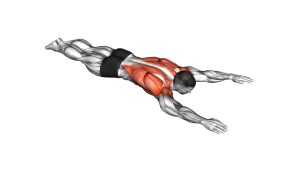
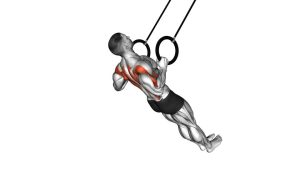
This exercise is best used as a posture-strengthening drill, shoulder prehab movement, or upper-back activation exercise. Because the body is supported in a prone position while the hands hold the suspension trainer handles, the movement challenges shoulder control without requiring heavy loading.
Quick Overview
| Body Part | Upper Back |
|---|---|
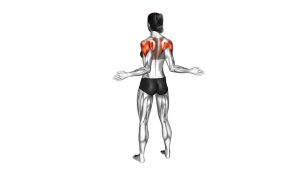
| Primary Muscle | Lower trapezius |
| Secondary Muscle | Rear deltoids, mid traps, rhomboids, rotator cuff, scapular stabilizers |
| Equipment | Suspension trainer / TRX-style straps |
| Difficulty | Intermediate |
Sets & Reps (By Goal)
- Shoulder activation: 2–3 sets × 8–12 reps with slow control.
- Posture correction: 3 sets × 10–15 reps using light tension and clean scapular movement.
- Strength endurance: 3–4 sets × 12–20 reps with a smooth 2–3 second lowering phase.
- Warm-up / prehab: 1–2 sets × 8–10 reps before upper-body training.
Progression rule: Increase control before intensity. Move the body slightly farther from the anchor or increase strap tension only when every rep stays smooth and shoulder-dominant.
Setup / Starting Position
- Anchor the suspension trainer: Secure the straps above you so the handles hang evenly.
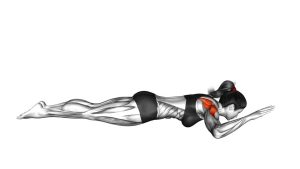
- Lie prone: Position yourself face down with your body long and stable.
- Grip the handles: Hold one handle in each hand with the arms extended forward and slightly outward.
- Create a Y shape: Your arms should form a wide overhead Y angle, not a narrow straight line.
- Set your posture: Keep the neck neutral, ribs controlled, glutes lightly engaged, and shoulders away from the ears.
Start with light strap tension. This exercise should feel precise and controlled, not heavy or jerky.
Execution (Step-by-Step)
- Brace gently: Keep your torso stable and avoid arching the lower back.
- Lead with the shoulders: Begin lifting the arms through the Y path while keeping the elbows mostly straight.
- Squeeze the shoulder blades: Pull the shoulder blades slightly down and together as the arms rise.
- Reach the top position: Pause briefly when the arms are elevated and the upper back is active.
- Lower with control: Return the arms slowly to the starting position without dropping tension.
- Repeat smoothly: Keep every rep small, clean, and controlled from start to finish.
Pro Tips & Common Mistakes
- Think “long neck”: Keep your head neutral instead of lifting the chin or craning the neck.
- Do not turn it into a row: Avoid bending the elbows too much. The arms should stay long.
- Avoid shrugging: Keep the shoulders away from the ears to target the lower traps better.
- Control the lowering phase: The eccentric portion builds shoulder stability and should not be rushed.
- Use light tension first: Too much resistance can shift work into the upper traps and neck.
- Keep the chest stable: A small lift is acceptable, but avoid excessive lower-back extension.
- Maintain the Y angle: Do not let the arms drift too wide into a T raise or too narrow overhead.
FAQ
What muscles does the Suspension Trainer Prone Y Raise work?
It mainly targets the lower trapezius, while also training the rear deltoids, mid traps, rhomboids, rotator cuff, and other scapular stabilizers.
Is the Suspension Trainer Prone Y Raise good for posture?
Yes. It helps strengthen the upper-back muscles that support shoulder positioning and scapular control. It works best when combined with rows, face pulls, thoracic mobility, and chest-opening exercises.
Should my elbows bend during this exercise?
A slight soft bend is fine, but the elbows should not bend enough to turn the movement into a row. Keep the arms long and let the shoulder blades guide the movement.
Why do I feel this exercise in my neck?
Neck tension usually means you are shrugging, using too much resistance, or lifting your head too high. Reduce the tension, keep the neck neutral, and focus on pulling the shoulders down.
Can beginners do this exercise?
Beginners can perform it with very light tension and a small range of motion. However, it requires good control, so many beginners should start with floor prone Y raises before progressing to suspension straps.
Recommended Equipment
- Suspension Trainer Straps — the main tool needed for prone Y raises and other bodyweight pulling drills.
- TRX-Style Suspension Trainer — a durable strap system for upper-back, core, and shoulder stability training.
- Thick Exercise Mat — adds comfort for prone positioning and protects the chest, hips, and knees.
- Suspension Trainer Door Anchor — useful for setting up straps safely at home when a fixed anchor is not available.
- Resistance Bands Set — helpful for pairing this exercise with face pulls, pull-aparts, and rotator cuff work.
Choose equipment that allows smooth tension, secure anchoring, and enough room to move the arms through a clean Y path.