Barbell Behind-the-Back Shrug: Proper Form, Sets, Muscles Worked & Tips
Learn how to do the Barbell Behind-the-Back Shrug with proper form. Discover muscles worked, setup, execution tips, sets and reps by goal, common mistakes, FAQs, and recommended equipment.
Barbell Behind-the-Back Shrug
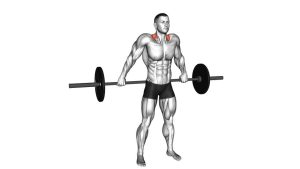
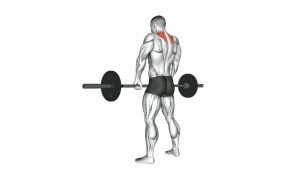
This exercise is best performed with strict form, a stable torso, and a smooth vertical shrug. In the video, the movement is controlled and consistent, with the shoulders rising upward while the elbows stay straight and the bar tracks behind the thighs. You should feel the work mostly in the upper trapezius, not in the lower back, wrists, or neck joints.
Quick Overview
| Body Part | Upper Back |
|---|---|
| Primary Muscle | Upper trapezius |
| Secondary Muscle | Middle trapezius, levator scapulae, forearms (grip stabilization) |
| Equipment | Barbell, weight plates, optional lifting straps |
| Difficulty | Beginner to Intermediate |
Sets & Reps (By Goal)
- Muscle growth: 3–5 sets × 8–15 reps, 60–90 sec rest
- Strength-focused trap work: 4–5 sets × 6–8 reps, 90–120 sec rest
- Technique and mind-muscle connection: 2–4 sets × 10–15 reps with a 1–2 second squeeze at the top
- Finisher work: 2–3 sets × 15–20 reps with moderate load and strict control
Progression rule: Add reps first, then small weight increases. Only load heavier when you can keep every rep smooth, vertical, and free from shoulder rolling.
Setup / Starting Position
- Load the barbell: Use a manageable weight that allows a full, controlled shrug without jerking.
- Stand tall: Place your feet around hip-width apart for a stable base.
- Grip the bar behind your body: Use a pronated grip slightly wider than shoulder-width.
- Let the arms hang long: Keep the elbows straight and the bar close to the back of your thighs or upper hamstrings.
- Brace your torso: Keep the chest up, core tight, and head neutral before each rep starts.
Tip: If grip becomes the limiting factor before your traps fatigue, use lifting straps so the upper traps stay the main focus.
Execution (Step-by-Step)
- Start from a dead hang: Let the shoulders settle naturally at the bottom while keeping posture tall.
- Shrug upward: Lift your shoulders straight up toward your ears without bending the elbows.
- Keep the path clean: The bar should travel slightly upward as the shoulders rise, but the arms should stay long and passive.
- Squeeze at the top: Pause briefly and contract the upper traps as hard as you can without straining the neck.
- Lower under control: Bring the shoulders back down slowly to the starting position.
- Repeat consistently: Use the same range and tempo on every rep rather than bouncing the weight.
Pro Tips & Common Mistakes
- Shrug up, not around: Do not roll the shoulders in circles. A straight vertical path is cleaner and safer.
- Keep the elbows straight: Turning the movement into a row shifts tension away from the traps.
- Use a brief squeeze: A 1–2 second pause at the top can improve upper trap engagement.
- Do not overload too soon: Excessive weight usually leads to torso swinging and shortened range of motion.
- Stay tall: Avoid craning the head forward or leaning back to fake more elevation.
- Control the negative: Lowering slowly improves tension and helps keep the movement strict.
FAQ
What muscles does the barbell behind-the-back shrug work?
It mainly targets the upper trapezius. The middle traps, levator scapulae, and forearms also assist by stabilizing the movement and grip.
Is behind-the-back shrug better than a regular barbell shrug?
Not always better, but different. Some lifters feel the behind-the-back setup makes it easier to keep the shoulders moving in a clean path and reduces cheating.
Should I use heavy weight on this exercise?
Heavy loading can work well, but only if you can keep the movement strict. If the bar starts bouncing or your torso swings, the load is too heavy for quality reps.
Should I roll my shoulders during shrugs?
No. Shoulder rolling is a common mistake. Focus on lifting the shoulders straight up, squeezing the traps, and lowering with control.
Can beginners do barbell behind-the-back shrugs?
Yes, as long as they start light, learn the shrug pattern first, and avoid turning the movement into a fast, momentum-based lift.
Recommended Equipment
- Lifting Straps — helpful when grip fails before the traps do
- Weightlifting Belt — useful for lifters who want extra torso bracing during heavier sets
- Olympic Barbell Collars — keeps plates secure and the bar stable during loaded shrug work
- Trap Bar — a useful alternative for shrugging if you want a different grip and loading setup
- Barbell Pad — optional for comfort in other barbell movements and general gym use
Tip: The most useful add-on for this exercise is usually lifting straps, especially once the weight gets heavy enough that grip starts limiting trap work.