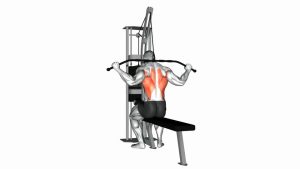
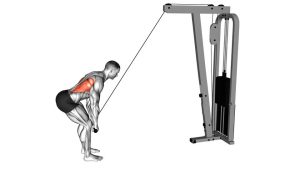
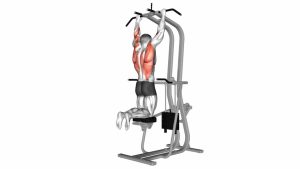
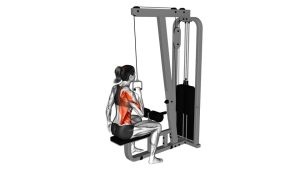
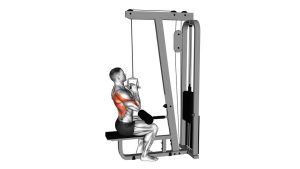
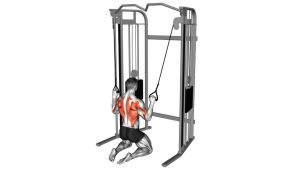
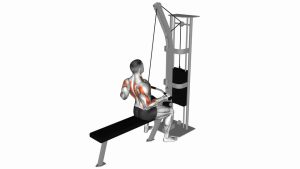
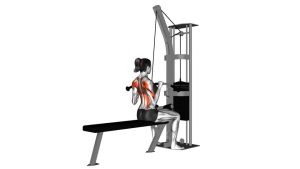
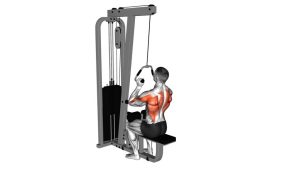
Lying Lat Pulldown: Proper Form, Sets, Tips & FAQ
Learn the Lying Lat Pulldown with proper form, setup, execution cues, sets by goal, common mistakes, FAQs, and recommended equipment for better lat activation and back development.
Lying Lat Pulldown
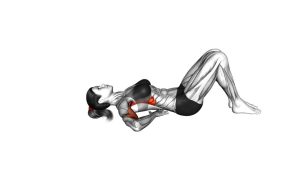
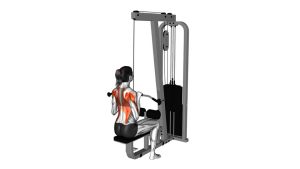
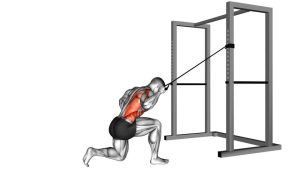
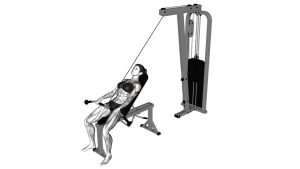
This variation works best when you use a smooth tempo and a moderate range of motion that keeps constant tension on the lats. Because the chest is supported, the exercise helps minimize body English and teaches you to pull with the back instead of yanking with the arms. You should feel the movement mainly through the sides of the back and under the armpits, with the biceps assisting but not dominating.
Quick Overview
| Body Part | Back |
|---|---|
| Primary Muscle | Latissimus dorsi |
| Secondary Muscle | Teres major, rear delts, rhomboids, mid traps, biceps |
| Equipment | Flat bench or support surface, cable machine or resistance band with anchor, handle attachment |
| Difficulty | Beginner to Intermediate |
Sets & Reps (By Goal)
- Muscle building: 3–4 sets × 8–12 reps with controlled eccentrics and 60–90 sec rest
- Technique practice: 2–3 sets × 10–15 reps using lighter resistance and perfect form
- Back activation / warm-up: 2–3 sets × 12–15 reps with light-to-moderate tension
- Higher-rep finisher: 2–3 sets × 15–20 reps with continuous tension and no swinging
Progression rule: First improve control, then add reps, then add resistance. If your shoulders shrug or your elbows stop tracking smoothly, the load is too heavy.
Setup / Starting Position
- Set the equipment: Position a bench or sturdy support so you can lie face down while pulling from an overhead or slightly forward line of resistance.
- Lie prone: Place your chest and torso on the bench with your body stable and your spine neutral.
- Reach overhead: Extend your arms in front of you so the lats feel stretched, but do not lose shoulder control.
- Grip the handle: Use a neutral, semi-pronated, or straight-bar grip depending on your setup and comfort.
- Brace lightly: Keep your core engaged, neck neutral, and shoulders depressed before starting the first rep.
Tip: A slightly angled pulling path often feels more natural than pulling straight down. Choose the line that lets you feel your lats without shoulder discomfort.
Execution (Step-by-Step)
- Start long: Begin with your arms extended and your shoulders set down and back slightly, without shrugging.
- Lead with the elbows: Pull by driving your elbows down and back toward your sides rather than curling the handle with your hands.
- Keep the chest supported: Let the bench stabilize your torso so the movement stays strict and lat-focused.
- Squeeze the back: At the bottom, pause briefly when your elbows come near your torso and your lats are fully contracted.
- Lower slowly: Return under control until your arms are extended again and the lats feel a strong stretch.
- Repeat smoothly: Maintain the same range and tempo on every rep without bouncing or rushing.
Pro Tips & Common Mistakes
- Think elbows, not hands: This simple cue usually improves lat recruitment immediately.
- Keep the neck neutral: Avoid lifting the chin too high to chase range.
- Do not shrug: Elevated shoulders shift tension away from the lats and into the upper traps.
- Use a full controlled stretch: Let the lats lengthen at the top without losing shoulder position.
- Do not yank the weight: Momentum turns a clean isolation drill into a messy pull.
- Pause at peak contraction: A brief squeeze helps reinforce mind-muscle connection.
- Match grip to comfort: Neutral or semi-pronated grips often feel friendlier on the shoulders.
FAQ
What muscles does the Lying Lat Pulldown work the most?
The main target is the latissimus dorsi. The teres major, rear delts, rhomboids, mid traps, and biceps also assist depending on your grip and setup.
Is the Lying Lat Pulldown better than a regular lat pulldown?
It is not necessarily better, but it can be more strict and easier for some lifters to feel in the lats. The supported torso reduces cheating and can improve technique awareness.
Can I do this exercise at home?
Yes. You can perform it with a resistance band, a door anchor, and a bench or sturdy surface. The key is creating a smooth line of resistance and keeping the movement controlled.
Should I use heavy weight on this exercise?
Usually, moderate resistance works best. This exercise is most effective when you can maintain constant tension, a clean elbow path, and a strong contraction without body movement.
What is the biggest mistake people make?
The most common mistake is pulling with the arms while shrugging the shoulders. That shifts the work away from the lats. Focus on driving the elbows and keeping the shoulders down.
Recommended Equipment
- Resistance Bands with Handles — useful for creating a home-friendly pulldown setup with scalable tension
- Door Anchor for Resistance Bands — helps create a higher anchor point for a smoother lat pulldown line
- Adjustable Weight Bench — provides stable chest support for stricter execution and better body positioning
- Exercise Handles — comfortable handles can improve grip comfort for band-based pulldown variations
- Lat Pulldown Attachment — useful if you train with a cable machine and want a dedicated back-training handle
Choose equipment that allows a smooth pulling path, stable body support, and enough resistance to challenge the lats without forcing you to use momentum.