Cable Standing Row: Proper Form, Muscles Worked, Sets, Tips & FAQ
Learn how to do the Cable Standing Row with proper back-focused form. Discover muscles worked, setup, step-by-step execution, sets and reps by goal, common mistakes, FAQs, and recommended equipment.
Cable Standing Row
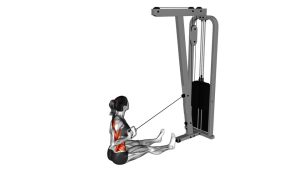
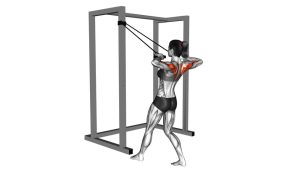
This exercise is especially useful for lifters who want more mid-back thickness, stronger rhomboids and traps, and better shoulder positioning during pulling movements. Because the cable provides a smooth resistance curve, the standing row can be a great option for learning how to coordinate the upper back, rear delts, and lats while keeping the torso stable. The best reps are smooth, controlled, and finished with a deliberate squeeze rather than momentum.
Quick Overview
| Body Part | Back |
|---|---|
| Primary Muscle | Rhomboids, middle trapezius, and rear deltoids |
| Secondary Muscle | Latissimus dorsi, biceps, forearms, and spinal stabilizers |
| Equipment | Cable machine with row handle attachment |
| Difficulty | Beginner to Intermediate |
Sets & Reps (By Goal)
- Muscle growth: 3-4 sets × 8-12 reps with controlled tempo and a strong squeeze at the back
- Strength focus: 4-5 sets × 5-8 reps using heavier weight without sacrificing posture
- Posture / movement quality: 2-4 sets × 10-15 reps with lighter weight and strict scapular control
- Warm-up / activation: 2-3 sets × 12-15 reps with smooth, moderate resistance
Progression rule: Add weight only after you can keep the chest lifted, elbows tracking cleanly, and the return phase slow and controlled on every rep.
Setup / Starting Position
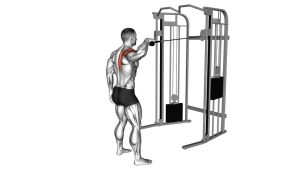
- Set the cable: Attach a row handle to a low or mid cable position depending on your machine setup.
- Take your stance: Stand tall with feet about shoulder-width apart. A slight staggered stance can improve balance.
- Grip the handle firmly: Keep wrists neutral and hands secure without over-squeezing.
- Brace your torso: Engage your core, lift the chest, and keep the spine neutral.
- Start with arms extended: Let the arms reach forward under control so the shoulders can protract naturally without rounding the whole upper body.
Tip: Stand far enough back to keep tension on the cable from the very first inch of the pull.
Execution (Step-by-Step)
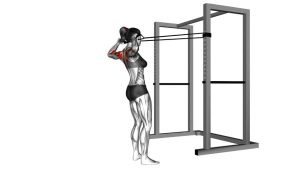
- Set the posture first: Keep your chest tall, neck neutral, and ribs stacked over the hips.
- Initiate with the upper back: Begin by drawing the shoulder blades back rather than yanking with the arms.
- Drive the elbows behind you: Pull the handle toward the lower chest or upper abdomen while keeping the elbows close to the body.
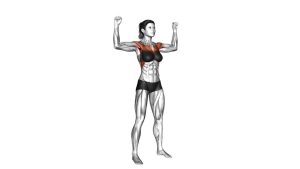
- Squeeze at the finish: Pause briefly when the shoulder blades are fully retracted and the chest is open.
- Return under control: Slowly extend the arms forward and allow the shoulder blades to move naturally into the stretched position.
- Repeat smoothly: Maintain constant tension and avoid letting the weight stack crash between reps.
Pro Tips & Common Mistakes
- Lead with the elbows: This helps keep the back doing the work instead of overloading the biceps.
- Do not round forward excessively: A slight reach at the start is fine, but keep the torso organized and stable.
- Avoid shrugging: Keep the shoulders down and back rather than letting the upper traps dominate.
- Control the negative: The return phase is where a lot of quality back stimulus is built.
- Do not lean back too much: Excessive torso swing turns the movement into momentum instead of a strict row.
- Use a manageable load: Clean technique beats heavier weight when your goal is back development.
FAQ
What muscles does the Cable Standing Row work the most?
It mainly targets the rhomboids, middle traps, and rear delts, while the lats, biceps, and forearms assist during the pull.
Is the Cable Standing Row good for posture?
Yes. When performed with controlled scapular retraction and a tall chest, it helps strengthen the muscles that oppose rounded shoulders.
Where should I pull the handle?
In most cases, pulling toward the lower chest or upper abdomen works well for a back-focused row. The exact path can vary slightly based on your attachment and body structure.
Should I use a heavy weight for this exercise?
Use a weight that allows you to keep the movement strict. If you need to rock backward hard or lose the squeeze, the load is too heavy.
Can beginners do Cable Standing Rows?
Absolutely. This is a beginner-friendly rowing variation because the cable provides a smooth line of resistance and makes it easier to learn proper back engagement.
Recommended Equipment
- Double D Row Handle Cable Attachment — ideal for close-grip cable rows and strong mid-back contraction
- Single D Handle Cable Attachment — useful for unilateral cable rows and side-to-side strength balance
- Resistance Bands Set with Handles and Door Anchor — a practical alternative for standing row practice at home when a cable machine is not available
- Lifting Straps — helpful if grip fatigue limits your back training before the target muscles are fully challenged
- Cable Attachment Set for Back Training — gives you multiple handle options for rows, pulldowns, and broader back work
Tip: For this exercise, the best first upgrade is usually a comfortable row handle that lets you keep your wrists neutral and pull cleanly through the elbows.