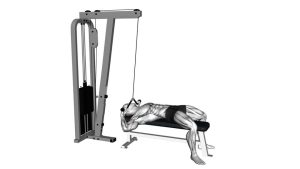
Cable Standing One-Arm Face Pull: Form, Muscles Worked, Sets, Tips & FAQ
Learn how to perform the Cable Standing One-Arm Face Pull with proper form to target the rear delts, upper back, and shoulder stabilizers. Includes setup, execution steps, sets by goal, common mistakes, FAQs, and recommended equipment.
Cable Standing One-Arm Face Pull
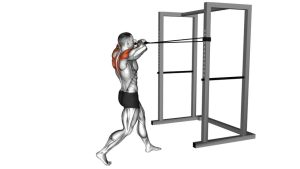
This variation is excellent for improving rear-delt engagement, cleaning up side-to-side imbalances, and reinforcing better scapular control. Because you work one arm at a time, it is easier to focus on elbow path, wrist alignment, and the quality of the contraction without the stronger side taking over.
Quick Overview
| Body Part | Shoulders |
|---|---|
| Primary Muscle | Rear deltoid (posterior deltoid) |
| Secondary Muscle | Middle trapezius, rhomboids, external rotators, upper-back stabilizers |
| Equipment | Cable machine with single handle or rope end |
| Difficulty | Beginner to Intermediate |
Sets & Reps (By Goal)
- Muscle growth: 3–4 sets × 10–15 reps per arm, 45–75 sec rest
- Shoulder stability / control: 2–4 sets × 12–20 reps per arm, slow tempo, 30–60 sec rest
- Warm-up / activation: 2–3 sets × 12–15 reps per arm, light load, smooth reps
- Posture-focused accessory work: 2–3 sets × 15–20 reps per arm, strict form, short rest
Progression rule: Add reps before adding load. Only increase weight when you can keep the elbow path clean, avoid shrugging, and control the return on every rep.
Setup / Starting Position
- Set the cable height: Position the pulley around upper-chest to face level.
- Choose the attachment: Use a single D-handle, single grip handle, or one end of a rope attachment.
- Stand tall: Face the machine with feet about shoulder-width apart and knees softly bent.
- Grip the handle: Hold the attachment with one hand and step back until the cable is taut.
- Brace lightly: Keep the ribs stacked, core engaged, and shoulders down and relaxed.
- Start with the arm extended: The working arm should be in front of you at roughly shoulder height.
Tip: A slight backward lean is fine if it helps you balance the cable, but avoid turning the movement into a bodyweight shift.
Execution (Step-by-Step)
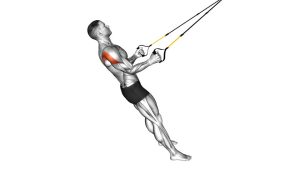
- Set your shoulder: Begin with the shoulder packed and the chest tall.
- Lead with the elbow: Pull the handle toward your face while letting the elbow travel out and back.
- Aim high: Bring the hand toward nose or eye level rather than pulling low to the chest.
- Squeeze at the back: At the end of the rep, pause briefly and feel the rear delt and upper back working.
- Return under control: Extend the arm forward slowly without letting the weight yank you back.
- Repeat evenly: Complete all reps on one arm, then switch sides.
Pro Tips & Common Mistakes
- Pull toward the face, not the chest: A low pull shifts emphasis away from the rear delts.
- Let the elbow flare naturally: Keeping the elbow too tucked turns it into more of a row.
- Do not shrug: Keep the upper traps quiet and the neck relaxed.
- Use a full controlled return: Don’t let the cable snap your arm forward.
- Keep the torso still: Avoid twisting, swinging, or leaning excessively to finish the rep.
- Use moderate loads: Face pulls usually work better with precision than with heavy cheating reps.
- Train both sides evenly: The unilateral version is ideal for noticing strength or control imbalances.
FAQ
What muscles does the Cable Standing One-Arm Face Pull work?
It primarily targets the rear deltoid, while also involving the middle traps, rhomboids, and smaller shoulder-stabilizing muscles.
Is this better than a two-arm face pull?
Not necessarily better, but different. The one-arm version is excellent for improving mind-muscle connection, correcting side-to-side imbalances, and refining shoulder control.
Should I use a rope or a single handle?
Both can work well. A single D-handle usually feels stable and easy to control, while a rope end can feel more natural for some lifters.
Where should I feel this exercise?
You should mainly feel it in the back of the shoulder and the upper back. If you mostly feel your neck or upper traps, lower the load and adjust the elbow path.
Can beginners use this exercise?
Yes. It is beginner-friendly when done with light-to-moderate resistance and strict control. Start light and focus on smooth reps before progressing.
Recommended Equipment
- Tricep Rope Attachment — useful for face pulls, pushdowns, and other cable shoulder or upper-back work
- Single D-Handle Cable Attachment — ideal for unilateral cable work with a stable grip
- Ergonomic Cable Handle — comfortable option for single-arm pulling and controlled rear-delt work
- Single-Arm Rope Attachment — good alternative if you prefer a softer grip and freer wrist position
- Resistance Bands with Door Anchor — practical home-gym substitute for face pulls when you do not have a cable machine
Choose attachments that let you keep a neutral wrist, smooth cable path, and controlled shoulder motion.