Kettlebell Rear Delt Row: Proper Form, Muscles Worked, Sets, Tips & FAQ
Learn how to perform the Kettlebell Rear Delt Row with proper form to target the rear shoulders and upper back. Includes setup, step-by-step execution, sets and reps by goal, common mistakes, FAQs, and recommended equipment.
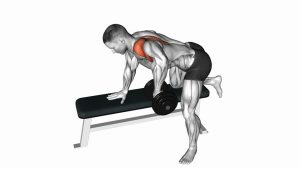
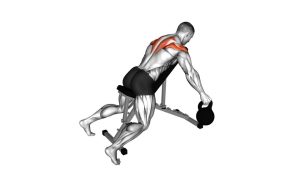
Kettlebell Rear Delt Row
This exercise is most effective when performed with a moderate load and clean upper-body control. The goal is to move through a smooth rowing path that targets the rear shoulder rather than turning the lift into a heavy lat-dominant row. A brief squeeze at the top and a controlled lowering phase will help you keep tension where it belongs.
Quick Overview
| Body Part | Rear Shoulders |
|---|---|
| Primary Muscle | Rear deltoids (posterior delts) |
| Secondary Muscle | Rhomboids, middle trapezius, upper back stabilizers, rotator cuff support muscles |
| Equipment | Kettlebell, flat bench |
| Difficulty | Beginner to Intermediate |
Sets & Reps (By Goal)
- Muscle growth: 3–4 sets × 8–15 reps per side
- Shoulder control and balance: 2–4 sets × 10–15 reps per side
- Light technique work: 2–3 sets × 12–15 reps per side with slow tempo
- Upper-back accessory work: 3–4 sets × 10–12 reps per side after main pulling exercises
Progression rule: Add reps before increasing kettlebell load. Only move up when you can keep the elbow path clean, avoid torso rotation, and control the lowering phase.
Setup / Starting Position
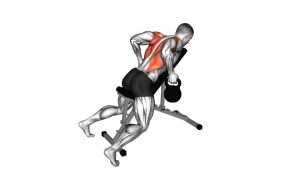
- Set your base: Place one hand and the same-side knee on a flat bench. Keep the opposite foot planted firmly on the floor.
- Hold the kettlebell: Let the working arm hang straight down from the shoulder while gripping the kettlebell securely.
- Hinge into position: Keep your torso nearly parallel to the floor with a neutral spine and braced core.
- Square the body: Keep the chest open and hips stable without rotating toward the working arm.
- Set the shoulder: Let the shoulder hang naturally at the bottom, but do not collapse into the joint.
Tip: A stable bench-supported setup helps isolate the rear delts better and reduces the temptation to use body English.
Execution (Step-by-Step)
- Start from a dead hang: Let the kettlebell hang below the shoulder with the arm extended and the torso still.
- Lead with the elbow: Pull the elbow outward and upward rather than tight against the ribcage.
- Row toward the upper side of the torso: Bring the kettlebell up in a controlled arc toward the outer ribcage or lower chest area.
- Squeeze at the top: Pause briefly when the upper arm reaches roughly torso height and feel the rear delt and upper back contract.
- Lower with control: Return the kettlebell slowly to the start without dropping the shoulder or twisting the body.
- Repeat evenly: Finish all reps on one side, then switch sides and match volume and control.
Pro Tips & Common Mistakes
- Lead with the elbow, not the hand: Think about lifting through the elbow to improve rear delt recruitment.
- Do not yank the kettlebell: Momentum reduces tension on the target muscles and makes the row less precise.
- Keep your torso quiet: Avoid rotating the chest to “help” the weight reach the top.
- Use a moderate flare: Too tucked becomes a lat row; too exaggerated may irritate the shoulder.
- Control the lowering phase: A slow eccentric helps build better shoulder control and muscular tension.
- Do not shrug excessively: Keep the upper traps from taking over the lift.
- Choose load carefully: A lighter kettlebell with strict form is usually better than a heavier one with body swing.
FAQ
What muscles does the Kettlebell Rear Delt Row work most?
The main target is the rear deltoid. It also trains the rhomboids, middle traps, and other upper-back stabilizers.
How is this different from a regular kettlebell row?
The main difference is the elbow path. A regular row usually keeps the elbow closer to the torso, while a rear delt row uses a more flared elbow to place more emphasis on the posterior shoulder.
Should I use heavy weight for this exercise?
Usually no. This movement works best with a controlled moderate load that lets you keep the torso stable and feel the rear delts working throughout the full range.
Can beginners do kettlebell rear delt rows?
Yes. Beginners can use a light kettlebell and focus on setup, elbow path, and tempo before worrying about heavier loads.
Where should I feel this exercise?
You should mainly feel it in the back of the shoulder and across the upper back. If you feel it mostly in the lats, your elbow may be too tucked.
Recommended Equipment
- Adjustable Kettlebell — ideal for progressing load without buying multiple kettlebells
- Flat Weight Bench — provides the stable support needed for strict bench-supported rows
- Resistance Band Set — useful for warm-ups, rear delt activation, and extra shoulder work
- Lifting Straps — can help if grip fatigue limits your rowing sets before your upper back does
- Exercise Mat — adds comfort and floor protection in home gym setups
Tip: Prioritize a stable bench and the right kettlebell first. Those two items matter most for this exercise.