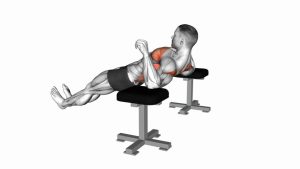
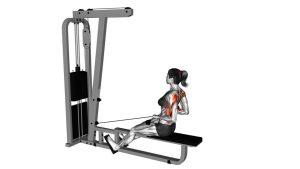
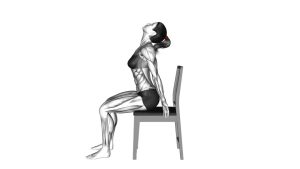
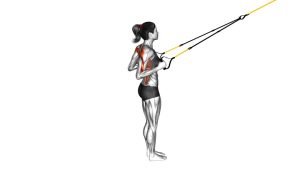
Seated Scapular Adduction: Proper Form, Sets, Tips & FAQ
Learn how to perform the Seated Scapular Adduction with proper form to improve upper-back activation, posture, and shoulder blade control. Includes setup, execution, sets by goal, tips, FAQ, and recommended equipment.
Seated Scapular Adduction
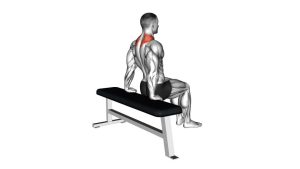
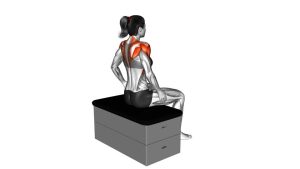
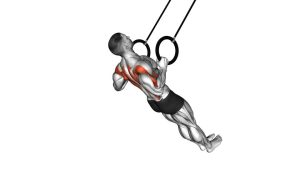
This exercise works best when the movement stays controlled and precise. Instead of pulling with the arms, you should think about moving the shoulder blades themselves. A good rep feels like a clean upper-back contraction, not a shrug, arm tug, or lower-back arch. Because the range of motion is relatively small, quality matters much more than trying to make the movement look bigger.
Quick Overview
| Body Part | Back |
|---|---|
| Primary Muscle | Rhomboids and middle trapezius |
| Secondary Muscle | Rear deltoids, lower trapezius, rotator cuff stabilizers |
| Equipment | None |
| Difficulty | Beginner |
Sets & Reps (By Goal)
- Posture improvement: 2–3 sets × 10–15 reps with a 1–2 second squeeze
- Warm-up / activation: 2–3 sets × 8–12 reps before rows, pulldowns, or pull-ups
- Scapular control / rehab-style work: 2–4 sets × 8–10 slow reps with strict form
- Desk break reset: 1–2 sets × 10–12 easy, controlled reps
Progression rule: First improve control, pause quality, and posture. Then increase reps or add a slightly longer squeeze before moving to more advanced pulling patterns.
Setup / Starting Position
- Sit tall: Sit upright on a bench, chair, or seated station with your feet planted flat on the floor.
- Align the torso: Keep the chest gently lifted, ribs stacked, and spine neutral without over-arching the lower back.
- Relax the shoulders: Let the shoulders stay down and away from the ears.
- Position the arms: Keep the arms in front of the body or by the sides depending on the variation, with minimal elbow movement.
- Start neutral: Begin with the shoulder blades in a relaxed, neutral position before initiating the squeeze.
Tip: Think “tall chest, long neck, relaxed traps” before each rep.
Execution (Step-by-Step)
- Brace lightly: Stay upright and keep the core gently engaged so the torso does not sway.
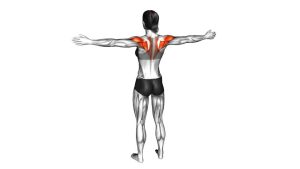
- Initiate from the shoulder blades: Pull the scapulae backward toward each other without leading with the elbows.
- Open the chest slightly: As the shoulder blades move inward, allow the chest to open naturally without leaning back.
- Pause and squeeze: Hold the peak contraction briefly while maintaining a relaxed neck and steady breathing.
- Return with control: Slowly release the squeeze and let the shoulder blades move back to neutral without collapsing posture.
Pro Tips & Common Mistakes
- Move the shoulder blades, not the arms: The goal is scapular retraction, not elbow-driven pulling.
- Keep the neck neutral: Avoid jutting the chin forward or tensing the upper traps.
- Do not shrug: Shoulder elevation shifts tension away from the target muscles.
- Use a small range: Clean, controlled reps are far more effective than exaggerated movement.
- Do not arch the lower back: Keep the torso stacked so the upper back does the work.
- Pause at the top: A brief squeeze helps reinforce better scapular awareness and control.
FAQ
Where should I feel the seated scapular adduction?
You should mainly feel it between the shoulder blades in the upper back, especially around the rhomboids and middle traps. You should not feel the movement dominated by the biceps, neck, or upper traps.
Is this the same as a rowing exercise?
Not exactly. A row usually includes more elbow flexion and larger arm movement. This drill is more focused on pure shoulder blade retraction and upper-back control.
Can this help with rounded shoulders?
It can be useful as part of a posture-focused routine because it teaches better scapular positioning and strengthens the muscles that help oppose shoulder rounding.
How often can I do this exercise?
Most people can perform it several times per week, and light posture-focused practice may even be done daily as long as it stays comfortable and controlled.
Should I squeeze as hard as possible?
No. A moderate, clean contraction is usually better. Over-squeezing often causes shrugging, neck tension, or compensations.
Recommended Equipment (Optional)
- Resistance Bands Set — useful for progressing from bodyweight scapular control into light rowing, pull-aparts, and posture drills
- Upper Back Posture Corrector — can serve as a light posture reminder during daily activities when used sensibly
- Trigger Point Massage Ball — helpful for releasing tight areas around the upper back, rear shoulder, and scapular region
- Thoracic Foam Roller — supports upper-back mobility work that pairs well with scapular retraction training
- Ergonomic Back Support Cushion — useful for improving seated posture during long work sessions and reducing slouched positioning
Tip: Use equipment to support better posture and movement quality, not to replace proper training and body awareness.