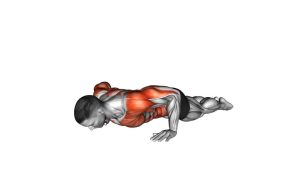
Dumbbell Push-Up Row: Proper Form, Sets, Muscles Worked & FAQ
Learn how to do the Dumbbell Push-Up Row with proper form. Discover muscles worked, setup tips, sets and reps by goal, common mistakes, FAQs, and recommended equipment.
Dumbbell Push-Up Row
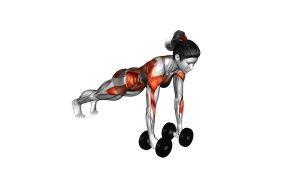
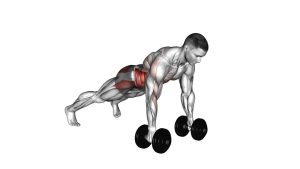
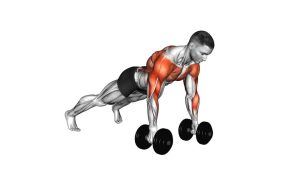
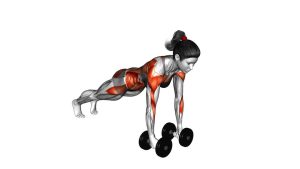
This exercise is highly effective because it combines upper-body pressing, upper-body pulling, and plank control in a single repetition cycle. The push-up phase builds chest and triceps strength, while the row phase targets the lats, rhomboids, and mid-back. At the same time, your abdominals, obliques, glutes, and spinal stabilizers work hard to keep the torso steady.
Quick Overview
| Body Part | Back |
|---|---|
| Primary Muscle | Lats, rhomboids, chest, and core stabilizers |
| Secondary Muscle | Shoulders, triceps, biceps, obliques, and glutes |
| Equipment | Two dumbbells; optional exercise mat for comfort |
| Difficulty | Intermediate |
Sets & Reps (By Goal)
- Strength: 3–5 sets × 4–6 reps per side with controlled tempo and longer rest periods
- Muscle building: 3–4 sets × 6–10 reps per side using moderate weight and strict form
- Conditioning: 2–4 sets × 8–12 reps per side with short rests and steady pacing
- Core stability focus: 2–3 sets × 5–8 clean reps per side with slower rows and pause control
Progression rule: Build quality first. Increase reps, then tempo control, and only after that move to heavier dumbbells. Every rep should look nearly identical from start to finish.
Setup / Starting Position
- Place two dumbbells on the floor about shoulder-width apart with stable handles and enough space for a plank position.
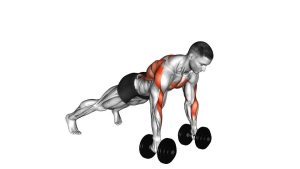
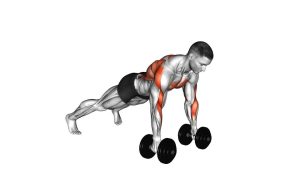
- Grip the dumbbells firmly and step your feet back into a high plank.
- Set your base wide enough so your feet give you balance during the rowing phase.
- Brace your core by tightening the abs and glutes to keep a straight line from head to heels.
- Stack the shoulders over the hands and keep the neck neutral with the eyes slightly ahead of the dumbbells.
Tip: If standard dumbbells roll too easily, use hex dumbbells for a safer and more stable base.
Execution (Step-by-Step)
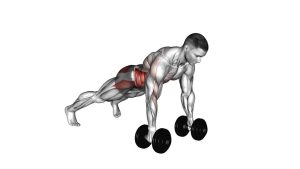
- Lower into a push-up: Bend the elbows and bring the chest toward the floor while keeping the body rigid and aligned.
- Press back to the top: Push through both hands until the elbows extend and you return to a strong high plank.
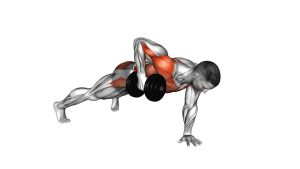
- Row one dumbbell: Shift minimal weight, then pull one dumbbell toward the lower ribcage or hip with the elbow close to the body.
- Pause briefly: Squeeze the back at the top without rotating the torso or opening the hips.
- Lower the dumbbell with control: Return it to the floor slowly and reestablish full plank stability.
- Repeat on the other side: Alternate rows after each push-up or perform both rows before starting the next repetition, depending on your programming.
Pro Tips & Common Mistakes
- Widen your feet slightly: A broader base improves balance and reduces unwanted hip rotation.
- Use lighter dumbbells than expected: The anti-rotation challenge makes this harder than standard one-arm rows.
- Keep the hips square: Avoid turning the torso as you row. Excessive rotation reduces core demand and weakens the movement quality.
- Row toward the hip, not the shoulder: This keeps the lats more engaged and improves pulling mechanics.
- Do not rush the push-up: A sloppy push-up ruins your setup for the row phase.
- Avoid sagging or piking: The body should stay long and rigid from start to finish.
- Control the lowering phase: Both the push-up descent and the dumbbell return should be deliberate, not dropped.
FAQ
What muscles does the Dumbbell Push-Up Row work most?
It primarily targets the chest, lats, upper back, shoulders, and core. The push-up emphasizes the chest, triceps, and front delts, while the row adds strong upper-back and lat involvement.
Is this the same as a renegade row?
It is closely related. A classic renegade row is usually just the alternating row from a plank. A push-up row adds the push-up component, making it more demanding and more complete as a compound exercise.
Should beginners do this exercise?
Most beginners should first master regular push-ups, plank stability, and dumbbell rows separately. Once those patterns are solid, this variation becomes much more productive and safer.
How wide should my feet be?
Generally, wider than a normal push-up stance. A wider foot position improves balance and helps prevent twisting during the row.
What if I feel my lower back during the movement?
That usually means your core is losing tension, the load is too heavy, or your hips are rotating too much. Reduce the weight, widen the stance, and focus on tighter bracing before each repetition.
Recommended Equipment
- Hex Dumbbells — stable on the floor and ideal for push-up row variations
- Adjustable Dumbbells — useful for progressive overload without needing multiple pairs
- Push-Up Handles — helpful if you want a more wrist-friendly pressing setup during accessory work
- Exercise Mat — adds comfort and protects flooring during high-plank movements
- Wrist Wraps — optional support if plank pressure bothers your wrists during higher-volume sessions
Tip: Choose dumbbells with a stable shape and secure grip. For this movement, floor stability matters almost as much as the weight itself.