Dumbbell Renegade Row: Form, Muscles Worked, Sets, Tips & FAQ
Learn the Dumbbell Renegade Row for back strength, core stability, and anti-rotation control with step-by-step form, sets, tips, FAQs, and gear.
Dumbbell Renegade Row
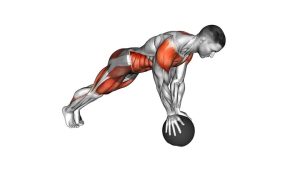
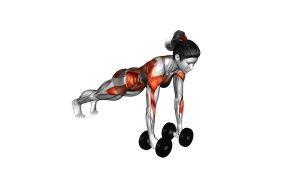
The Dumbbell Renegade Row is best performed with a controlled tempo and a strong plank position. Because one hand supports the body while the other arm rows, your core must work hard to stop the hips from rocking side to side. This makes the exercise highly effective for building upper-back strength, lat engagement, shoulder stability, and anti-rotation core control.
This movement is more demanding than a normal dumbbell row because the body has to stabilize against movement. For that reason, the best reps are smooth, strict, and balanced. A wider foot stance can make the exercise easier to control. A narrow stance makes the exercise harder because it increases the anti-rotation demand.
Quick Overview
| Body Part | Back |
|---|---|
| Primary Muscle | Latissimus dorsi, middle back, rhomboids, and core stabilizers |
| Secondary Muscle | Rear delts, traps, biceps, triceps, shoulders, obliques, glutes, and chest stabilizers |
| Equipment | Dumbbells and exercise mat optional |
| Difficulty | Intermediate because it requires plank strength, shoulder control, and anti-rotation stability |
Sets & Reps (By Goal)
- Strength and control: 3–4 sets × 6–8 reps per side with moderate-to-heavy dumbbells and full control.
- Muscle building: 3–4 sets × 8–12 reps per side using a controlled tempo and steady plank position.
- Core stability: 2–4 sets × 6–10 reps per side with lighter weight and minimal hip movement.
- Conditioning: 2–3 sets × 10–14 total alternating reps with strict form and short rest periods.
- Beginner progression: 2–3 sets × 5–8 reps per side from a wide stance or elevated surface.
Progression rule: First improve your plank stability. Then increase reps. After that, increase dumbbell load slowly. Never add weight if your hips rotate or your lower back drops.
Setup / Starting Position
- Place two dumbbells on the floor: Set them about shoulder-width apart. Use dumbbells with stable flat sides if possible.
- Grip the handles firmly: Position your hands directly under your shoulders. Keep your wrists stacked and strong.
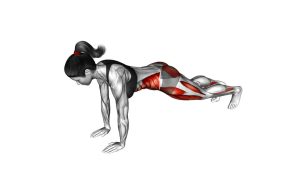
- Step back into a plank: Extend both legs behind you and place your feet wider than hip-width. A wider stance helps reduce unwanted rotation.
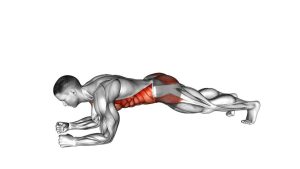
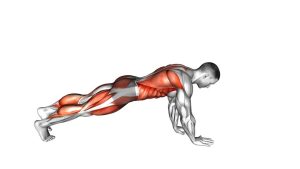
- Brace your core: Pull your ribs down, tighten your abs, and squeeze your glutes lightly. Your body should form a straight line from head to heels.
- Set your shoulders: Push gently through the supporting dumbbell and avoid sinking between your shoulder blades.
- Keep your neck neutral: Look slightly ahead of your hands. Do not drop your head or crane your neck upward.
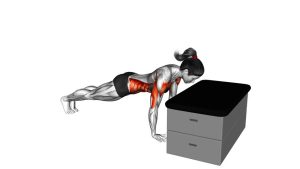
Tip: If the floor version feels too difficult, place your hands on a bench or sturdy elevated surface. This reduces the plank demand and makes the rowing pattern easier to learn.
Execution (Step-by-Step)
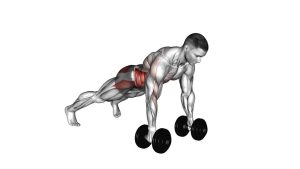
- Start in a strong plank: Keep both arms straight, both dumbbells grounded, and your feet planted firmly on the floor.
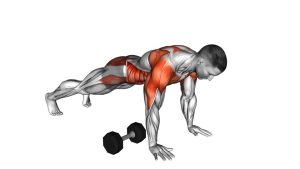
- Shift weight carefully: Press one hand into the dumbbell and transfer just enough weight to row with the opposite arm.
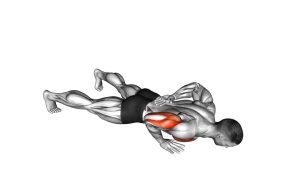
- Row the dumbbell upward: Pull one dumbbell toward your lower ribs. Keep your elbow close to your torso instead of flaring it wide.
- Control the hips: Keep your pelvis as level as possible. Avoid twisting your chest open as the dumbbell rises.
- Squeeze the back: At the top, briefly contract the lat and upper back without shrugging your shoulder toward your ear.
- Lower slowly: Return the dumbbell to the floor with control. Do not let it drop or bounce.
- Reset your plank: Re-brace your abs, level your hips, and repeat on the opposite side.
Pro Tips & Common Mistakes
Pro Tips
- Use a wide base: Wider feet make it easier to resist rotation and keep the plank stable.
- Row toward the ribs: Pulling toward the lower ribs helps target the lats more effectively.
- Push the floor away: The supporting arm should stay active so the shoulder does not collapse.
- Move slowly: A controlled row builds more strength than a fast, twisting rep.
- Keep the glutes engaged: Light glute tension helps protect the lower back and stabilize the pelvis.
- Use hex dumbbells: Flat-sided dumbbells are usually more stable than round dumbbells.
Common Mistakes
- Rotating the hips: This turns the exercise into a twist instead of an anti-rotation row.
- Sagging the lower back: This reduces core tension and can place stress on the lumbar spine.
- Using too much weight: Heavy dumbbells often cause momentum, poor plank alignment, and shoulder compensation.
- Flaring the elbow: A wide elbow path can reduce lat focus and increase shoulder stress.
- Rushing the lowering phase: Dropping the dumbbell removes control and increases instability.
- Holding the breath too long: Brace firmly, but continue breathing with short, controlled breaths.
FAQ
What muscles does the Dumbbell Renegade Row work?
The Dumbbell Renegade Row works the lats, rhomboids, traps, rear delts, biceps, shoulders, and core. It also trains the obliques, glutes, and deep stabilizers because the body must resist rotation during each single-arm row.
Is the Dumbbell Renegade Row a back exercise or a core exercise?
It is both. The rowing arm trains the back and arms, while the plank position trains the core. The main core challenge is anti-rotation, which means your abs and obliques work to stop your hips from twisting as you row.
Why do my hips twist during renegade rows?
Hip twisting usually happens because the weight is too heavy, the feet are too narrow, or the core is not braced strongly enough. Use lighter dumbbells, widen your stance, and slow down each rep until your pelvis stays level.
Can beginners do Dumbbell Renegade Rows?
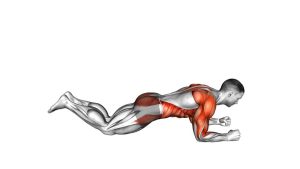
Beginners can do a modified version. Start with hands elevated on a bench, use lighter dumbbells, or perform the movement from the knees. Progress to the full plank version only when you can keep your spine neutral and hips controlled.
Should I do renegade rows fast or slow?
Slow and controlled reps are better for most goals. A slower tempo improves back engagement, core control, and shoulder stability. Fast reps often create twisting and reduce the quality of the exercise.
What dumbbells are best for renegade rows?
Hex dumbbells are usually the best choice because their flat sides reduce rolling. Choose a weight that lets you row smoothly without twisting, dropping the hips, or losing your plank position.
Recommended Equipment
- Hex Dumbbells — flat-sided dumbbells provide better floor stability for renegade rows.
- Adjustable Dumbbells — useful for progressing load while keeping your home workout setup compact.
- Thick Exercise Mat — adds comfort under the feet, knees, and hands during plank-based training.
- Workout Gloves with Wrist Support — can improve grip comfort when holding dumbbell handles on the floor.
- Push-Up Handles — useful for practicing plank stability before progressing to dumbbell rows.
Tip: Choose stable equipment first. For this exercise, control and balance matter more than heavy loading. If the dumbbells roll or feel unstable, use flat-sided dumbbells or practice the plank row pattern with lighter weight.