Dumbbell Incline One-Arm Lateral Raise: Form, Sets, Tips & FAQ
Learn how to do the Dumbbell Incline One-Arm Lateral Raise with proper form. Discover muscles worked, setup, execution steps, sets and reps by goal, common mistakes, FAQs, and recommended equipment.
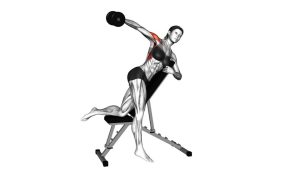
Dumbbell Incline One-Arm Lateral Raise
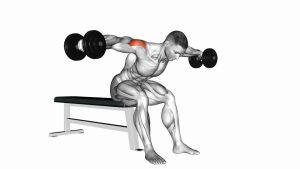
This variation is excellent for lifters who want more precise shoulder isolation, better mind-muscle connection, and fewer compensations from the traps or lower body. Because the bench supports your torso, each rep tends to feel more deliberate and more focused on the side delt. It is especially useful for hypertrophy phases, unilateral balance work, and anyone who struggles to keep standard standing lateral raises strict.
Quick Overview
| Body Part | Shoulders |
|---|---|
| Primary Muscle | Lateral deltoid (middle deltoid / side delt) |
| Secondary Muscle | Anterior deltoid, supraspinatus, rotator cuff stabilizers, upper traps (minimal if form is strict) |
| Equipment | Incline bench and one dumbbell |
| Difficulty | Beginner to Intermediate |
Sets & Reps (By Goal)
- Muscle growth: 3–4 sets × 10–15 reps per arm with 45–75 seconds rest
- Shoulder control and technique: 2–3 sets × 12–15 reps per arm with lighter weight and slower tempo
- Finisher / pump work: 2–3 sets × 15–20 reps per arm with short rest and strict form
- Balanced unilateral training: 3 sets × 8–12 reps per arm, starting with the weaker side
Progression rule: Add reps before increasing weight. Only move up when you can keep the shoulder path clean, avoid shrugging, and control the lowering phase on every rep.
Setup / Starting Position
- Set the bench: Adjust an incline bench to a moderate angle, usually around 30 to 60 degrees.
- Position your body: Lean your torso sideways into the bench so your body is supported and stable throughout the set.
- Plant your feet: Keep your lower body anchored for balance and to prevent unnecessary shifting.
- Hold the dumbbell: Use the outside arm to hold one dumbbell with a neutral grip and a slight elbow bend.
- Start under control: Let the working arm hang naturally beneath the shoulder without rounding or shrugging upward.
Tip: Set your shoulder down and away from your ear before the rep starts. A stable shoulder position makes it easier to target the side delt cleanly.
Execution (Step-by-Step)
- Brace and align: Press your torso gently into the bench, keep your core engaged, and maintain a steady body position.
- Lead with the elbow: Raise the dumbbell out to the side in a controlled arc, keeping a soft bend in the elbow.
- Lift to shoulder level: Bring the arm up until the elbow reaches about shoulder height, or slightly below if that feels cleaner on your joint.
- Pause briefly: Hold the top for a moment without shrugging or twisting your torso.
- Lower slowly: Return the dumbbell along the same path under control, maintaining tension instead of dropping the weight.
- Repeat evenly: Complete all reps on one side, then switch arms and match the same quality of movement.
Pro Tips & Common Mistakes
- Lead with the elbow, not the hand: This helps keep tension on the lateral delt instead of turning the movement into a loose arm swing.
- Keep the shoulder depressed: Avoid hiking the shoulder toward the ear, which shifts work into the traps.
- Use a manageable load: Heavy dumbbells often reduce the quality of isolation and encourage momentum.
- Do not rotate the torso: Let the bench provide support and keep your ribcage quiet.
- Control the eccentric: The lowering phase is one of the best parts of this exercise for hypertrophy.
- Stop at a clean top position: You do not need to raise the weight excessively high to make the exercise effective.
- Train both sides honestly: Start with the weaker arm and match reps, tempo, and range on the stronger side.
FAQ
What muscles does the Dumbbell Incline One-Arm Lateral Raise work?
The main target is the lateral deltoid, which helps build shoulder width. Secondary involvement comes from the anterior deltoid and smaller stabilizers around the shoulder joint.
Why use an incline bench for lateral raises?
The incline bench supports your torso, which reduces cheating and makes it easier to keep the movement strict. That usually improves side-delt isolation and makes each rep more controlled.
How high should I raise the dumbbell?
In most cases, lifting to about shoulder height is enough. Go only as high as you can without shrugging, twisting, or feeling discomfort at the shoulder joint.
Is this better than standing lateral raises?
It is not automatically better for everyone, but it is often stricter. If you tend to use momentum during standing lateral raises, this incline variation can help you feel the target muscle more clearly.
Should I do this exercise early or late in a shoulder workout?
It works well in the middle or later part of a shoulder session, especially after pressing movements. It can also be used as a focused accessory when your goal is to bring up side-delt development.
Recommended Equipment
- Adjustable Incline Weight Bench — essential for setting the torso support angle used in this exercise
- Adjustable Dumbbells — practical for progressive overload and switching shoulder-isolation weights easily
- Light Dumbbell Set — useful for strict high-rep delt work and technique-focused training
- Wrist Wraps — optional support if grip or wrist comfort limits your focus during unilateral raises
- Resistance Bands Set — useful for pairing shoulder warm-ups, activation drills, and extra lateral delt volume
Tip: This movement usually works best with lighter-to-moderate loads and very clean form. Chasing heavy weight too early often reduces the quality of the exercise.