Lying Rear Lateral Raise: Proper Form, Rear Delt Tips, Sets & FAQ
Learn how to do the Lying Rear Lateral Raise with proper form to target the rear delts, improve shoulder balance, and reduce momentum. Includes setup, execution, sets by goal, mistakes, FAQ, and recommended equipment.
Lying Rear Lateral Raise
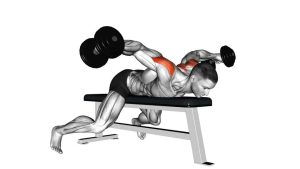
This exercise is ideal for lifters who want cleaner rear-delt work, better shoulder balance, and more consistent hypertrophy stimulus. Because your chest is supported, the movement becomes more honest: lighter weights usually work better, form becomes easier to monitor, and the rear shoulders have to do more of the work. Focus on lifting with control, pausing briefly near the top, and lowering slowly.
Quick Overview
| Body Part | Rear Shoulders |
|---|---|
| Primary Muscle | Posterior deltoids (rear delts) |
| Secondary Muscle | Rhomboids, middle traps, rotator cuff stabilizers |
| Equipment | Dumbbells and a flat or incline bench |
| Difficulty | Beginner to Intermediate |
Sets & Reps (By Goal)
- Muscle growth: 3–4 sets × 10–15 reps with controlled tempo and 45–75 sec rest
- Technique practice: 2–3 sets × 12–15 reps with light dumbbells and strict form
- Shoulder balance / accessory work: 2–4 sets × 12–20 reps after pressing or upper-body training
- Light pump finisher: 2–3 sets × 15–20 reps with slow lowering and short rest
Progression rule: Add reps before increasing load. Rear-delt raises respond best to control, clean mechanics, and steady tension rather than heavy cheating.
Setup / Starting Position
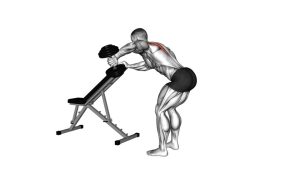
- Set the bench: Use a flat bench or a low incline bench depending on comfort and arm path preference.
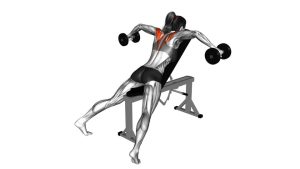
- Lie chest-supported: Position your chest on the bench so your torso stays stable throughout the set.
- Hold the dumbbells neutrally: Let the arms hang down toward the floor with a slight bend in the elbows.
- Pack the shoulders lightly: Keep the neck neutral and avoid shrugging before the lift starts.
- Brace gently: Keep your core engaged and lower body still to prevent unnecessary movement.
Tip: Start with lighter dumbbells than you expect. Rear-delt isolation usually looks and feels better with less weight.
Execution (Step-by-Step)
- Begin from the hang: Let the dumbbells hang under the shoulders while keeping a soft elbow bend.
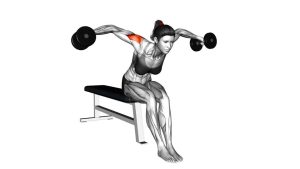
- Raise out wide: Lift both arms out to the sides in a controlled arc, aiming to form a broad “T” position.
- Lead with the elbows: Think about driving the elbows outward rather than flicking the hands upward.
- Pause near the top: Stop around shoulder height or slightly below, depending on your mobility and control.
- Lower slowly: Bring the dumbbells back down under control without dropping or bouncing into the next rep.
Pro Tips & Common Mistakes
- Use lighter weight than your ego wants: Rear delts are small muscles and respond well to strict reps.
- Keep the chest supported: Don’t turn the movement into a standing swing or full-body heave.
- Maintain soft elbows: A slight bend protects the joint and keeps tension where you want it.
- Avoid shrugging: If the shoulders creep toward the ears, the traps are taking over.
- Don’t lift too high: Going much above shoulder level often shifts emphasis away from the rear delts.
- Control the eccentric: The lowering phase is where a lot of effective rear-delt tension happens.
- Keep the neck neutral: Don’t crane the head up while lying on the bench.
FAQ
What muscles does the Lying Rear Lateral Raise work most?
It primarily targets the posterior deltoids. The rhomboids, middle traps, and smaller stabilizers also assist, but the rear delts should feel like the main drivers.
Is this better than a standing rear-delt raise?
It can be better for strict isolation because the bench support reduces momentum. Standing versions are useful too, but lying variations often make it easier to keep the reps clean.
How heavy should I go?
Usually lighter than you would use for rows or presses. Choose a weight that lets you raise, pause, and lower the dumbbells with control for your full target rep range.
Should I feel this in my traps?
A little upper-back involvement is normal, but the movement should not feel trap-dominant. If it does, reduce the weight, stop shrugging, and focus on a wide, smooth arm path.
Where should I place this exercise in a workout?
It works well after pressing movements, during shoulder sessions, or as an upper-body accessory. Many lifters place it in the middle or near the end of the workout for higher-rep rear-delt volume.
Recommended Equipment (Optional)
- Adjustable Dumbbells — practical for fine load changes when training smaller shoulder muscles
- Adjustable Weight Bench — supports flat or incline chest-supported rear-delt work
- Light Dumbbell Set — ideal for strict rear-delt raises, warm-ups, and higher-rep shoulder isolation
- Resistance Bands Set — useful for pairing with face pulls, pull-aparts, and shoulder activation work
- Lifting Straps — optional for lifters whose grip fatigues before their rear delts on longer sessions
Tip: For this movement, a solid bench and light-to-moderate dumbbells usually matter more than heavy equipment.