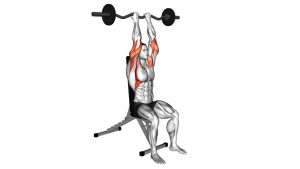
Dumbbell Seated Shoulder Press (Parallel Grip): Form, Sets, Tips & FAQ
Learn how to perform the Dumbbell Seated Shoulder Press with a parallel grip for stronger shoulders and safer pressing mechanics. Includes form cues, sets and reps by goal, common mistakes, FAQs, and recommended equipment.
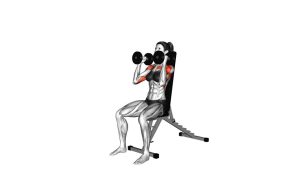
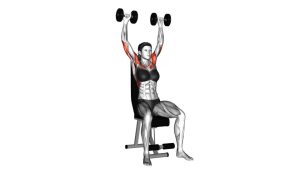
Dumbbell Seated Shoulder Press (Parallel Grip)
This exercise is ideal for lifters who want to build strong, well-rounded shoulders with a stable seated setup. The bench support helps reduce unnecessary torso movement, making it easier to focus on clean pressing mechanics. Because the grip stays neutral, many people find this variation more comfortable than a traditional palms-forward dumbbell press, especially during moderate-to-heavy hypertrophy work.
Quick Overview
| Body Part | Shoulders |
|---|---|
| Primary Muscle | Anterior deltoids (front shoulders) |
| Secondary Muscle | Lateral deltoids, triceps, upper chest (assisting) |
| Equipment | Adjustable bench or upright bench, dumbbells |
| Difficulty | Beginner to Intermediate |
Sets & Reps (By Goal)
- Muscle growth: 3-4 sets × 8-12 reps with 60-90 seconds rest
- Strength focus: 4-5 sets × 4-6 reps with 90-150 seconds rest
- Technique practice: 2-3 sets × 10-15 reps with light-to-moderate load
- Shoulder accessory work: 2-4 sets × 8-10 reps after your main pressing movement
Progression rule: Add reps before adding load. Once you can complete all prescribed reps with stable form and no excessive back arch, increase the dumbbells in small increments.
Setup / Starting Position
- Set the bench upright: Use a high incline or near-vertical bench with firm back support.
- Sit tall: Keep your feet flat on the floor and brace your core before lifting the dumbbells into position.
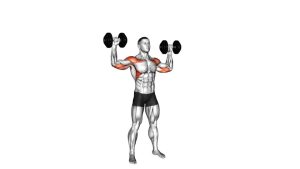
- Start at shoulder level: Hold the dumbbells beside your shoulders with your palms facing each other.
- Position the elbows slightly forward: Avoid flaring the elbows straight out to the sides.
- Stack the wrists: Keep the wrists neutral so the dumbbells stay directly over your forearms.
Tip: A neutral grip often feels smoother and more shoulder-friendly because it places the upper arm in a more natural pressing path.
Execution (Step-by-Step)
- Brace and breathe: Inhale, tighten your core, and keep your upper back gently pressed into the bench.
- Press upward: Drive the dumbbells overhead in a controlled path while keeping the palms facing inward.
- Finish above the shoulders: Bring the weights close together near the top without banging them together.
- Avoid overextending: Reach full shoulder and elbow extension without aggressively shrugging or forcing a lockout.
- Lower with control: Bring the dumbbells back to shoulder level slowly, keeping the elbows under the wrists.
- Repeat smoothly: Maintain the same range of motion and tempo on every rep.
Pro Tips & Common Mistakes
- Keep the ribcage down: Don’t turn the press into a standing incline press by over-arching your back.
- Use a controlled bottom position: Lower until the dumbbells reach shoulder level, not far below it if shoulder mobility is limited.
- Don’t flare too wide: A slight forward elbow angle usually feels stronger and safer than a straight-out position.
- Press through the palms: Keep a firm grip and avoid letting the wrists bend backward.
- Control the eccentric: The lowering phase builds stability and muscle tension, so don’t let the weights drop.
- Don’t chase momentum: A clean seated press should look smooth, not explosive and loose.
- Match both sides: Press both dumbbells evenly so one arm does not lock out much earlier than the other.
FAQ
What muscles does the seated parallel-grip shoulder press work?
It mainly targets the anterior deltoids, while the lateral delts and triceps assist throughout the press. The upper chest also helps slightly, especially at the bottom.
Is a neutral grip better for the shoulders?
For many lifters, yes. A neutral grip often feels more natural because the elbows stay slightly forward, which can reduce discomfort compared with a wide palms-forward pressing angle.
How low should I lower the dumbbells?
Lower them to about shoulder level while keeping your wrists stacked and shoulders stable. Go deeper only if you can do it without pain, excessive elbow flare, or loss of posture.
Should I lock out fully at the top?
You can reach a strong top position, but avoid jamming the shoulders upward or overextending the elbows. Think of a clean, controlled finish rather than a harsh lockout.
Can beginners use this exercise?
Yes. It is often a great beginner-friendly overhead press because the seated setup adds stability and the neutral grip is usually easy to learn. Start light and master the movement path first.
Recommended Equipment
- Adjustable Dumbbell Set — ideal for progressive overload without needing a full dumbbell rack
- Adjustable Workout Bench — gives you the back support needed for stable seated pressing
- Wrist Wraps for Weightlifting — useful if heavy presses make it hard to keep a neutral wrist position
- Resistance Bands Set — excellent for warm-ups, shoulder activation, and extra delt volume
- Dumbbell Spotter Hooks — helpful for safely getting heavier dumbbells into the starting position
Choose equipment that improves setup quality and control. For this exercise, stable seating, manageable load jumps, and good wrist positioning matter more than fancy accessories.