Dumbbell Standing Front Raise Above Head: Form, Sets, Tips & FAQ
Learn how to perform the Dumbbell Standing Front Raise Above Head with proper form. Discover muscles worked, setup, step-by-step execution, sets and reps by goal, common mistakes, FAQs, and recommended equipment.
Dumbbell Standing Front Raise Above Head
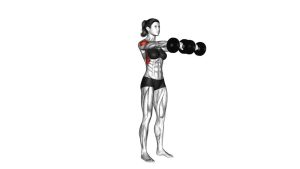
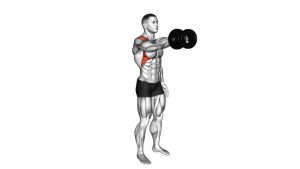
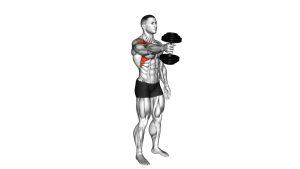
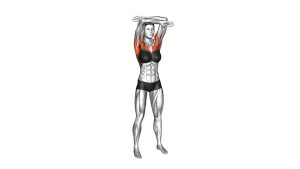
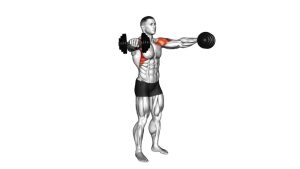
This variation is best performed with moderate loads and excellent control. The goal is not to heave the dumbbells upward, but to raise them through a clean forward arc and finish overhead without losing posture. You should feel the front of the shoulders working hard, while the core stays braced and the ribs remain down. If the lower back arches or momentum takes over, the weight is too heavy.
Quick Overview
| Body Part | Front Shoulders |
|---|---|
| Primary Muscle | Anterior deltoids |
| Secondary Muscle | Lateral deltoids, upper traps, serratus anterior, upper chest, core stabilizers |
| Equipment | Pair of dumbbells |
| Difficulty | Beginner to Intermediate |
Sets & Reps (By Goal)
- Muscle building: 3–4 sets × 8–12 reps with controlled tempo and 60–90 sec rest
- Shoulder endurance: 2–4 sets × 12–15 reps using lighter dumbbells and strict form
- Technique practice: 2–3 sets × 8–10 reps focusing on a smooth path and stable overhead finish
- Warm-up / activation: 1–2 sets × 10–12 reps with very light dumbbells before pressing work
Progression rule: Increase reps before increasing load. Only move up in weight when you can raise and lower every rep without torso sway, shoulder shrugging, or lumbar extension.
Setup / Starting Position
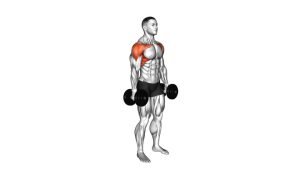
- Stand tall: Place your feet about hip-width to shoulder-width apart with knees softly unlocked.
- Hold the dumbbells in front of the thighs: Arms are extended down with a slight elbow bend and palms facing the body.
- Brace the midsection: Tighten your abs and keep the ribs stacked over the pelvis.
- Set the shoulders: Keep the shoulders down and controlled, not shrugged up toward the ears.
- Start from a dead stop: Let the dumbbells hang still before each rep instead of using momentum.
Tip: Choose a weight you can lift smoothly through the full path. This exercise becomes sloppy very quickly when the dumbbells are too heavy.
Execution (Step-by-Step)
- Raise the dumbbells forward: Lift both dumbbells together in front of your body with control.
- Pass shoulder height smoothly: Continue the movement upward rather than stopping at eye or shoulder level.
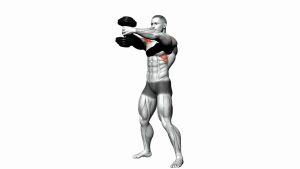
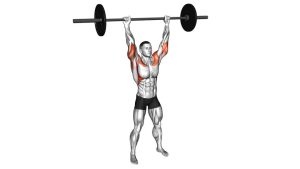
- Finish overhead: Bring the dumbbells above the head with arms extended and posture tall.
- Pause briefly: Hold the top for a short moment while keeping the core tight and the lower back neutral.
- Lower with control: Reverse the same path from overhead to shoulder height, then back down to the thighs.
- Reset before repeating: Avoid bouncing into the next rep. Let the shoulders stay organized and start again cleanly.
Pro Tips & Common Mistakes
- Lead with the shoulders, not momentum: Start each rep under control without swinging from the hips.
- Keep a soft elbow bend: Locked elbows can make the movement feel stiff and less natural.
- Do not overarch the lower back: Rib flare usually means the weight is too heavy or the core is not braced.
- Control the lowering phase: The eccentric portion builds discipline and shoulder tension.
- Keep the neck relaxed: Avoid shrugging the traps too early as the dumbbells pass shoulder height.
- Use lighter weights than your press: This is still a raise pattern, even though it finishes overhead.
- Stay in the pain-free range: If overhead motion causes shoulder discomfort, shorten the range slightly and reassess technique.
FAQ
What muscles does the dumbbell standing front raise above head work?
The main target is the anterior deltoid. Secondary contributors include the lateral delts, upper traps, serratus anterior, and core stabilizers that help keep the torso steady.
Is this better than a regular front raise?
It is not necessarily better, but it is different. This version uses a longer range of motion and adds more overhead control, which can make it more demanding on the shoulders and upper-body stabilizers.
Should I go heavy on this exercise?
Usually no. This movement responds best to strict technique and moderate resistance. Going too heavy often leads to torso swing, trap dominance, and lower-back compensation.
Can beginners do this exercise?
Yes, as long as they use light dumbbells and focus on control. Beginners who struggle with the overhead portion can first master the standard front raise before extending the range higher.
What is the biggest form mistake to avoid?
The biggest mistake is using momentum. Once the body starts rocking or the lower back arches, the shoulders no longer do the work as intended.
Recommended Equipment
- Adjustable Dumbbells — ideal for progressing front raises gradually without taking up much space
- Light Neoprene Dumbbells — great for beginners, high-rep shoulder work, and cleaner form practice
- Dumbbell Set with Rack — useful if you want multiple weight options for raises, presses, and accessory work
- Resistance Loop Bands — helpful for shoulder warm-ups, activation drills, and mobility preparation
- Resistance Band Set with Handles — useful for adding shoulder-friendly accessory work such as band front raises and presses
Tip: For this exercise, lighter and moderate loads usually produce better shoulder tension than overly heavy dumbbells.