Dumbbell Standing Front-to-Lateral Raise: Form, Muscles Worked, Sets & Tips
Learn how to do the Dumbbell Standing Front-to-Lateral Raise with proper form. Discover muscles worked, setup, step-by-step execution, sets and reps by goal, common mistakes, FAQs, and recommended equipment.
Dumbbell Standing Front-to-Lateral Raise
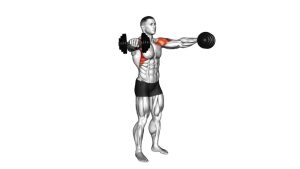
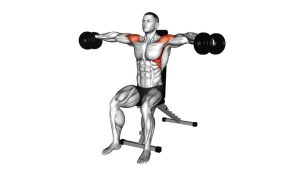
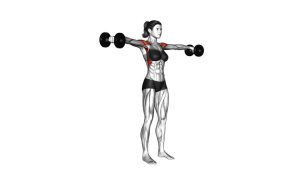
This exercise emphasizes strict shoulder mechanics and works best with light-to-moderate dumbbells. The front portion of the rep targets the anterior delts, while the outward transition and side position increase tension on the lateral delts. Because the weights stay elevated during the change in direction, the exercise can create a strong burn without needing heavy loading.
Quick Overview
| Body Part | Shoulders |
|---|---|
| Primary Muscle | Anterior deltoids and lateral deltoids |
| Secondary Muscle | Upper traps, supraspinatus, serratus anterior, and core stabilizers |
| Equipment | Pair of dumbbells |
| Difficulty | Beginner to Intermediate |
Sets & Reps (By Goal)
- Muscle growth: 3-4 sets × 10-15 reps with controlled tempo and 45-75 seconds rest
- Shoulder endurance/pump: 2-4 sets × 12-20 reps using light dumbbells and short rest
- Technique practice: 2-3 sets × 8-10 reps with very light weight and perfect control
- Warm-up activation: 1-2 sets × 10-12 reps with very light dumbbells before pressing or delt work
Progression rule: Increase reps first, then add small amounts of weight only when you can keep the front raise, transition, and lowering phase equally smooth and controlled.
Setup / Starting Position
- Stand tall: Place your feet about hip- to shoulder-width apart and soften the knees slightly.
- Hold the dumbbells at your sides: Use a neutral grip with palms facing inward.
- Brace the torso: Keep your ribs stacked over your hips and tighten your core to prevent leaning back.
- Relax the neck and traps: Let the shoulders stay down rather than shrugging up.
- Set a slight elbow bend: Keep it consistent throughout the full rep.
Tip: Use lighter dumbbells than you would for standard front raises or lateral raises. The combined path increases the challenge quickly.
Execution (Step-by-Step)
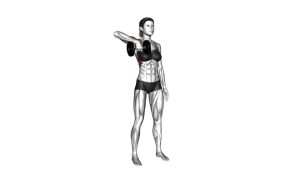
- Raise forward: Lift both dumbbells in front of your body until they reach about shoulder height.
- Pause briefly: Keep the elbows softly bent and avoid swinging or leaning backward.
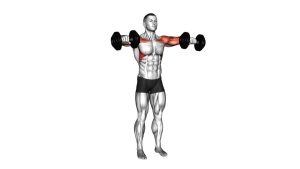
- Arc outward: From the front raise position, move the dumbbells outward in a controlled semicircle until your arms are extended to the sides.
- Reach the lateral position: Finish with the arms roughly in a “T” shape at shoulder height, still under control.
- Lower smoothly: Bring the dumbbells back down without dropping them or using momentum.
- Repeat evenly: Keep every rep controlled, matching the same range and tempo from start to finish.
Pro Tips & Common Mistakes
- Lead with the shoulders: Think about lifting through the delts instead of throwing the dumbbells upward.
- Stay at shoulder height: You do not need to raise higher to make the exercise more effective.
- Control the arc: The transition from front raise to lateral raise should be smooth, not rushed.
- Keep the core tight: Avoid leaning back or using hip drive to start the movement.
- Do not shrug: Elevated traps reduce delt focus and often signal too much load.
- Use a light load: This exercise becomes difficult quickly because tension stays on the shoulders for the whole path.
- Lower under control: The eccentric phase is valuable for shoulder hypertrophy and joint control.
FAQ
What muscles does the Dumbbell Standing Front-to-Lateral Raise work most?
It mainly targets the anterior deltoids during the front raise portion and the lateral deltoids during the outward arc and side position. The traps and core help stabilize.
Should I use heavy or light dumbbells?
Start with light dumbbells. Because this move combines two raise patterns in one repetition, it creates a lot of tension even with modest weight.
Can I do this exercise for shoulder hypertrophy?
Yes. It works well as an accessory movement for delt hypertrophy, especially after presses or as part of a shoulder-focused workout.
What is the most common mistake?
The most common mistake is using too much weight and turning the rep into a swing. That reduces shoulder tension and usually causes shrugging or torso movement.
Where should I place this in my workout?
Most lifters do it in the middle or later part of an upper-body or shoulder workout, after major compound pressing exercises.
Recommended Equipment
- Adjustable Dumbbells — ideal for progressing the movement with small load increases
- Light Neoprene Dumbbell Set — useful for strict shoulder isolation work and high-rep control sets
- Resistance Bands Set — a good add-on for shoulder warm-ups, lateral delt activation, and mobility work
- Exercise Mat — helpful for creating a stable training area during home workouts
- Full-Length Workout Mirror — helps you monitor shoulder height, symmetry, and torso control during reps
Choose equipment that helps you maintain strict form. For this exercise, controlled motion and repeatable mechanics matter more than heavy loading.