Kettlebell Arnold Press: Proper Form, Sets, Muscles Worked & FAQ
Learn how to do the Kettlebell Arnold Press with proper form. Discover muscles worked, setup, execution tips, sets and reps by goal, common mistakes, FAQs, and recommended equipment.
Kettlebell Arnold Press
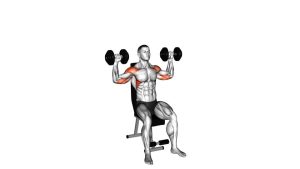
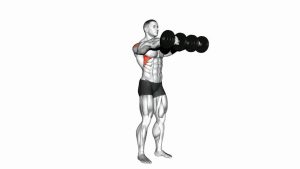
The kettlebell version of the Arnold press feels slightly different from the dumbbell version because the load sits below the handle, which increases the demand on shoulder stability and grip control. The movement should be smooth from start to finish: elbows begin in front of the torso, the wrists rotate as the bells rise, and the arms finish overhead without excessive leaning or lower-back arching. Keep the core braced, move with intention, and focus on making every rep look the same.
Quick Overview
| Body Part | Shoulders |
|---|---|
| Primary Muscle | Anterior deltoids |
| Secondary Muscle | Lateral deltoids, triceps, upper traps, rotator cuff, core stabilizers |
| Equipment | Two kettlebells |
| Difficulty | Intermediate |
Sets & Reps (By Goal)
- Muscle growth: 3-4 sets × 8-12 reps with controlled tempo and 60-90 seconds rest
- Strength development: 4-5 sets × 4-6 reps using heavier kettlebells and 90-150 seconds rest
- Shoulder endurance: 2-4 sets × 12-15 reps with lighter load and steady form
- Accessory pressing work: 3 sets × 8-10 reps after your main overhead or chest pressing
Progression rule: Increase weight only after you can complete all target reps with a clean rotation, stable lockout, and no excessive back arch.
Setup / Starting Position
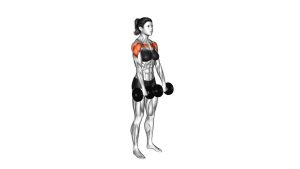
- Stand tall: Position your feet about hip-width apart and brace your core.
- Clean the kettlebells up: Bring one kettlebell into each rack position at shoulder height.
- Set the elbows forward: Keep your elbows slightly in front of your torso rather than flared wide.
- Start with palms facing inward: Your hands should begin in a semi-supinated position near the front of the shoulders.
- Keep the chest lifted: Maintain a neutral spine, ribs down, and shoulders packed without shrugging.
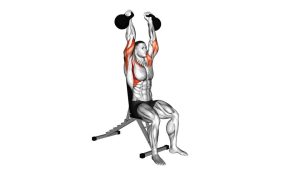
Tip: If standing feels unstable, perform the movement seated on an upright bench with back support while you learn the pattern.
Execution (Step-by-Step)
- Brace before pressing: Tighten the core and squeeze the glutes lightly to stabilize the torso.
- Begin the press smoothly: Drive the kettlebells upward from shoulder height while keeping the elbows under control.
- Rotate during the ascent: As the bells rise, rotate your hands outward so the palms gradually move from facing inward to facing forward.
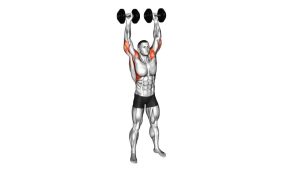
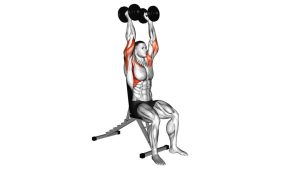
- Reach full overhead lockout: Finish with the arms extended overhead and the kettlebells stacked over your shoulders and hips.
- Pause briefly at the top: Hold for a moment without shrugging or losing your rib position.
- Lower with control: Reverse the motion slowly, rotating the hands back inward as the kettlebells descend.
- Return to the start: Finish back in the front-loaded position at shoulder level and repeat.
Pro Tips & Common Mistakes
- Rotate gradually: Do not rush the wrist turn. The rotation should blend naturally into the press.
- Keep the elbows slightly forward at the bottom: This improves shoulder comfort and matches the intended Arnold press path.
- Do not overarch the back: Keep the ribs down and avoid turning the press into a standing incline movement.
- Use full but controlled range: Press high, but stay in a pain-free path with stable shoulders.
- Avoid bouncing at the bottom: Reset briefly in the start position before initiating the next rep.
- Choose the right load: A weight that is too heavy usually ruins the rotation and shifts stress away from the delts.
- Control the negative: The lowering phase builds stability and increases time under tension, so do not let the kettlebells drop.
FAQ
What muscles does the kettlebell Arnold press work?
It mainly targets the anterior deltoids, while also training the lateral deltoids, triceps, and smaller shoulder stabilizers. Your core also works to keep the torso stable.
Is the kettlebell Arnold press better than a regular shoulder press?
It is not always better, but it offers a different stimulus. The added rotation increases range of motion and can create more tension across the front and side delts. A standard press is simpler for pure strength progression, while the Arnold press is excellent for shoulder development and control.
Can beginners do this exercise?
Yes, but many beginners do better starting with lighter kettlebells or learning the movement first with dumbbells. The kettlebell version requires more stability and coordination.
Should I do it standing or seated?
Standing trains more total-body stability and core control. Seated can make it easier to focus on the shoulder movement itself. Both are useful when performed with good form.
Why do my shoulders feel uncomfortable during the rotation?
Discomfort often comes from using too much weight, rotating too aggressively, or pressing through a range your shoulders cannot control yet. Reduce the load, move more smoothly, and stop if you feel sharp pain or pinching.
Recommended Equipment
- Cast Iron Kettlebells — the core tool for performing the exercise with stable grip and balanced loading
- Adjustable Kettlebell — useful for progressive overload without needing multiple separate bells
- Wrist Wraps — helpful if your wrists feel fatigued during higher-volume pressing sessions
- Adjustable Workout Bench — allows you to perform the movement seated when you want extra support and control
- Resistance Bands Set — great for warming up the shoulders and adding rotator cuff activation before pressing
Tip: Prioritize kettlebells with comfortable handles and consistent balance. Good equipment makes pressing mechanics smoother and safer.