Push Press: Proper Form, Sets, Benefits, Mistakes & FAQ
Learn how to perform the Push Press with proper form to build explosive shoulder strength and full-body power. Includes setup, step-by-step execution, sets and reps by goal, common mistakes, FAQs, and recommended equipment.
Push Press
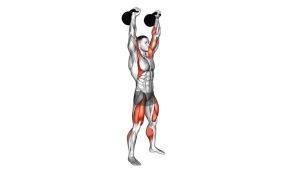
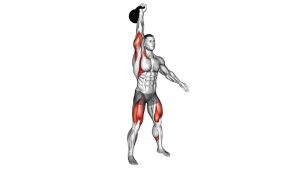
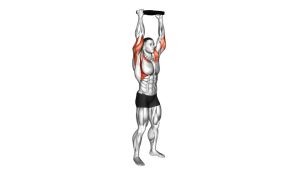
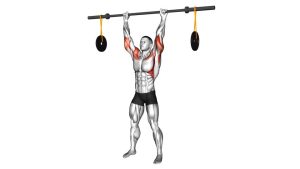
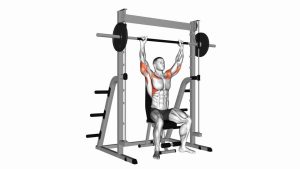
This exercise rewards crisp timing and efficient bar path. The dip should be short and controlled, the drive should be explosive, and the press should feel like a seamless continuation of the leg power. Done correctly, the Push Press trains the front delts, triceps, upper chest, core, and lower body while also improving overhead strength and athletic force production.
Quick Overview
| Body Part | Shoulders |
|---|---|
| Primary Muscle | Anterior deltoids |
| Secondary Muscle | Triceps, upper chest, traps, quads, glutes, and core stabilizers |
| Equipment | Barbell and weight plates |
| Difficulty | Intermediate |
Sets & Reps (By Goal)
- Strength: 4-6 sets × 3-5 reps with 2-3 minutes rest
- Power development: 3-5 sets × 2-4 reps with fast, explosive intent and 2-3 minutes rest
- Muscle building: 3-4 sets × 6-8 reps with 90-120 seconds rest
- Athletic conditioning: 3-4 sets × 5-6 reps with controlled technique and moderate load
Progression rule: Add load only when you can keep the dip vertical, transfer leg drive smoothly, and lock the bar out overhead without pressing around your face or overextending your lower back.
Setup / Starting Position
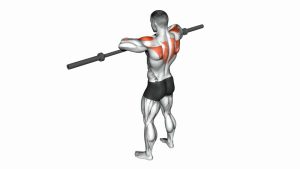
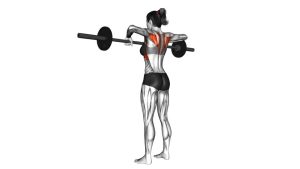
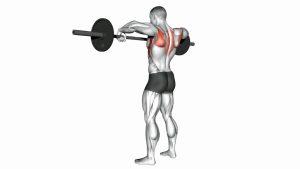
- Rack the bar correctly: Hold the bar across the front of the shoulders and upper chest with hands just outside shoulder width.
- Set your stance: Place your feet about shoulder-width apart with the entire foot planted evenly on the floor.
- Brace the torso: Lift the chest, tighten the core, and keep the spine neutral before starting the dip.
- Position the elbows: Keep them slightly forward so the bar stays supported and close to the body.
- Start tall: Stand fully upright before each rep and keep your eyes forward.
Tip: Think of the start position as a stable front-rack base. The better your setup, the easier it is to transfer force straight into the bar.
Execution (Step-by-Step)
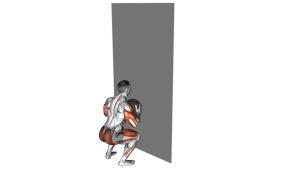
- Dip straight down: Bend the knees slightly while keeping the torso upright and the heels grounded.
- Drive explosively: Reverse the dip immediately by extending the knees and hips powerfully to launch the bar upward.
- Press through the momentum: As the bar leaves the shoulders, continue pressing with the arms to guide it overhead.
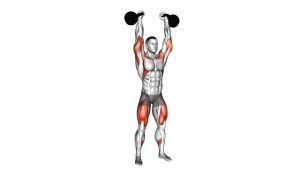
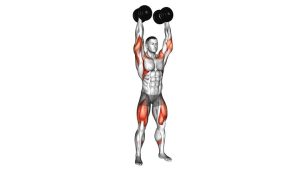
- Reach full lockout: Finish with elbows extended and the bar stacked over the shoulders, hips, and mid-foot.
- Lower under control: Bring the bar back to the shoulders smoothly, reset your posture, and prepare for the next rep.
Pro Tips & Common Mistakes
- Keep the dip shallow: A Push Press uses a quick dip, not a deep squat.
- Drive first, then press: Let the legs move the bar before the shoulders take over.
- Stay vertical: Leaning forward during the dip makes the bar path less efficient.
- Do not overarch the lower back: Brace the core and keep the ribcage under control.
- Press in a straight path: The bar should travel close to the face and finish directly overhead.
- Control the descent: Dropping the bar carelessly back to the shoulders can disrupt rhythm and strain the rack position.
- Use leg drive, not a rebend: This movement is a Push Press, not a Push Jerk. Finish by pressing to lockout rather than dipping under the bar.
FAQ
What is the difference between a Push Press and a Strict Press?
The Push Press uses a small knee dip and explosive leg drive to help move the bar overhead, while the Strict Press relies almost entirely on upper-body strength without lower-body assistance.
Is the Push Press good for building shoulders?
Yes. It overloads the front delts and triceps while also allowing you to handle more weight than a strict overhead press, which can be useful for strength and size when programmed correctly.
Should the Push Press be done heavy or explosive?
It can be used for both. Lighter loads with maximum speed work well for power, while moderate-to-heavy loads can improve overhead strength and pressing performance.
Why does the bar drift forward during my Push Press?
This usually happens when the torso leans forward, the elbows drop too much, or the drive is not directed straight up. Focus on a vertical dip and keep the bar close to the body.
Who should be cautious with the Push Press?
Anyone with shoulder pain, limited overhead mobility, wrist discomfort, or lower-back instability should be cautious. Master lighter overhead pressing variations first before pushing this lift hard.
Recommended Equipment
- Olympic Barbell — the main tool for performing Push Press variations with progressive loading
- Bumper Plates Set — durable plates that work well for strength training and repeated barbell work
- Adjustable Squat Stand / Rack — useful for setting the bar at the right rack height before each set
- Weightlifting Wrist Wraps — helpful for extra wrist support during heavier overhead pressing sessions
- Weightlifting Belt — can improve bracing and torso stability when working with challenging loads
Choose equipment that matches your training level, available space, and lifting goals. For most lifters, a solid barbell, plates, and a safe rack setup provide the biggest long-term value.