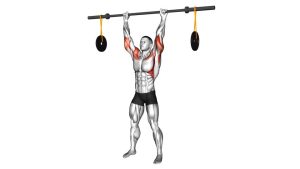
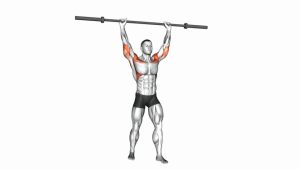
Trap Bar Overhead Press: Proper Form, Muscles Worked, Sets, Tips & FAQ
Learn how to perform the Trap Bar Overhead Press with proper form. Discover muscles worked, setup, execution steps, sets and reps by goal, common mistakes, FAQs, and recommended equipment.
Trap Bar Overhead Press
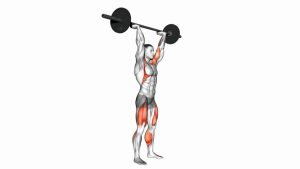
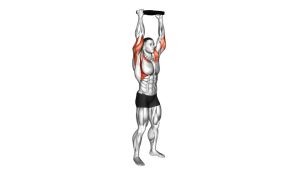
This exercise blends shoulder strength, upper-body stability, and core control. Because the trap bar uses a neutral grip, many lifters find it easier to keep the elbows in a safer pressing path and reduce stress on the wrists and shoulders. The movement should stay strict and controlled, with no leg drive, excessive back arch, or bouncing at the bottom.
Quick Overview
| Body Part | Shoulders |
|---|---|
| Primary Muscle | Anterior deltoids and lateral deltoids |
| Secondary Muscle | Triceps, upper chest, upper traps, core stabilizers |
| Equipment | Trap bar (hex bar), weight plates, collars |
| Difficulty | Intermediate |
Sets & Reps (By Goal)
- Strength: 4–5 sets × 3–6 reps, resting 2–3 minutes between sets
- Muscle growth: 3–4 sets × 6–10 reps, resting 60–90 seconds
- Technique practice: 2–4 sets × 5–8 reps with light-to-moderate load and perfect control
- Shoulder endurance: 2–3 sets × 10–15 reps with lighter weight and steady tempo
Progression rule: Increase load only when you can maintain a strict torso position, a smooth lockout, and a controlled lowering phase on every rep.
Setup / Starting Position
- Load the trap bar evenly: Make sure both sides are balanced and secured with collars.
- Stand tall: Place your feet about shoulder-width apart and keep your weight balanced through the whole foot.
- Bring the bar to shoulder level: Grip the neutral handles firmly with palms facing each other.
- Set your posture: Brace your core, keep your chest up, and avoid flaring the ribs.
- Align the elbows: Keep them under or slightly in front of the handles for a strong pressing path.
Tip: Before pressing, squeeze the handles hard and create full-body tension so the bar feels stable from the first rep.
Execution (Step-by-Step)
- Start from shoulder height: Hold the trap bar with a neutral grip and maintain a tall, braced torso.
- Press straight up: Drive the bar overhead in a controlled vertical line while extending the elbows.
- Move the head slightly back if needed: Let the bar travel cleanly without forcing it around the face.
- Lock out overhead: Finish with the arms extended, shoulders engaged, and the bar stacked over the mid-foot.
- Lower with control: Bring the bar back down to shoulder level without dropping or losing posture.
- Repeat smoothly: Keep each rep strict and avoid using leg drive or lower-back momentum.
Pro Tips & Common Mistakes
- Keep the ribs down: Don’t turn the press into a standing backbend.
- Use a vertical press path: The bar should move up efficiently, not out in front of you.
- Grip hard: A strong grip improves stability through the shoulders and arms.
- Don’t rush the lowering phase: Controlled eccentrics help build better pressing mechanics.
- Avoid using leg drive: This is a strict overhead press, not a push press.
- Watch elbow position: Too much flare can reduce efficiency and irritate the shoulders.
- Stay balanced: Don’t rock onto the toes or let the trap bar pull you out of alignment.
FAQ
What muscles does the Trap Bar Overhead Press work?
It mainly targets the front and side deltoids, while also training the triceps, upper chest, and core stabilizers.
Is the Trap Bar Overhead Press better than a barbell overhead press?
Not necessarily better for everyone, but many lifters find the neutral grip more comfortable on the shoulders and wrists. It can be an excellent alternative if a straight bar feels awkward.
Can beginners do this exercise?
Beginners can learn it, but it is usually better once basic pressing mechanics and core stability are already in place. Start light and focus on control before increasing the load.
Should I use leg drive during the press?
No. In a standard Trap Bar Overhead Press, the goal is a strict press. If you bend the knees and drive upward, that becomes more like a push press variation.
Why does this exercise feel more comfortable on my shoulders?
The trap bar allows a neutral hand position, which can make the pressing path feel more natural and reduce stress on the shoulder joint compared with some straight-bar setups.
Recommended Equipment
- Olympic Trap Bar / Hex Bar — the main specialty bar used for this pressing variation
- Olympic Weight Plates — needed to load the trap bar progressively for strength and hypertrophy work
- Barbell Collars / Clamps — helps keep plates secure and stable during pressing
- Weightlifting Belt — useful for bracing support during heavier sets
- Fractional Weight Plates — ideal for making small, steady progress on overhead pressing strength
Tip: Small load increases and stable equipment setup matter a lot on overhead lifts, especially when training strict pressing form.