Dumbbell Front Raise : Proper Form, Sets, Tips & FAQ
Learn how to perform the Dumbbell Front Raise with proper form to build stronger front delts and improve shoulder control. Includes setup, execution, sets and reps by goal, mistakes to avoid, FAQ, and recommended equipment.
Dumbbell Front Raise
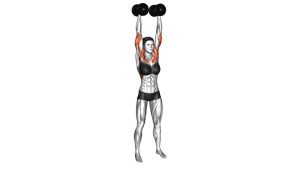
This movement works best with light-to-moderate loads, a controlled tempo, and a stable torso. You should feel the front of the shoulders doing most of the work while the core stays braced and the traps stay quiet. The dumbbells should travel in front of the body in a clean arc, with the elbows slightly bent and the wrists neutral.
Quick Overview
| Body Part | Front Shoulders |
|---|---|
| Primary Muscle | Anterior deltoids (front delts) |
| Secondary Muscle | Lateral deltoids, upper chest, serratus anterior, core stabilizers |
| Equipment | Pair of dumbbells |
| Difficulty | Beginner to Intermediate |
Sets & Reps (By Goal)
- Muscle growth: 3–4 sets × 10–15 reps, 45–75 sec rest
- Shoulder endurance / toning: 2–4 sets × 12–20 reps, 30–60 sec rest
- Technique practice: 2–3 sets × 8–12 reps with light weight, slow tempo
- Accessory work after presses: 2–3 sets × 10–15 reps, controlled form
Progression rule: Increase reps before increasing load. If you need to swing, lean back, or shrug to finish reps, the dumbbells are too heavy.
Setup / Starting Position
- Stand tall: Place your feet about hip-width to shoulder-width apart with soft knees.
- Hold the dumbbells: Let the dumbbells hang in front of your thighs with a neutral or slightly pronated grip.
- Brace the torso: Keep your ribs down, core tight, and spine neutral.
- Set the shoulders: Pull the shoulders down and back lightly without over-squeezing the shoulder blades.
- Start in control: Keep the elbows slightly bent and your gaze straight ahead.
Tip: Use lighter dumbbells than you think you need. The front raise is most effective when the delts, not momentum, drive the movement.
Execution (Step-by-Step)
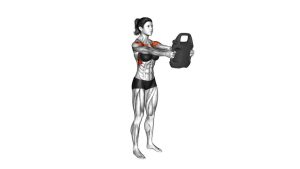
- Lift the dumbbells forward: Raise both dumbbells in front of your body in a controlled arc.
- Keep the elbows soft: Maintain a slight bend in the elbows without turning the movement into a curl.
- Stop at shoulder height: Lift until the dumbbells reach about shoulder level or just below parallel.
- Pause briefly: Hold the top position for a moment without shrugging or leaning back.
- Lower slowly: Bring the dumbbells back down under control to the starting position near your thighs.
- Repeat smoothly: Maintain the same tempo and body position on every rep.
Pro Tips & Common Mistakes
- Lead with the shoulders, not momentum: Raise the dumbbells with muscular control instead of swinging them upward.
- Don’t go too heavy: This is an isolation movement, so strict technique matters more than load.
- Stop around shoulder height: Going much higher often shifts tension away from the target muscles and may irritate the shoulders.
- Keep your wrists neutral: Avoid excessive wrist bending as the dumbbells rise.
- Don’t shrug: Keep the upper traps from taking over by keeping the neck relaxed and shoulders down.
- Control the lowering phase: The eccentric portion helps build shoulder strength and stability.
- Avoid leaning back: Excessive torso lean usually means the weight is too heavy.
FAQ
What muscles does the dumbbell front raise work?
The main target is the anterior deltoid, which is the front part of the shoulder. The exercise also involves supporting help from the upper chest, lateral delts, and core stabilizers.
How high should I raise the dumbbells?
In most cases, raise the dumbbells to about shoulder height. Going much higher can reduce control and may create unnecessary stress for some lifters.
Should I raise both dumbbells at the same time?
You can perform the movement with both arms together, alternating reps, or one arm at a time. Bilateral raises are common, while single-arm versions can help improve focus and control.
Why do I feel this exercise in my traps or neck?
That usually happens when the shoulders shrug upward or the dumbbells are too heavy. Lower the weight, relax the neck, and keep the shoulders down as you lift.
Is the dumbbell front raise necessary if I already do shoulder presses?
Not always, but it can still be useful as an accessory exercise if you want extra front-delt volume, improved shoulder control, or a lighter isolation movement after presses.
Recommended Equipment
- Neoprene Dumbbell Set — ideal for beginners who want lighter fixed weights for smooth front raise practice
- Adjustable Dumbbells — useful for progressing load gradually without needing multiple separate dumbbell pairs
- Shoulder Resistance Bands — great for warm-ups, activation drills, and extra shoulder volume with lower joint stress
- Exercise Mat — helpful for home workouts, warm-ups, mobility drills, and floor-based shoulder work
- Home Gym Mirror — useful for checking shoulder height, posture, and avoiding torso swing during raises
Tip: For front raises, lighter dumbbells with clean control usually outperform heavy weights with sloppy form.