Dumbbell Standing Overhead Press : Form, Muscles Worked, Sets & Tips
Learn how to do the Dumbbell Standing Overhead Press with proper form. Discover muscles worked, setup, execution, sets and reps by goal, common mistakes, FAQs, and recommended equipment.
Dumbbell Standing Overhead Press
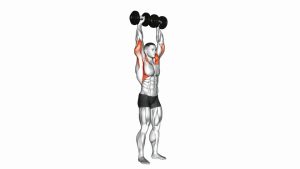
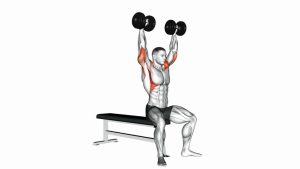
This exercise works best when you press the dumbbells in a smooth vertical path while keeping your core braced, ribs down, and spine neutral. The movement should be driven by the shoulders and triceps rather than by leaning back or using momentum. Keep your wrists stacked over your elbows, control the lowering phase, and avoid turning the rep into an incline-style press.
Quick Overview
| Body Part | Shoulders |
|---|---|
| Primary Muscle | Anterior deltoids and lateral deltoids |
| Secondary Muscle | Triceps, upper chest, upper traps, and core stabilizers |
| Equipment | Pair of dumbbells |
| Difficulty | Beginner to Intermediate |
Sets & Reps (By Goal)
- Muscle growth: 3–4 sets × 8–12 reps with 60–90 seconds rest
- Strength: 4–5 sets × 4–6 reps with 2–3 minutes rest
- General fitness: 2–4 sets × 8–10 reps with 60–90 seconds rest
- Technique practice: 2–3 sets × 10–15 reps using a light, controlled load
Progression rule: Add reps first while maintaining strict form, then increase the weight gradually once you can complete all target reps without arching your back or losing control.
Setup / Starting Position
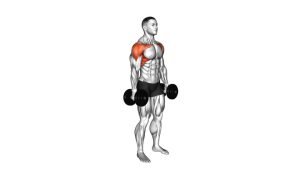
- Stand tall: Place your feet about hip-width apart for a stable base.
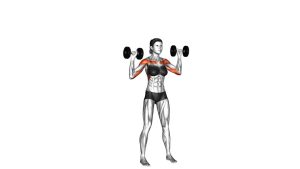
- Hold the dumbbells at shoulder level: Use a standard overhand grip with palms facing forward or slightly turned in.
- Stack the joints: Keep wrists over elbows and elbows slightly in front of the body.
- Brace your core: Tighten your abs and glutes to prevent excessive leaning.
- Set your posture: Keep your chest lifted, ribs down, and head neutral.
Tip: Before the first rep, think “tall body, tight core, smooth press.” A strong setup improves both shoulder safety and pressing power.
Execution (Step-by-Step)
- Start from shoulder height: Hold the dumbbells beside your shoulders with your forearms mostly vertical.
- Press upward: Drive both dumbbells overhead in a controlled path while keeping your torso upright.
- Finish overhead: Bring the weights above your shoulders with arms extended but not aggressively locked out.
- Keep the body stable: Do not lean back or flare the ribs as the dumbbells rise.
- Lower with control: Bring the dumbbells back down to shoulder level slowly and evenly.
- Repeat smoothly: Maintain the same pressing path and tempo on every rep.
Pro Tips & Common Mistakes
- Brace before every rep: A tight core helps protect the lower back and improves force transfer.
- Do not lean back excessively: Too much arching shifts tension away from the shoulders and stresses the lumbar spine.
- Keep wrists neutral: Avoid letting the dumbbells bend your wrists backward under load.
- Use a full controlled range: Lower to a comfortable shoulder-level position and press smoothly to the top.
- Do not rush the lowering phase: The eccentric portion helps build control and muscle.
- Avoid overly flared elbows: Keep them in a strong pressing angle instead of straight out to the sides.
- Choose load carefully: If form breaks early, the dumbbells are too heavy for quality reps.
FAQ
What muscles does the Dumbbell Standing Overhead Press work?
It mainly targets the front delts and side delts, while the triceps, upper chest, and core stabilizers assist throughout the movement.
Is the standing version harder than the seated version?
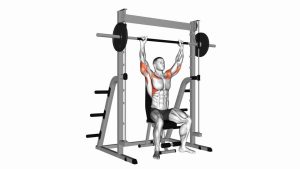
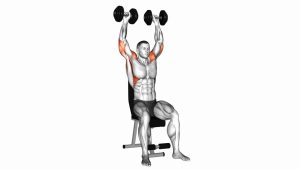
Yes. The standing variation requires more core stability and body control because you do not have bench support behind you.
Should the dumbbells touch at the top?
No. They can come close together overhead, but they do not need to touch. Focus more on shoulder alignment and control than forcing the weights inward.
Can beginners do this exercise?
Yes, beginners can perform it safely with light dumbbells and strict technique. Starting light helps you learn proper pressing mechanics and posture.
What is the most common mistake?
The most common mistake is leaning back too much, which turns the press into a chest-dominant movement and places extra stress on the lower back.
Recommended Equipment
- Adjustable Dumbbells — versatile for progressive overload and ideal for home shoulder training
- Weightlifting Wrist Wraps — useful for extra wrist support during heavier pressing sets
- Non-Slip Exercise Mat — helps create a more stable and comfortable standing training area
- Dumbbell Rack Stand — keeps your dumbbells organized and easier to access between sets
- Resistance Bands Set — great for warm-ups, shoulder activation, and accessory delt work
Tip: Choose equipment that improves stability, progression, and joint comfort. Good setup quality often leads to better pressing performance and safer reps.