Standing Dumbbell Shoulder Press: Proper Form, Sets, Tips & FAQ
Learn the Standing Dumbbell Shoulder Press with proper form, setup, execution steps, sets and reps by goal, common mistakes, FAQs, and recommended equipment for stronger shoulders
Standing Dumbbell Shoulder Press
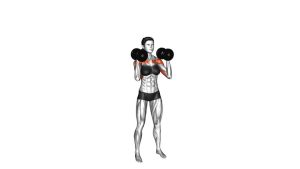
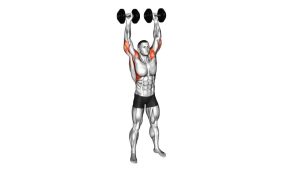
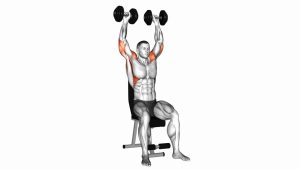
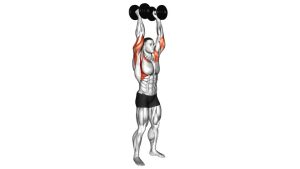
This exercise works best when you stay tall, keep your ribs down, and press the dumbbells in a controlled path. The standing position adds a meaningful core-stability demand, making it more than just a shoulder exercise. You should feel the delts and triceps doing most of the work, not the lower back. Use a weight that lets you press smoothly without flaring the ribs or turning the movement into a push press.
Quick Overview
| Body Part | Shoulders |
|---|---|
| Primary Muscle | Anterior deltoids |
| Secondary Muscle | Lateral deltoids, triceps, upper chest, core stabilizers |
| Equipment | Dumbbells |
| Difficulty | Beginner to Intermediate |
Sets & Reps (By Goal)
- Muscle growth: 3–4 sets × 8–12 reps, 60–90 sec rest
- Strength focus: 4–5 sets × 4–6 reps, 90–150 sec rest
- General fitness: 2–4 sets × 8–10 reps, 60–90 sec rest
- Shoulder endurance/control: 2–3 sets × 12–15 reps, 45–75 sec rest
Progression rule: Increase weight only when you can complete all reps with a stable torso, full control on the way down, and no excessive lower-back arch.
Setup / Starting Position
- Stand tall: Place your feet about shoulder-width apart and distribute your weight evenly through both feet.
- Pick up the dumbbells safely: Bring the dumbbells to shoulder height with control, using your thighs if needed to help set them.
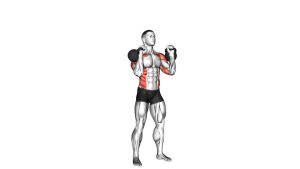
- Set the rack position: Hold each dumbbell just outside shoulder level with elbows bent and slightly forward of the body.
- Brace your torso: Tighten your abs and glutes lightly to keep the ribs down and the lower back neutral.
- Keep wrists stacked: Align wrists over elbows and keep a firm but not over-gripped handle position.
Tip: A slightly forward elbow position is usually more shoulder-friendly than flaring the elbows straight out to the sides.
Execution (Step-by-Step)
- Start from shoulder height: Begin with the dumbbells near your shoulders and your torso upright.
- Press overhead: Drive both dumbbells upward in a smooth, controlled path until your arms are nearly straight overhead.
- Finish tall: At the top, keep the dumbbells balanced over your shoulders and mid-foot without shrugging excessively.
- Lower with control: Bring the dumbbells back down slowly to shoulder level, keeping tension in the shoulders and triceps.
- Repeat evenly: Perform each rep with the same path and tempo, avoiding leg drive or torso swing.
Pro Tips & Common Mistakes
- Keep ribs down: Don’t turn the press into a standing backbend.
- Press in a natural arc: The dumbbells should travel slightly inward as they rise overhead.
- Control the eccentric: Lowering too fast reduces tension and makes the next rep less stable.
- Don’t overflare the elbows: A slightly forward elbow angle is usually stronger and more comfortable.
- Avoid using the legs: This is a strict shoulder press, not a push press.
- Use full pain-free range: Press as high as you can while keeping the shoulders and spine in a strong position.
FAQ
What muscles does the standing dumbbell shoulder press work?
It primarily targets the anterior deltoids, while the lateral delts and triceps assist the movement. Your core also works to stabilize the torso during the press.
Is standing better than seated for dumbbell shoulder presses?
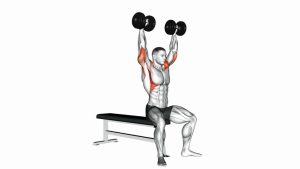
Standing adds more core and full-body stability demand, while seated versions can make it easier to focus more directly on the shoulders. Both are effective depending on your goal.
Should I press the dumbbells straight up or inward?
A natural overhead path is usually slightly inward as the dumbbells rise. The goal is to finish with the weights stacked over your shoulders, not drifting far forward.
Why do I feel this in my lower back?
That usually happens when the weight is too heavy or your ribs flare as you press. Brace your abs, squeeze your glutes lightly, and reduce the load until you can stay upright.
Can beginners do the standing dumbbell shoulder press?
Yes. Beginners can start with light dumbbells and focus on posture, pressing path, and tempo before progressing to heavier loads.
Recommended Equipment
- Adjustable Dumbbells — ideal for progressive overload and space-saving home shoulder training
- Adjustable Weight Bench — useful if you want to alternate between standing and seated dumbbell presses
- Resistance Bands Set — great for shoulder warm-ups, activation drills, and pull-aparts between pressing sessions
- Wrist Wraps — helpful if heavier dumbbells make wrist support a limiting factor
- Exercise Floor Mat — protects flooring and creates a more stable training surface for standing presses
Tip: For most people, the best first investment for this exercise is a solid pair of adjustable dumbbells, then resistance bands for shoulder prep, and an adjustable bench if you want more pressing variation.