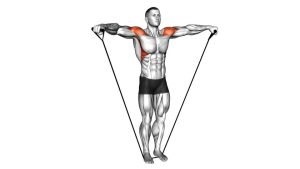
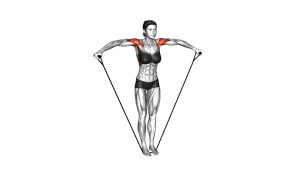
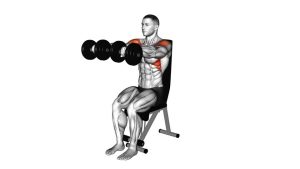
Dumbbell Single-Arm Leaning Lateral Raise: Form, Muscles Worked, Sets & Tips
Learn how to perform the Dumbbell Single-Arm Leaning Lateral Raise with proper form. Discover muscles worked, setup, execution steps, sets and reps by goal, mistakes to avoid, FAQs, and recommended equipment.
Dumbbell Single-Arm Leaning Lateral Raise
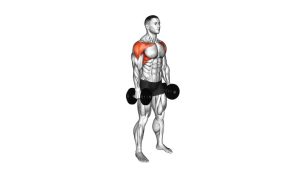
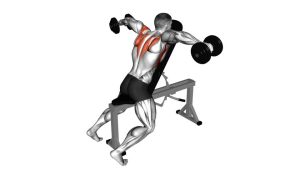
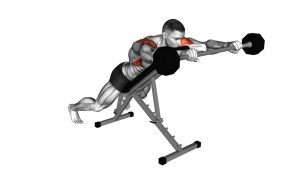
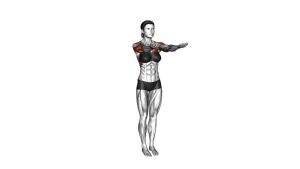
This variation is excellent for lifters who want better side-delt activation, cleaner technique, and a more challenging resistance profile than a standard standing lateral raise. Because one hand holds support, it becomes easier to stay stable, reduce swinging, and focus on a smooth raise and controlled lowering phase.
Quick Overview
| Body Part | Shoulders |
|---|---|
| Primary Muscle | Lateral deltoid |
| Secondary Muscle | Supraspinatus, upper traps (minimal if form is strict), core stabilizers |
| Equipment | One dumbbell and a stable support such as a rack, post, or machine upright |
| Difficulty | Beginner to Intermediate |
Sets & Reps (By Goal)
- Muscle growth: 3–4 sets × 10–15 reps per arm, 45–75 sec rest
- Technique practice: 2–3 sets × 8–12 reps per arm with a lighter weight, 45–60 sec rest
- Shoulder finisher: 2–3 sets × 12–20 reps per arm, short rests and strict control
- Deload / recovery week: 2 sets × 12–15 reps per arm, reduced load and slow tempo
Progression rule: Increase reps first, then load. If the traps start taking over or the body begins swinging, the weight is too heavy for strict side-delt work.
Setup / Starting Position
- Stand beside a stable support: Use your non-working hand to grip a rack, upright, or sturdy handle.
- Lean your body slightly away: Create a small side lean so the working arm hangs more freely under the shoulder.
- Hold one dumbbell: Use a neutral grip with the palm facing inward.
- Set your posture: Keep the chest up, ribs stacked, core braced, and shoulders relaxed.
- Start with the arm low: Let the working arm hang down naturally with a soft bend in the elbow.
Tip: A slight lean is enough. You do not need to hang dramatically away from the support to make the exercise effective.
Execution (Step-by-Step)
- Brace and stabilize: Grip the support firmly and lock in your torso position before each rep.
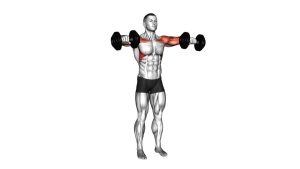
- Raise the dumbbell out to the side: Lead with the elbow and lift in a smooth arc.
- Keep the shoulder down: Do not shrug as the weight rises. Let the side delt drive the motion.
- Stop around shoulder height: Raise until the upper arm is about parallel to the floor, or slightly below if that feels better on your shoulder.
- Pause briefly: Hold the top position for a split second without losing control.
- Lower slowly: Return the dumbbell to the start under control and keep tension through the entire descent.
- Repeat evenly: Finish all reps on one side, then switch arms.
Pro Tips & Common Mistakes
- Lead with the elbow: Thinking “elbow up” often improves lateral delt recruitment.
- Keep a soft elbow bend: Too much elbow flexion turns the movement into something else; fully locking can feel stiff and less natural.
- Do not shrug: Elevating the shoulder shifts tension toward the upper traps.
- Avoid swinging: The support is there to help you stay strict, not to let you use more momentum.
- Control the eccentric: The lowering phase is one of the best parts of this exercise for muscle-building stimulus.
- Use moderate loads: Side delts respond well to precise reps and consistent tension, not sloppy heavy swings.
- Do not raise too high: Going far above shoulder height can increase trap involvement and reduce isolation.
FAQ
What makes the leaning version different from a regular lateral raise?
The leaning setup changes the angle of resistance and usually creates more tension near the bottom of the rep. It also makes it easier to stabilize the body and reduce momentum.
Where should I feel this exercise the most?
You should mostly feel it in the side of the shoulder, especially the lateral deltoid. A little upper trap involvement is normal, but it should not dominate the movement.
Should I use heavy or light dumbbells?
Most lifters get the best results with light-to-moderate weights and very strict form. If you cannot control the top and the lowering phase, the dumbbell is too heavy.
Can beginners do this exercise?
Yes. Beginners can use it to learn side-delt isolation, as long as they start light and focus on clean reps. The support hand often makes the movement easier to control than unsupported variations.
How should I program it in a shoulder workout?
It works well after presses, during a delt-focused hypertrophy session, or as a finishing movement near the end of an upper-body workout.
Recommended Equipment
- BowFlex Results Series SelectTech Adjustable Dumbbells — adjustable pair that saves space and makes it easy to fine-tune shoulder-training loads
- Tone Fitness Neoprene Dumbbell Set with Storage Rack — useful for beginners who want lighter fixed dumbbells for strict lateral raise work
- Yes4All Adjustable Dumbbells — a practical adjustable option for home training and progressive overload
- Yes4All Neoprene Coated Dumbbell Hand Weights — comfortable fixed dumbbells with a neoprene coating for controlled isolation work
- CAP Barbell Dumbbell Rack — helpful for organizing multiple dumbbells if you train shoulders and upper body at home
Tip: For this exercise, a lighter dumbbell with excellent control is usually more productive than a heavier dumbbell with body swing.