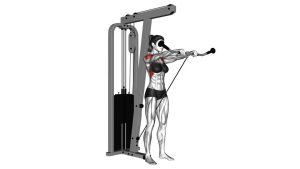
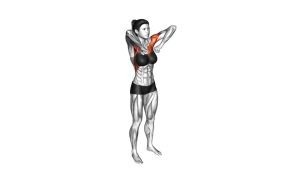
Barbell Front Raise : Proper Form, Muscles Worked, Sets, Tips & FAQ
Learn how to perform the Barbell Front Raise with proper form to target the front delts. Includes setup, execution, sets and reps by goal, common mistakes, FAQs, and recommended equipment.
Barbell Front Raise
This exercise works best with strict control, moderate loads, and a smooth tempo. You should feel the front of the shoulders doing most of the work while the core stabilizes your body. The bar should travel in a controlled arc directly in front of you, and each rep should look nearly identical from start to finish.
Quick Overview
| Body Part | Front Shoulders |
|---|---|
| Primary Muscle | Anterior deltoids |
| Secondary Muscle | Lateral deltoids, upper chest, upper traps, core stabilizers |
| Equipment | Straight barbell |
| Difficulty | Beginner to Intermediate |
Sets & Reps (By Goal)
- Muscle building: 3–4 sets × 8–15 reps, 60–90 sec rest
- Shoulder endurance / definition: 2–4 sets × 12–20 reps, 45–75 sec rest
- Technique practice: 2–3 sets × 10–12 reps with light weight, 45–60 sec rest
- Warm-up activation: 1–2 light sets × 12–15 reps before pressing or delt work
Progression rule: Add reps before adding weight. Once you can complete all working sets with strict control and no torso swing, increase the load slightly.
Setup / Starting Position
- Stand tall: Place your feet about hip-width apart and keep your torso upright.
- Grip the barbell: Hold the bar with a pronated (overhand) grip around shoulder-width or slightly wider.
- Start position: Let the bar rest in front of your thighs with arms extended and elbows softly bent.
- Brace your core: Tighten your abs and glutes lightly to reduce body swing.
- Set your shoulders: Keep the shoulders down and back slightly without over-arching the lower back.
Tip: A lighter barbell or fixed-weight bar often helps maintain better control than going too heavy too soon.
Execution (Step-by-Step)
- Begin the raise: Lift the bar forward and upward in front of your body using the front delts.
- Keep the bar path clean: Raise the bar in a smooth arc while keeping your torso still and core braced.
- Stop around shoulder height: Lift until the bar reaches roughly shoulder level or just below parallel.
- Pause briefly: Hold the top for a moment without shrugging the shoulders.
- Lower with control: Bring the bar back down slowly to the starting position in front of the thighs.
- Repeat evenly: Maintain the same tempo and range of motion on every rep.
Pro Tips & Common Mistakes
- Lift with the shoulders: Focus on moving from the shoulder joint rather than using momentum.
- Keep a soft elbow bend: Avoid locking the arms rigidly, but do not turn it into a curl.
- Don’t raise too high: Shoulder height is usually enough for strong front-delt tension.
- Avoid leaning back: Excessive torso lean shifts stress away from the target muscles and into the lower back.
- Control the eccentric: Lowering slowly improves tension and helps reinforce better technique.
- Watch shoulder shrugging: Letting the traps take over reduces front-delt isolation.
- Use moderate weight: This exercise is more effective with precision than with ego lifting.
FAQ
What muscles does the Barbell Front Raise work the most?
The exercise mainly targets the anterior deltoids, which are the front portion of the shoulders. The lateral delts, upper traps, and core also help stabilize the movement.
Should I raise the bar above shoulder height?
In most cases, no. Stopping around shoulder height keeps tension on the front delts and helps reduce unnecessary strain.
Is the Barbell Front Raise good for beginners?
Yes, as long as the load is light enough to control. Beginners should focus on clean reps, stable posture, and avoiding body swing.
What is better for front raises: barbell or dumbbells?
Barbells allow both arms to move together and can feel stable, while dumbbells allow a more natural arm path. Both work well, but the barbell version is great for consistent bilateral control.
Why do I feel this in my traps more than my shoulders?
That usually happens when the weight is too heavy or when you shrug during the lift. Lower the weight, keep your shoulders relaxed, and focus on raising the bar with the front delts.
Recommended Equipment
- Straight Barbell Set — useful for performing barbell front raises with a balanced, stable grip
- Olympic Change Plates — small plate increments make it easier to progress this isolation exercise gradually
- Barbell Collars — help keep plates secure and reduce shifting during sets
- Wrist Wraps — can add wrist support if front raises feel uncomfortable at the bottom position
- Resistance Bands Set — helpful for shoulder warm-ups, activation drills, and lighter front-raise variations
Tip: Choose gear that supports strict technique and gradual progression rather than jumping to heavier loads too quickly.