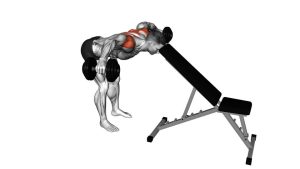
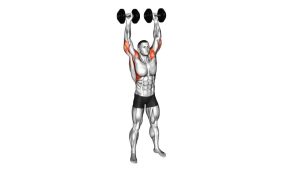
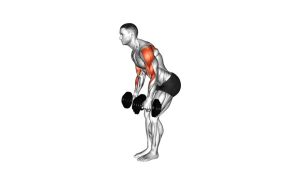
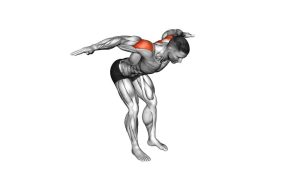
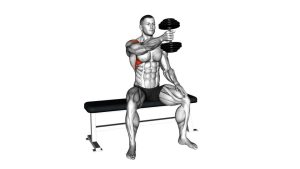
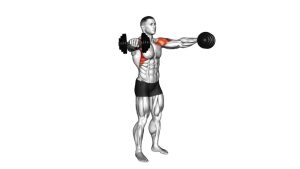
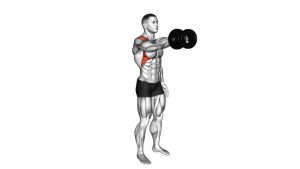
Dumbbell Bent-Over Alternate Rear Delt Fly: Form, Muscles Worked, Sets, Tips & FAQ
Learn how to do the Dumbbell Bent-Over Alternate Rear Delt Fly with proper form. Discover muscles worked, setup, step-by-step execution, sets by goal, common mistakes, FAQs, and recommended equipment.
Dumbbell Bent-Over Alternate Rear Delt Fly
This variation works best with light to moderate weight, a strong hip hinge, and a controlled tempo. You should feel the effort mainly in the rear shoulder, with assistance from the upper back. If you feel your traps taking over, your torso swinging, or the movement turning into a row, reduce the load and tighten your form.
Quick Overview
| Body Part | Rear Shoulders |
|---|---|
| Primary Muscle | Rear deltoids (posterior delts) |
| Secondary Muscle | Rhomboids, middle trapezius, rotator cuff stabilizers, core |
| Equipment | Dumbbells |
| Difficulty | Beginner to Intermediate |
Sets & Reps (By Goal)
- Muscle growth: 3–4 sets × 10–15 reps per side, 45–75 sec rest
- Shoulder control / technique: 2–3 sets × 8–12 reps per side, slow tempo, 45–60 sec rest
- Light accessory finisher: 2–3 sets × 15–20 reps per side, lighter weight, 30–45 sec rest
- Warm-up activation: 1–2 sets × 10–15 reps per side with very light dumbbells
Progression rule: Increase reps first, then load. Rear-delt work responds best to strict mechanics and clean repetition quality.
Setup / Starting Position
- Stand tall with dumbbells in hand: Keep your feet about hip- to shoulder-width apart.
- Soften the knees: Use a slight bend to help stabilize the lower body.
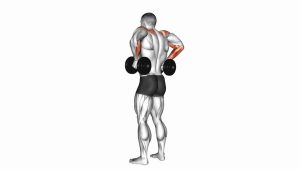
- Hinge at the hips: Push the hips back until your torso is close to parallel with the floor or at a strong forward angle.
- Set your spine: Keep the chest open, back flat, and neck neutral.
- Let the arms hang below the shoulders: Use a neutral grip with a slight bend in the elbows.
Tip: Brace your core before each rep so your torso stays quiet while the shoulder does the work.
Execution (Step-by-Step)
- Lock in the hinge: Keep your torso stable and avoid lifting your chest during the movement.
- Raise one dumbbell out to the side: Lead with the elbow and move the arm in a wide arc.
- Stop around shoulder height: Lift until the rear delt is fully engaged without shrugging.
- Pause briefly: Hold the top for a moment and squeeze the rear shoulder.
- Lower with control: Bring the dumbbell back down slowly to the start position.
- Repeat with the opposite arm: Alternate sides while keeping the torso steady and the rhythm controlled.
Pro Tips & Common Mistakes
- Use lighter weights than you think: Rear delts are small muscles and usually respond better to precision than heavy loading.
- Keep the torso still: Avoid twisting side to side as you alternate arms.
- Maintain a soft elbow bend: Don’t lock the arm straight, but don’t turn it into a press either.
- Don’t shrug: If the traps dominate, lower the load and focus on the back of the shoulder.
- Avoid momentum: Swinging the dumbbells reduces tension on the target muscle.
- Control the negative: The lowering phase helps build stability and improves shoulder positioning.
FAQ
What muscle does the Dumbbell Bent-Over Alternate Rear Delt Fly work most?
It mainly targets the rear deltoids. The rhomboids, middle traps, and rotator cuff muscles also assist with upper-back and shoulder stability.
Is alternating better than lifting both arms together?
Alternating reps can make it easier to control the motion, reduce cheating, and improve mind-muscle connection on each side. It is especially useful when learning strict rear-delt form.
Should I raise the dumbbell above shoulder height?
Usually no. Stopping around shoulder height keeps tension where you want it and helps prevent the upper traps from taking over too much.
Why do I feel this more in my traps than my rear delts?
That usually happens when the weight is too heavy, the shoulders shrug upward, or the arm path drifts too high. Lower the weight and focus on a smooth outward raise.
Can beginners use this exercise?
Yes. Beginners should start light, shorten the range if needed, and prioritize posture, control, and clean shoulder movement over load.
Recommended Equipment
- Adjustable Dumbbells — versatile for progressive loading and ideal for shoulder isolation work
- Fixed Dumbbells — simple option for strict rear-delt sets and higher-rep accessory training
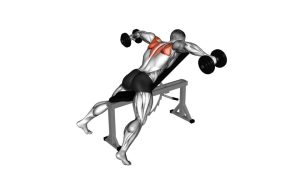
- Adjustable Weight Bench — useful for chest-supported rear-delt work if you want extra torso stability
- Resistance Bands Set — helpful for warm-ups, pull-aparts, and extra rear-shoulder activation work
- Mini Loop Bands — good for shoulder activation drills before dumbbell training
Tip: Choose weights that let you keep your torso stable and your shoulders relaxed. For rear-delt training, clean reps matter more than heavy reps.