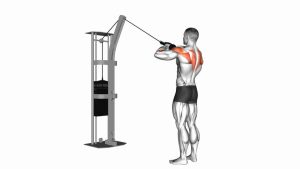
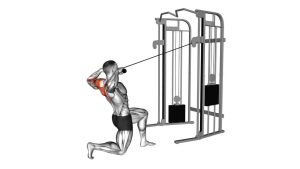
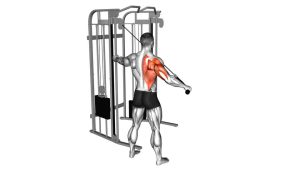
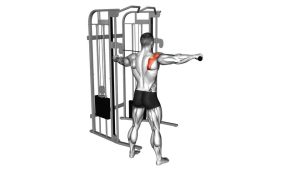
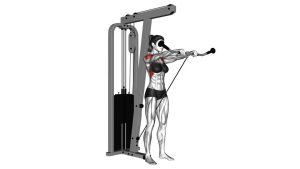
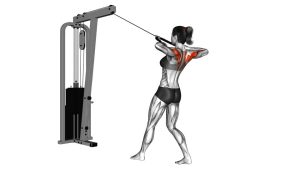
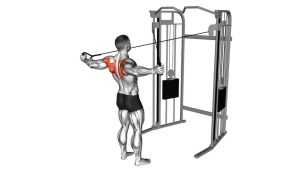
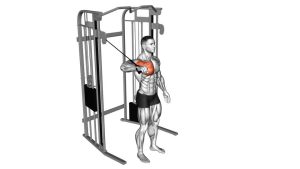
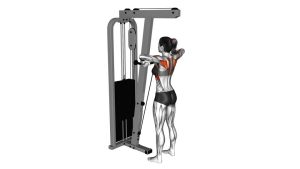
Cable Seated Rear Delt Raise: Proper Form, Sets, Tips & FAQ
Learn how to do the Cable Seated Rear Delt Raise with proper form to target the rear shoulders. Includes setup, execution, sets by goal, mistakes to avoid, FAQs, and recommended equipment.
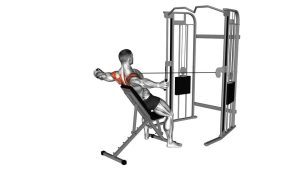
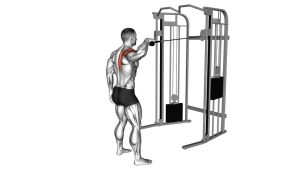
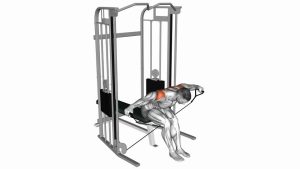
Cable Seated Rear Delt Raise
This exercise is excellent for building the often-neglected posterior delts, improving shoulder symmetry, and supporting healthier posture. Because the resistance comes from cables, you get tension at both the stretched and contracted portions of the movement. The best reps are controlled, slightly bent at the elbows, and performed without turning the exercise into a row or shrug.
Quick Overview
| Body Part | Shoulders |
|---|---|
| Primary Muscle | Rear deltoids (posterior delts) |
| Secondary Muscle | Middle traps, rhomboids, rotator cuff stabilizers |
| Equipment | Cable machine, bench or seat, cable handles |
| Difficulty | Beginner to Intermediate |
Sets & Reps (By Goal)
- Muscle growth: 3–4 sets × 10–15 reps with 45–75 sec rest
- Shoulder endurance / control: 2–4 sets × 12–20 reps with 30–60 sec rest
- Warm-up / activation: 2–3 sets × 12–15 light reps with slow tempo
- Technique work: 2–3 sets × 8–12 reps focusing on strict form and smooth range
Progression rule: Add reps before adding load. Once you can control all reps without shrugging or swinging, increase the weight slightly and keep the same clean movement pattern.
Setup / Starting Position
- Set the pulleys: Position the cable pulleys low enough to allow a smooth outward raise from a seated position.
- Sit securely: Sit on the bench or seat with feet planted flat on the floor for balance.
- Lean slightly forward: Hinge just enough to line up the movement with the rear delts while keeping the spine neutral.
- Grip the handles: Hold the cable handles with a neutral grip and a slight bend in the elbows.
- Start under control: Let the arms begin in front of the body with the shoulders set down and back, not shrugged.
Tip: A small forward lean usually helps reduce upper-trap dominance and keeps the rear delts in a stronger line of pull.
Execution (Step-by-Step)
- Brace your torso: Sit tall through the core and keep your chest steady without excessive arching.
- Lead with the elbows: Raise the arms out to the sides in a wide arc, keeping the elbow bend nearly fixed.
- Lift to rear-delt height: Bring the arms up until they are around shoulder level or slightly below, depending on comfort and control.
- Pause briefly: Squeeze the rear delts for a moment at the top without shrugging the shoulders toward the ears.
- Lower slowly: Return the handles under control to the start position, maintaining cable tension and posture.
Pro Tips & Common Mistakes
- Use a moderate load: Rear delts respond better to controlled tension than to heavy cheating reps.
- Keep the elbows soft: A small bend protects the joints and helps maintain a consistent movement path.
- Avoid shrugging: Letting the shoulders rise shifts tension to the upper traps.
- Don’t turn it into a row: Pulling too far backward changes the exercise emphasis away from the rear delts.
- Control the eccentric: Lowering slowly often makes the exercise much more effective.
- Stay stable on the seat: Excess torso rocking usually means the load is too heavy.
- Think “wide arc”: Moving outward instead of backward helps keep the rear delts working harder.
FAQ
What muscles does the Cable Seated Rear Delt Raise work?
The main target is the rear deltoid. The exercise also recruits the middle traps, rhomboids, and small shoulder stabilizers to support controlled movement.
Is this better than dumbbell rear delt raises?
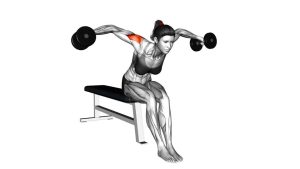
For many lifters, cables feel better because they provide more consistent tension through the full range. Dumbbells are still useful, but cables often make it easier to keep the rear delts loaded from start to finish.
How high should I lift my arms?
Lift until your arms reach about shoulder height or slightly below, as long as you can keep tension on the rear delts without shrugging or losing posture.
Should I go heavy on this exercise?
Usually no. Rear delt raises work best with strict technique, moderate resistance, and smooth reps. Going too heavy often turns the exercise into a trap-dominant swing.
Where should I feel it?
You should feel the exercise mostly in the back of the shoulders. A little upper-back involvement is normal, but the movement should not feel dominated by the neck or upper traps.
Recommended Equipment
- Cable Machine Handles — useful for a more comfortable grip and smoother rear delt cable work
- Adjustable Weight Bench — helpful if you want a stable seated setup for cable shoulder exercises
- Resistance Bands Set — a practical option for extra rear-delt activation work outside the cable station
- Wrist Wraps — useful if grip or wrist discomfort limits control during cable raises
- Foam Roller — helpful for upper-back mobility work that complements rear delt training
Tip: Choose equipment that improves comfort and stability rather than encouraging heavier, less controlled reps. Amazon availability for these product categories can vary over time.