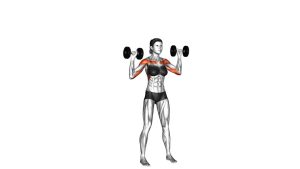
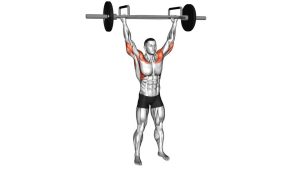
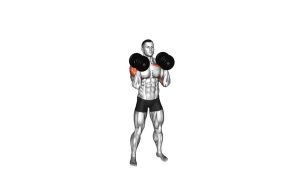
Kettlebell Seated One-Arm Military Press: Form, Muscles Worked, Sets & Tips
Learn how to perform the Kettlebell Seated One-Arm Military Press with proper form. Discover muscles worked, setup, execution, sets and reps by goal, common mistakes, FAQs, and recommended equipment.
Kettlebell Seated One-Arm Military Press
This exercise is ideal for lifters who want to improve unilateral shoulder strength, clean up pressing mechanics, and expose left-to-right imbalances. Because the movement is performed one arm at a time, it demands better trunk control, better shoulder positioning, and a smoother overhead path. Use a controlled tempo, keep the ribs down, and press the kettlebell in a strong vertical line over the working shoulder.
Quick Overview
| Body Part | Shoulders |
|---|---|
| Primary Muscle | Anterior deltoid |
| Secondary Muscle | Lateral deltoid, triceps, upper traps, rotator cuff, core stabilizers |
| Equipment | Kettlebell, flat bench |
| Difficulty | Intermediate |
Sets & Reps (By Goal)
- Strength: 4-5 sets × 4-6 reps per arm, 90-150 sec rest
- Muscle growth: 3-4 sets × 8-12 reps per arm, 60-90 sec rest
- Shoulder stability and control: 2-4 sets × 6-10 reps per arm, slow tempo, 60-90 sec rest
- Accessory pressing work: 2-3 sets × 10-15 reps per arm, moderate load, 45-75 sec rest
Progression tip: Add reps before increasing load. Once you can complete all prescribed reps with clean lockout, no torso lean, and stable wrist alignment, move up gradually.
Setup / Starting Position
- Sit tall on a flat bench: Plant both feet firmly on the floor and keep your torso upright.
- Rack the kettlebell: Hold it at shoulder level with the bell resting behind the forearm and the wrist stacked neutrally.
- Align the elbow: Keep the elbow slightly in front of the body rather than flared straight out to the side.
- Brace the core: Keep the ribs down, glutes lightly engaged, and spine neutral.
- Free hand placement: Rest the non-working hand on your thigh or bench for balance, without twisting the torso.
Tip: Think “tall chest, locked-in core, vertical press path.” The cleaner the setup, the stronger and safer the rep.
Execution (Step-by-Step)
- Start from the rack position: The kettlebell begins at shoulder height with the forearm vertical.
- Press upward: Drive the kettlebell overhead in a smooth vertical line while keeping the wrist stacked over the elbow.
- Reach lockout: Extend the arm overhead without leaning back or shrugging excessively.
- Pause briefly: Hold the top for a moment to confirm control and shoulder stability.
- Lower with control: Bring the kettlebell back to the shoulder rack position slowly, resisting gravity the whole way down.
- Repeat all reps on one side or alternate: Follow your programming and keep each rep consistent.
Pro Tips & Common Mistakes
- Keep the wrist straight: Do not let the kettlebell fold the wrist backward.
- Press from a stable base: Drive your feet into the floor to create full-body tension.
- Avoid over-arching the lower back: Keep the ribs tucked and abs braced.
- Do not rush the lowering phase: The eccentric builds control and shoulder resilience.
- Don’t flare the elbow too wide: A slightly forward elbow position is usually stronger and more shoulder-friendly.
- Do not shrug early: Let the deltoid initiate the press before the upper traps contribute near lockout.
- Use full control at the top: Lockout should feel stable, not shaky or jammed.
FAQ
What muscles does the Kettlebell Seated One-Arm Military Press work?
It mainly targets the anterior deltoid, while also training the lateral deltoid, triceps, and several stabilizers including the rotator cuff and core.
Why do this press seated instead of standing?
The seated version removes most lower-body assistance, which helps isolate the upper body and makes it easier to focus on shoulder mechanics, stability, and strict pressing form.
Is a kettlebell harder than a dumbbell for shoulder pressing?
For many lifters, yes. The kettlebell’s offset center of mass makes the shoulder and wrist work harder to stabilize the load, especially during the press and lockout.
Should I press one side at a time or alternate arms?
Both approaches work. Doing all reps on one side first can improve focus and stability, while alternating arms may reduce fatigue and keep overall output more even.
What is the most common mistake in this exercise?
The most common mistake is leaning back and turning the movement into a partial incline press. Keep your torso tall, ribs down, and press directly overhead.
Recommended Equipment
- Adjustable Kettlebell — practical for progressive overload and space-saving home training
- Flat Weight Bench — provides a stable seated base for strict unilateral pressing
- Wrist Wraps — useful for lifters who need extra wrist support during heavier presses
- Gym Chalk — helps maintain a secure grip when pressing heavier kettlebells
- Mini Resistance Bands — useful for shoulder warm-ups and activation before pressing sessions
Choose equipment that supports stable, controlled pressing rather than just heavier loading. A solid bench, a well-balanced kettlebell, and good wrist support can make this exercise safer and more effective.