Cable Kneeling Shoulder Press: Proper Form, Sets, Tips & FAQ
Learn the Cable Kneeling Shoulder Press for stronger front delts, better overhead pressing control, and improved core stability. Includes setup, execution, sets by goal, common mistakes, FAQs, and recommended equipment.
Cable Kneeling Shoulder Press
This exercise is excellent for lifters who want more shoulder tension with less cheating. Because you are kneeling, your core has to work harder to keep your torso upright, which makes the press feel more strict than many standing variations. You should feel strong effort in the front of the shoulders, assistance from the triceps, and steady bracing through the core.
Quick Overview
| Body Part | Shoulders |
|---|---|
| Primary Muscle | Anterior deltoids (front delts) |
| Secondary Muscle | Lateral deltoids, triceps, upper chest, core stabilizers |
| Equipment | Cable machine with handles |
| Difficulty | Intermediate |
Sets & Reps (By Goal)
- Muscle growth: 3–4 sets × 8–12 reps with 60–90 sec rest
- Shoulder strength: 4–5 sets × 5–8 reps with 90–120 sec rest
- Control and stability: 2–4 sets × 10–15 reps with slow tempo and 45–75 sec rest
- Accessory after main press: 2–3 sets × 10–12 reps with moderate weight
Progression rule: Add reps first, then increase load gradually. Only go heavier when you can press without leaning back or losing cable control.
Setup / Starting Position
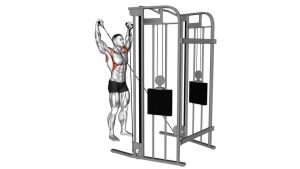
- Set the cables: Position the pulleys around shoulder or upper-chest height and attach single handles.
- Kneel in the center: Get on both knees facing away from or centered between the cable lines, depending on the machine setup.
- Bring handles to shoulder level: Hold each handle near the shoulders with elbows bent and slightly in front of the body.
- Brace your torso: Squeeze glutes, tighten abs, and keep ribs stacked over hips.
- Start tall: Chest up, spine neutral, head forward, and shoulders set down and back slightly.
Tip: Use a pad or folded mat under the knees if the floor feels uncomfortable so you can focus fully on pressing mechanics.
Execution (Step-by-Step)
- Lock in your base: Stay tall on both knees with the core tight and glutes lightly squeezed.
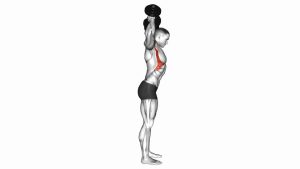
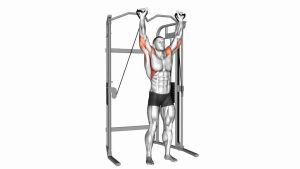
- Press upward: Drive the handles overhead in a smooth, controlled path while keeping the wrists stacked over the elbows.
- Finish strong: Extend the arms near the top without jamming the joints or shrugging the shoulders.
- Pause briefly: Hold the top for a moment while maintaining a neutral torso and steady cable tension.
- Lower under control: Bring the handles back down to shoulder level slowly without letting the weight pull you out of position.
- Repeat smoothly: Every rep should look the same—no bouncing, no leaning, and no rushing the negative.
Pro Tips & Common Mistakes
- Keep the ribs down: The biggest mistake is turning the press into a backbend.
- Press in a natural arc: Let the handles travel slightly inward as you press if that feels better on the shoulders.
- Do not rush the lowering phase: The cable pulls constantly, so control the eccentric for better muscle tension.
- Keep glutes engaged: This helps you stabilize the pelvis and avoid lumbar extension.
- Do not shrug at the top: Finish the rep with strong shoulders, not elevated traps.
- Use moderate weight: This variation is most effective when the movement stays strict and repeatable.
- Avoid flaring the elbows too much: Keep them slightly forward for a stronger and more joint-friendly press.
FAQ
What muscles does the Cable Kneeling Shoulder Press work?
It mainly targets the anterior deltoids, while the triceps, lateral delts, and core stabilizers assist throughout the movement.
Why do this exercise kneeling instead of standing?
The kneeling position removes leg drive and reduces cheating, which makes the movement stricter and increases the demand on torso stability and overhead control.
Is this better than a dumbbell shoulder press?
It is not automatically better, but it offers constant cable tension and often makes it easier to keep the movement strict. It works very well as an accessory shoulder press.
Should I use heavy weight on this exercise?
Usually moderate weight works best. The goal is clean pressing mechanics, controlled tension, and a stable torso rather than using momentum or chasing maximum load.
Can beginners do the Cable Kneeling Shoulder Press?
Yes, but it is usually better for beginners to start light and learn how to brace properly. If balance or cable control is difficult, reduce the load and focus on smooth reps.
Recommended Equipment
- Exercise Knee Pad for Gym — adds comfort and support during kneeling cable exercises
- Cable Machine Handles — useful if you want more comfortable grip options for pressing work
- Ab Mat / Exercise Pad — helpful for cushioning the knees and improving setup comfort
- Weightlifting Belt — optional support for lifters who want more torso awareness during pressing sessions
- Resistance Bands Set — useful for shoulder warm-ups, activation drills, and extra delt volume outside the cable machine
Tip: Prioritize comfort, grip, and stable setup. This exercise is most effective when you can focus on clean pressing rather than fighting the floor or handle discomfort.