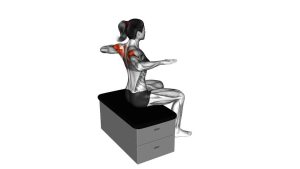
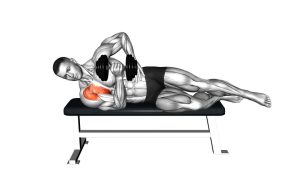
Cable Shoulder Internal Rotation: Form, Muscles Worked, Sets, Tips & FAQ
Learn how to perform the Cable Shoulder Internal Rotation with proper form to strengthen the rotator cuff and improve shoulder stability. Includes muscles worked, setup, step-by-step execution, sets and reps by goal, common mistakes, FAQs, and recommended equipment.
Cable Shoulder Internal Rotation
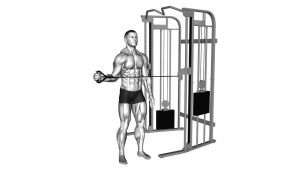
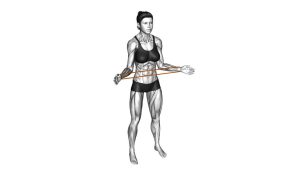
This exercise is most effective when performed with light-to-moderate resistance and strict form. The goal is to rotate at the shoulder joint without letting the elbow drift away from the ribs or the torso twist. You should feel controlled work in the front of the shoulder and deep within the rotator cuff, not stress in the wrist, neck, or low back.
Quick Overview
| Body Part | Shoulders |
|---|---|
| Primary Muscle | Subscapularis |
| Secondary Muscle | Anterior deltoid, pectoralis major, latissimus dorsi |
| Equipment | Cable machine with single handle attachment |
| Difficulty | Beginner to Intermediate (best performed with strict control rather than heavy loading) |
Sets & Reps (By Goal)
- Shoulder activation / warm-up: 2–3 sets × 10–15 reps per side with light resistance
- Rotator cuff strength: 3–4 sets × 8–12 reps per side with slow, controlled tempo
- Rehab-style control: 2–3 sets × 12–20 reps per side using very light resistance
- Shoulder-health finisher: 2–3 sets × 12–15 reps per side, focusing on form and symmetry
Progression rule: Increase control and rep quality first. Only add weight when you can keep the elbow pinned, the shoulder relaxed, and the torso completely stable.
Setup / Starting Position
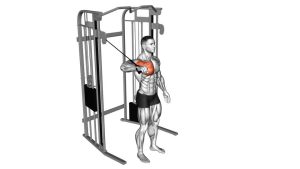
- Set the pulley: Position the cable at about elbow or waist height and attach a single D-handle.
- Stand side-on to the machine: The working arm should be the one closest to the cable stack.
- Bend the elbow: Keep the elbow at roughly 90 degrees and tucked firmly against your side.
- Square your posture: Stand tall with ribs stacked, chest neutral, shoulders level, and core lightly braced.
- Start slightly open: Let the forearm begin rotated outward just enough to create tension without losing shoulder position.
Tip: Placing a small towel between your elbow and ribs can help you maintain the correct elbow position.
Execution (Step-by-Step)
- Brace and stay tall: Set your posture and avoid leaning toward or away from the machine.
- Rotate inward: Pull the handle across your body by internally rotating the shoulder, not by rowing the elbow backward or twisting the torso.
- Keep the elbow pinned: The elbow should remain glued to your side throughout the rep.
- Pause briefly: At the end of the inward rotation, squeeze lightly for 1 second without forcing extra range.
- Return under control: Slowly allow the forearm to move back outward to the start position while resisting the pull of the cable.
Pro Tips & Common Mistakes
- Use lighter weight than you think: This is a precision exercise, not a max-load movement.
- Lead with shoulder rotation: Don’t turn it into a mini cable row.
- Keep the wrist neutral: Avoid curling or bending the wrist to “help” the rep.
- Control the eccentric: The return phase is where shoulder stability is built.
- Don’t let the elbow drift: A floating elbow shifts tension away from the target muscles.
- Avoid torso twisting: Your trunk should stay quiet while the shoulder does the work.
- Train both sides evenly: This helps improve side-to-side shoulder balance and control.
FAQ
What muscle does the Cable Shoulder Internal Rotation target most?
The main target is the subscapularis, one of the four rotator cuff muscles. It helps internally rotate the shoulder and supports glenohumeral joint stability.
Should this exercise feel heavy?
Not usually. This movement works best with a controlled, moderate effort. Going too heavy often causes torso rotation, elbow drift, and loss of shoulder alignment.
Is this exercise good for shoulder rehab?
It is commonly used in shoulder-strengthening and stability programs, especially when performed with light resistance and excellent form. If you are dealing with injury or pain, follow the guidance of a qualified clinician.
Where should I feel it?
Most people feel this exercise in the front of the shoulder and deep around the shoulder joint. You should not feel sharp pinching or strain in the neck.
Can I do this with a resistance band instead of a cable?
Yes. A resistance band anchored at elbow height is a practical alternative and works well for home training, warm-ups, and shoulder-care sessions.
Recommended Equipment
- Rotator Cuff / Shoulder Rehab Bands — ideal for home versions of internal rotation and other shoulder-stability drills
- Single D-Handle Cable Attachment — useful for cable-machine shoulder internal rotation and other unilateral cable exercises
- Shoulder Pulley for Physical Therapy — a good mobility and rehab companion for shoulder recovery routines
- Thick Exercise Mat — helpful for floor-based shoulder mobility, warm-ups, and accessory rehab work
- Shoulder Resistance Training System — useful for broader shoulder prehab, activation, and rotator cuff programming
Tip: For this exercise, a light band or cable attachment is usually more useful than heavy gym accessories. Prioritize control, smooth tension, and comfort at the shoulder joint.