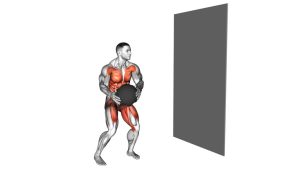
Medicine Ball Throw Squat with Wall: Form, Muscles Worked, Sets, Tips & FAQ
Learn how to perform the Medicine Ball Throw Squat with Wall for explosive power, shoulder drive, and full-body coordination. Includes muscles worked, setup, execution, sets by goal, mistakes, FAQs, and recommended equipment.
Medicine Ball Throw Squat with Wall
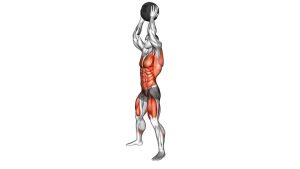
This movement is best performed with a strong, athletic rhythm. The squat loads the lower body, the core transfers force upward, and the shoulders and arms finish the throw. Keep the ball close to the body on the way down, maintain a stable trunk, and avoid turning the exercise into an arm-only toss. The best reps feel powerful, smooth, and coordinated rather than rushed or sloppy.
Quick Overview
| Body Part | Shoulders |
|---|---|
| Primary Muscle | Anterior deltoids |
| Secondary Muscle | Quadriceps, glutes, triceps, upper chest, core |
| Equipment | Medicine ball, solid wall, open training space |
| Difficulty | Intermediate (requires timing, power, and catch control) |
Sets & Reps (By Goal)
- Power development: 3–5 sets × 4–6 reps, 60–90 sec rest, explosive effort on every throw
- Athletic conditioning: 3–4 sets × 8–12 reps, 45–75 sec rest, controlled but aggressive pace
- General fitness: 2–4 sets × 6–10 reps, 45–60 sec rest, moderate ball weight and crisp form
- Warm-up activation: 2–3 sets × 4–6 reps with a light ball, focus on speed and coordination
Progression rule: Increase speed and consistency before increasing ball weight. Your throw should stay explosive and your catch should stay stable.
Setup / Starting Position
- Stand facing the wall: Position yourself close enough to throw and catch the ball comfortably without reaching.
- Set your stance: Place your feet about shoulder-width apart with toes slightly turned out if needed.
- Hold the ball at chest height: Keep elbows slightly bent and the ball close to your torso.
- Brace the core: Keep ribs stacked over hips and maintain a neutral spine.
- Prepare to move vertically: Think squat down, then drive up hard through the floor.
Tip: Start with a lighter medicine ball if you are learning the timing of the throw and catch.
Execution (Step-by-Step)
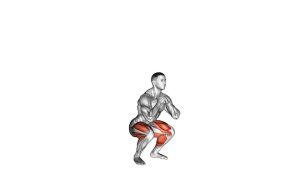
- Lower into a squat: Push the hips back and down while keeping the chest lifted and the ball close to the body.
- Load the legs: Reach a comfortable squat depth where you can still stay balanced and powerful.
- Drive upward explosively: Extend the hips, knees, and ankles as you rise.
- Throw the ball into the wall: Use the momentum from the squat drive to launch the ball forward and slightly upward.
- Catch and absorb: Receive the rebound with soft elbows and a braced core, then reset for the next rep.
Pro Tips & Common Mistakes
- Use the legs first: Build force from the squat instead of relying only on the shoulders and arms.
- Keep the ball close on the way down: Letting it drift away can pull you forward and weaken the throw.
- Stay tall through the torso: Avoid collapsing the chest or rounding the lower back.
- Don’t use a ball that is too heavy: Excessive load slows the movement and ruins the explosive intent.
- Catch with control: Absorb the rebound softly instead of letting the ball crash into the hands and chest.
- Reset your stance every rep: Keep feet planted and balanced so power transfers cleanly into the wall.
- Match the wall distance to your height and ball size: Too close or too far can disrupt the throw path.
FAQ
What muscles does the Medicine Ball Throw Squat with Wall work?
It primarily emphasizes the front delts during the throw, while also training the quads, glutes, triceps, upper chest, and core as part of the explosive full-body pattern.
Is this exercise more for shoulders or legs?
It is both, but in different ways. The legs generate most of the force, while the shoulders and arms help direct and finish the throw. It is best viewed as a full-body power exercise with strong shoulder involvement.
What weight medicine ball should I use?
Choose a ball that lets you move fast and stay sharp technically. Beginners often do best with a lighter ball so the movement stays explosive and coordinated.
Can I use this for conditioning?
Yes. It works well in conditioning circuits, athletic sessions, and power-focused training blocks. Just avoid using so much fatigue that your throw and catch quality break down.
What is the biggest mistake with this exercise?
The most common error is turning it into an arm-dominant wall toss instead of using the squat and hip drive to create power from the ground up.
Recommended Equipment
- Yes4All Wall Ball — soft wall-ball style option designed for repeated throws and catching drills
- Yes4All Slam Ball — durable textured ball that can work for explosive training and controlled throw variations
- Wall Ball Target (Wall Mounted) — useful for giving your throws a consistent visual target and height reference
- Gaiam Exercise / Yoga Mat — good for warm-ups, mobility drills, and floor-based accessory work before or after training
- Interlocking Foam Gym Floor Mats — helps protect the floor and adds traction in a home or garage training area
Tip: For this exercise, a ball that is too heavy usually reduces speed and technique quality. Pick equipment that helps you stay explosive and controlled.