Medicine Ball Slam: Full-Body Power, Core Strength, Form & Tips
Learn the Medicine Ball Slam for explosive core power, conditioning, and full-body strength. Includes form cues, sets, mistakes, FAQs, and equipment.
Medicine Ball Slam
This movement works best when the body moves as one connected system. The legs help generate power, the core transfers force, and the arms guide the ball down with speed. A strong Medicine Ball Slam should feel explosive and athletic, but it should not feel uncontrolled, sloppy, or painful in the lower back.
Quick Overview
| Body Part | Plyometrics |
|---|---|
| Primary Muscle | Rectus abdominis, lats, glutes |
| Secondary Muscle | Shoulders, hamstrings, quadriceps, obliques, upper back, forearms |
| Equipment | Medicine ball or slam ball |
| Difficulty | Intermediate; beginner-friendly only when light load and controlled technique are used |
Sets & Reps (By Goal)
- Power development: 3–5 sets × 4–8 explosive reps, 60–120 sec rest
- Conditioning / HIIT: 3–6 rounds × 10–20 reps, 30–60 sec rest
- Core strength: 3–4 sets × 8–12 controlled explosive reps, 45–90 sec rest
- Fat-loss circuit: 30–45 sec work × 3–5 rounds, paired with squats, rows, or carries
- Beginner technique practice: 2–3 sets × 5–8 reps with a light ball and full reset between reps
Progression rule: Improve speed, posture, and clean repetition quality before increasing ball weight. A heavier ball is only useful if you can still slam explosively without rounding your lower back.
Setup / Starting Position
- Choose the right ball: Use a slam ball or medicine ball that can safely handle repeated floor impact.
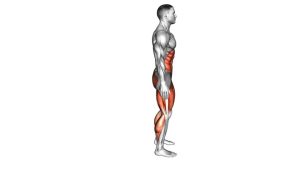
- Stand tall: Place your feet about shoulder-width apart with your toes slightly turned out if comfortable.
- Hold the ball securely: Grip the sides of the ball with both hands and keep your wrists neutral.
- Brace your core: Keep your ribs stacked over your hips and avoid arching your lower back.
- Load through the legs: Slightly bend the knees and prepare to drive the ball overhead with the whole body.
Setup cue: Start with the ball close to your body. A compact start helps you lift with control before producing maximum force.
Execution (Step-by-Step)
- Lift the ball overhead: Extend through your hips, knees, and ankles while raising the ball above your head.
- Reach tall without over-arching: Keep your ribs down and avoid leaning too far backward at the top.
- Brace before the slam: Tighten your abs as if preparing for impact.
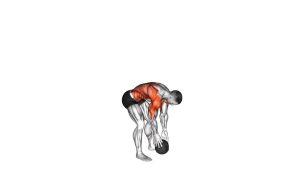
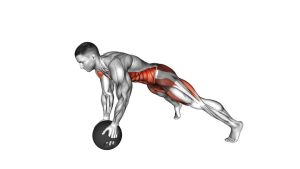
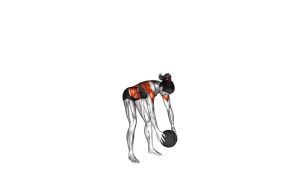
- Drive the ball down: Use your abs, lats, and arms to slam the ball powerfully into the floor.
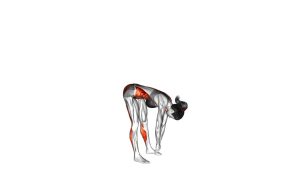
- Hinge and follow through: Let your hips move back and your knees bend as the ball travels downward.
- Absorb the movement: Finish in a strong hinge or partial squat with your spine neutral.
- Reset before the next rep: Pick up the ball safely, re-brace, and repeat with clean power.
Pro Tips & Common Mistakes
- Use your whole body: Do not turn the movement into an arms-only throw. Power should come from legs, hips, core, and lats together.
- Brace before impact: Tight abs protect the spine and improve force transfer.
- Avoid excessive back arch: At the overhead position, stay tall without flaring the ribs.
- Do not chase bounce: A slam ball should stay low. If the ball rebounds high, step back or use a safer ball.
- Keep the ball close when resetting: Pick it up with a hinge or squat pattern instead of rounding from the waist.
- Quality beats fatigue: Stop the set when power drops or form becomes loose.
- Breathe with intent: Inhale during the lift, brace at the top, and exhale sharply during the slam.
FAQ
What muscles does the Medicine Ball Slam work?
The Medicine Ball Slam primarily works the abs, lats, glutes, and shoulders. It also trains the legs, upper back, obliques, forearms, and cardiovascular system because the movement uses the full body explosively.
Is the Medicine Ball Slam good for abs?
Yes. It is excellent for training explosive core strength because the abs contract forcefully during the downward slam. However, it should be performed with proper bracing instead of uncontrolled spinal flexion.
Should I use a medicine ball or a slam ball?
A slam ball is usually best because it is designed for repeated impact and has little bounce. A regular medicine ball may bounce more, so use caution and check whether it is rated for slams.
How heavy should the ball be?
Choose a weight that allows fast, powerful reps without losing posture. Many beginners should start light to moderate, then increase weight only when technique stays clean.
Can beginners do Medicine Ball Slams?
Beginners can do them if they use a light ball, move with control, and reset between reps. Anyone with back, shoulder, or neck issues should be cautious and avoid forcing explosive range.
Are Medicine Ball Slams cardio or strength?
They can be both. Low-rep sets train power and strength, while higher-rep intervals train conditioning, calorie output, and full-body endurance.
Recommended Equipment
- Slam Ball — the best option for repeated floor slams with minimal bounce
- Medicine Ball — useful for core training, throws, partner drills, and conditioning circuits
- Thick Exercise Mat — helps protect flooring and reduce impact noise during training
- Cross-Training Shoes — provides stable footing for explosive lifting, hinging, and conditioning work
- Interval Timer — useful for HIIT rounds, conditioning circuits, and timed slam workouts
Tip: For this exercise, the ball matters. A non-bouncing slam ball is safer and more practical than a hard ball that rebounds aggressively.