Band Face Pull: Proper Form, Muscles Worked, Sets, Tips & FAQ
Learn how to do the Band Face Pull with proper form to target the rear delts, upper back, and shoulder stabilizers. Includes setup, step-by-step execution, sets by goal, mistakes to avoid, FAQs, and recommended equipment.
Band Face Pull
This exercise works best when performed with light-to-moderate resistance and crisp control. You should feel the movement mainly in the back of the shoulders and across the upper back, not in the lower back, wrists, or neck. A clean rep includes a steady pull, a brief squeeze, and a smooth return without letting the band snap forward.
Quick Overview
| Body Part | Shoulders |
|---|---|
| Primary Muscle | Rear deltoids (posterior delts) |
| Secondary Muscle | Rhomboids, middle trapezius, external rotators, upper back stabilizers |
| Equipment | Resistance band with an anchor point at about face height |
| Difficulty | Beginner to Intermediate |
Sets & Reps (By Goal)
- Shoulder health / posture work: 2–4 sets × 12–20 reps with light, clean tension
- Rear delt hypertrophy: 3–4 sets × 10–15 reps with a 1-second squeeze at the end
- Warm-up / activation: 1–3 sets × 12–15 reps before pressing or upper-body training
- Technique practice: 2–3 sets × 8–12 slow reps with strict control
Progression rule: First improve control, range, and end-position squeeze. Then increase band tension gradually. If the shoulders start shrugging or the elbows drop, the band is probably too strong.
Setup / Starting Position
- Anchor the band: Set the band at about upper-chest to face height on a sturdy post, rack, or door anchor.
- Take your grip: Hold the band with both hands using a neutral or overhand grip, about shoulder-width apart.
- Step back: Walk back until the band has light tension with your arms extended in front of you.
- Set your stance: Stand tall with feet hip- to shoulder-width apart, knees soft, and core braced.
- Organize posture: Chest up, ribs stacked, neck neutral, shoulders relaxed and not shrugged.
Tip: A slight staggered stance can help you stay balanced and prevent leaning backward during the pull.
Execution (Step-by-Step)
- Start long: Begin with arms extended and the band under control, keeping your torso still.
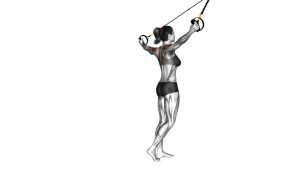
- Lead with the elbows: Pull the elbows out and back as you bring the band toward face level.
- Aim high: Bring your hands toward the sides of the face or upper cheek area rather than the chest.
- Squeeze the upper back: At the end of the rep, let the shoulder blades come together naturally without over-arching the low back.
- Pause briefly: Hold the contraction for about 1 second while keeping the neck relaxed.
- Return slowly: Extend the arms back to the start under control and maintain tension in the band.
- Repeat smoothly: Keep each rep steady and avoid using momentum or body swing.
Pro Tips & Common Mistakes
- Pull to the face, not the chest: Pulling too low shifts the exercise toward a row pattern.
- Keep elbows high: This helps emphasize the posterior shoulder rather than the lats.
- Don’t shrug: Elevating the shoulders too much lets the upper traps take over.
- Use a manageable band: Too much resistance usually causes leaning, jerking, or shortened range.
- Control the return: The eccentric phase matters just as much as the pull.
- Keep wrists neutral: Avoid bending the wrists excessively as you finish the rep.
- Stay tall: Don’t turn the exercise into a whole-body rock backward.
FAQ
What muscles does the Band Face Pull work most?
The main target is the rear deltoid. It also trains the rhomboids, middle traps, and shoulder external rotators that help support posture and shoulder control.
Is the Band Face Pull for shoulders or back?
It’s primarily used as a shoulder and upper-back accessory exercise. Most people classify it under shoulders because of the strong rear delt involvement, but it also trains the upper back significantly.
How high should I pull the band?
Pull toward face level, usually around the nose, eyes, or upper cheek line. If you pull much lower, the movement becomes more row-like and less rear-delt focused.
Should I go heavy on band face pulls?
Usually no. This exercise tends to work best with controlled reps and moderate resistance. Going too heavy often causes shrugging, momentum, and poor elbow position.
Can beginners use this exercise?
Yes. It’s a very beginner-friendly option as long as the band tension is appropriate and the anchor point is secure. Start light and focus on clean mechanics before adding more resistance.
Recommended Equipment (Optional)
- Resistance Band Set with Handles — versatile for face pulls, presses, rows, and general upper-body training
- Door Anchor for Resistance Bands — makes it much easier to set the band at face height for proper pulling angle
- Light Resistance Bands for Rehab / Mobility — useful for shoulder warm-ups, activation drills, and low-load corrective work
- Loop Resistance Bands Set — compact option for home training, posture drills, and quick shoulder sessions
- Exercise Mat — optional, but useful for a dedicated home workout space and accessory work around your band sessions
Tip: For Band Face Pulls, the most useful setup is usually a band set plus a door anchor. That combination gives you better exercise angles and easier progression. Amazon has broad listings for these categories, including general resistance-band sets, door anchors, and handle-based systems.