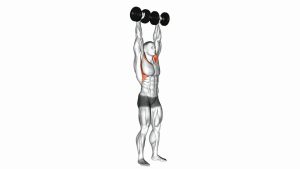
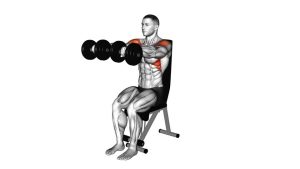
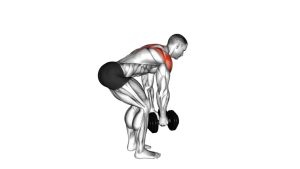
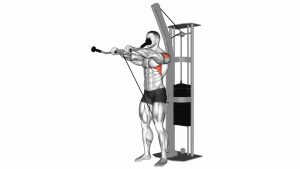
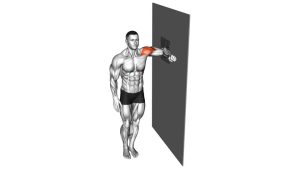
Standing Elbow Crossover Raise: Form, Muscles Worked, Sets & Tips
Learn the Standing Elbow Crossover Raise for stronger, rounder shoulders. Includes muscles worked, setup, step-by-step form, sets and reps by goal, mistakes to avoid, FAQs, and recommended Amazon equipment.
Standing Elbow Crossover Raise
This exercise is especially useful for lifters who want to build shoulder shape without relying on heavy loads. Because the movement begins with the arms crossed in front of the body and then opens outward, it creates a slightly different stimulus than a standard front raise or lateral raise alone. It works best with light weight, steady tempo, and strict form.
Quick Overview
| Body Part | Shoulders |
|---|---|
| Primary Muscle | Anterior deltoids and lateral deltoids |
| Secondary Muscle | Upper chest, upper traps, and core stabilizers |
| Equipment | Light dumbbells, small hand weights, or similar light resistance |
| Difficulty | Beginner to intermediate |
Sets & Reps (By Goal)
- Muscle toning / shoulder definition: 3-4 sets × 12-15 reps with light to moderate weight
- Hypertrophy / delt growth: 3-5 sets × 8-12 reps with strict form and controlled lowering
- Warm-up / activation: 2-3 sets × 10-12 reps with very light weight before pressing or upper-body work
- Technique practice: 2-3 sets × 8-10 smooth reps focusing on elbow path and shoulder control
Progression rule: Increase reps first, then load. If your shoulders start shrugging or your torso starts swinging, the weight is too heavy for this movement.
Setup / Starting Position
- Stand tall: Place your feet about hip-width to shoulder-width apart and keep your knees softly unlocked.
- Hold light weights: Use a pair of light dumbbells or similar small hand weights with a comfortable grip.
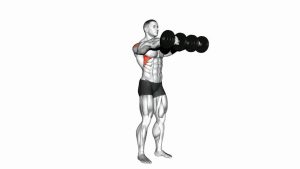
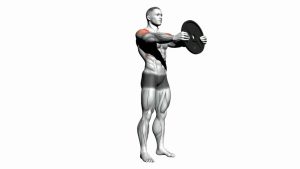
- Bring the arms forward: Raise the arms in front of the torso so they lightly cross or come close together at about chest height.
- Keep a soft elbow bend: The elbows should stay slightly bent throughout the movement rather than fully straight or fully tucked.
- Brace your posture: Keep the chest lifted, ribs stacked, shoulders down, and core lightly engaged.
Tip: This exercise usually feels best with lighter weights than a normal lateral raise because the crossover position increases control demands.
Execution (Step-by-Step)
- Start from the crossover: Bring the arms in front of the body so the elbows and forearms move near each other without rounding your upper back.
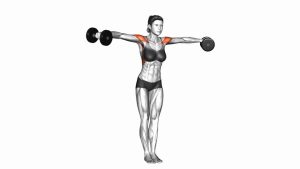
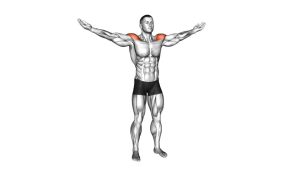
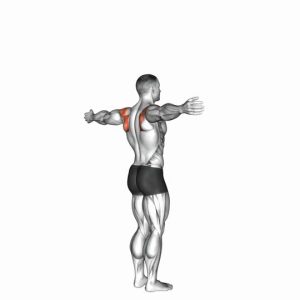
- Lead with the elbows: Open the arms outward in a controlled arc, thinking about moving the elbows wide rather than throwing the hands outward.
- Raise to shoulder level: Lift until the upper arms are around shoulder height, or slightly below if that feels better on your joints.
- Pause briefly: Hold the top for a moment while keeping the neck relaxed and shoulders away from the ears.
- Return with control: Bring the arms back along the same path into the front crossover position without letting the weights drop.
- Repeat smoothly: Maintain a consistent tempo and avoid using momentum from the legs or torso.
Pro Tips & Common Mistakes
- Use lighter weights than expected: This is a control-based raise, not a heavy compound exercise.
- Let the elbows guide the motion: This keeps tension where you want it and helps avoid wrist-dominant lifting.
- Do not swing: Momentum takes stress off the shoulders and reduces the quality of the rep.
- Keep the shoulders down: Avoid shrugging into the traps as the arms rise.
- Stop at a clean range: Shoulder height is usually enough. You do not need to force extra elevation.
- Control the lowering phase: The eccentric portion helps build shoulder stability and better muscular tension.
- Stay tall through the torso: No leaning back, rib flare, or exaggerated arching through the lower back.
FAQ
What muscles does the Standing Elbow Crossover Raise work most?
It mainly targets the front delts and side delts. Depending on your form, the upper chest and traps may assist slightly, but the exercise is primarily a shoulder isolation movement.
Should I use heavy weights for this exercise?
Usually no. This movement works best with light to moderate resistance so you can keep the crossover path clean and maintain constant control through the full rep.
Is this more of a front raise or a lateral raise?
It is a hybrid pattern. Because the movement starts in front and opens outward, it blends features of both a front raise and a lateral raise, with strong emphasis on the deltoids.
Can beginners do the Standing Elbow Crossover Raise?
Yes. Beginners can use very light weights and focus on movement quality. The key is staying slow, stable, and relaxed through the neck and upper traps.
Where should I feel it during the set?
You should mainly feel the exercise across the front and outer parts of the shoulders. If you mostly feel your neck, traps, or lower back, adjust your posture and reduce the load.
Recommended Equipment (Optional)
- Adjustable Dumbbells — practical for progressing shoulder raises without needing a full rack
- Wrist Weights — a lighter alternative for high-rep shoulder shaping and controlled raises
- Resistance Bands for Shoulder Work — useful for warm-ups, activation drills, and low-load delt training
- Wrist Cuffs for Cable Training — helpful if you want cable-based raise variations with less grip fatigue
- Exercise Mat — creates a cleaner, more comfortable training space for home workouts
Tip: Pair this exercise with presses, lateral raises, and rear-delt work for more complete shoulder development.