Bench-Supported Oblique Crunch: Form, Sets, Tips & FAQ
Learn the bench-supported oblique crunch to target your side abs with safe twisting form, sets by goal, setup, mistakes, FAQs, and equipment.
Bench-Supported Oblique Crunch
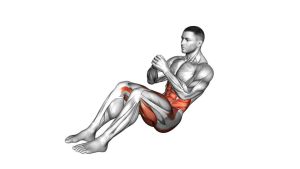
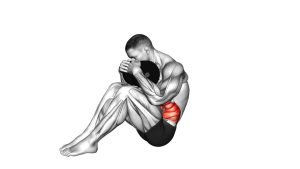
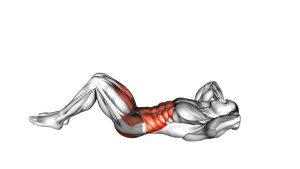
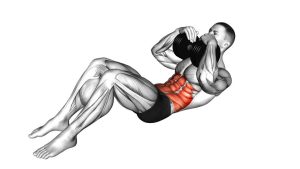
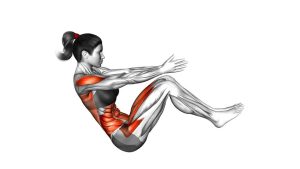
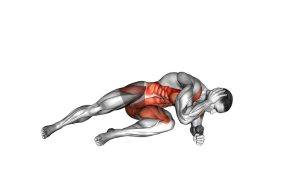
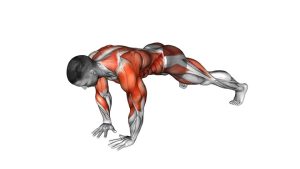
This exercise is useful when you want to train the side abs without using heavy equipment. It combines a small crunch with trunk rotation, which makes the external obliques and internal obliques work harder than they would during a basic straight crunch. However, the movement should never become a neck-pulling exercise. Your hand supports the head, while your ribs and shoulder drive the rotation.
For best results, keep the legs quiet, brace the midsection before each rep, and rotate from the upper torso rather than swinging the elbow. In addition, lower yourself slowly after every contraction. This controlled return helps build strength through the full repetition and prevents momentum from taking over.
Quick Overview
| Body Part | Obliques |
|---|---|
| Primary Muscle | Obliques, especially external obliques and internal obliques |
| Secondary Muscle | Rectus abdominis, transverse abdominis, hip flexors, deep core stabilizers |
| Equipment | Flat bench or sturdy elevated surface; exercise mat optional |
| Difficulty | Beginner to Intermediate |
Sets & Reps (By Goal)
- Beginner technique practice: 2–3 sets × 8–10 reps per side, using a slow tempo and light effort.
- Core strength: 3–4 sets × 10–15 reps per side, resting 30–60 seconds between sets.
- Oblique hypertrophy: 3–5 sets × 12–20 reps per side, emphasizing the squeeze at the top.
- Core endurance: 2–4 sets × 20–30 controlled reps total, alternating sides if preferred.
- Warm-up activation: 1–2 sets × 8–12 reps per side before a core, lower-body, or full-body workout.
Progression rule: First improve control, then add reps. After that, increase the pause at the top or slow the lowering phase. Avoid progressing by pulling harder with the neck or swinging faster.
Setup / Starting Position
- Lie on your back: Position yourself on the floor with your hips close enough to a flat bench so your lower legs can rest comfortably on top.
- Elevate the legs: Place both calves on the bench with knees bent around 90 degrees. This helps stabilize the pelvis and reduce unnecessary lower-back arching.
- Set the upper body: Place one hand lightly behind the head. Keep the other arm relaxed beside your body or across your torso for balance.
- Brace gently: Pull the ribs slightly down, tighten the abs, and keep the lower back comfortable against the floor without aggressively flattening it.
- Keep the neck neutral: Look slightly upward instead of forcing the chin into the chest. Your hand should support the head, not pull it forward.
- Prepare the twist: Before lifting, think about bringing one shoulder toward the opposite knee direction, not just moving the elbow across the body.
Setup check: Your legs should remain still on the bench, your shoulders should stay relaxed, and your core should feel ready before the first rep begins.
Execution (Step-by-Step)
- Exhale and begin the crunch: Lift your head and upper shoulders slightly from the floor while keeping your neck supported.
- Rotate through the ribs: Turn your torso diagonally so one shoulder moves toward the opposite knee direction.
- Squeeze the oblique: Pause briefly at the top and feel the side abs contract. The movement should be compact rather than exaggerated.
- Keep the lower body fixed: Do not let your knees swing, hips twist, or feet press aggressively into the bench.
- Lower with control: Return your shoulders to the floor slowly while keeping tension through the core.
- Repeat on the same side: Complete all reps on one side, or alternate sides depending on your workout goal.
- Maintain steady breathing: Exhale during the lift and inhale as you return to the starting position.
Pro Tips & Common Mistakes
- Lead with the shoulder, not the elbow: This keeps the work in the obliques instead of turning the movement into an arm swing.
- Use a small range of motion: A short, controlled crunch is more effective than a large, sloppy twist.
- Do not pull the neck: Your hand should cradle the head lightly. If the neck gets tired first, reduce the range or cross the arms instead.
- Keep the legs relaxed: The bench supports the legs, but the abs should perform the lift. Avoid pushing hard through the calves.
- Control the lowering phase: Dropping quickly reduces tension and can irritate the lower back.
- Avoid over-rotation: Twist enough to feel the oblique shorten, but do not force the spine into an uncomfortable position.
- Match both sides: Perform the same number of reps with the same tempo on each side to avoid side-to-side imbalance.
- Keep the ribs down: If the ribs flare upward, the abs lose tension and the movement becomes less targeted.
FAQ
What muscles does the bench-supported oblique crunch work?
It mainly works the obliques, which are the side-ab muscles responsible for trunk rotation and lateral core control. It also trains the rectus abdominis and deep stabilizers because the movement combines a crunch with a twist.
Is this exercise good for beginners?
Yes. The bench-supported setup can be beginner-friendly because the legs are stable and the lower back is easier to control. However, beginners should use a small range of motion and avoid pulling on the head.
Should my elbow touch the opposite knee?
No. Contact is not required. The goal is to rotate the torso and contract the obliques, not to force the elbow across the body. In fact, chasing elbow-to-knee contact often causes neck pulling and poor form.
Why do I feel this exercise in my neck?
Neck discomfort usually happens when you pull with the hand, tuck the chin too hard, or lift too high. Support the head lightly, keep the chin relaxed, and let the ribcage create the twist.
Can I do this exercise every day?
You can perform it often if the volume is low and the movement feels comfortable. Still, for stronger results, use it 2–4 times per week as part of a balanced core routine that includes anti-rotation, planks, and controlled flexion exercises.
Is this better than a regular crunch?
It is not necessarily better, but it is more specific for the obliques. A regular crunch emphasizes forward trunk flexion, while this variation adds rotation to increase side-ab involvement.
Recommended Equipment (Optional)
- Flat Workout Bench — provides a stable surface for elevating the legs during the oblique crunch.
- Thick Exercise Mat — improves comfort for the spine, shoulders, and hips during floor-based core work.
- Ab Mat — offers light support for controlled crunch variations and better torso positioning.
- Core Sliders — useful for pairing this exercise with advanced oblique and anti-rotation core drills.
- Resistance Bands Set — helpful for adding complementary core, upper-back, and posture-focused exercises.
Tip: Choose equipment that improves comfort and control. This exercise does not require heavy loading, so prioritize a stable bench, a non-slip mat, and smooth movement quality.