Bodyweight Standing Straight-Arm Chest-High Fly: Form, Muscles Worked, Sets & Tips
Learn how to do the Bodyweight Standing Straight-Arm Chest-High Fly with proper form. Discover muscles worked, setup, execution steps, sets and reps by goal, common mistakes, FAQs, and recommended equipment.
Bodyweight Standing Straight-Arm Chest-High Fly
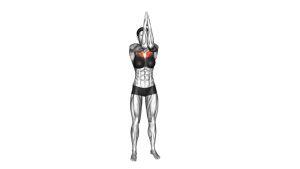
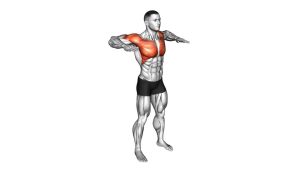
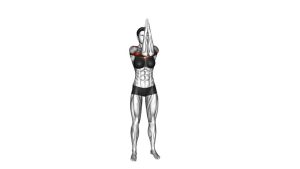
This exercise works best when performed with smooth tempo, straight but not locked arms, and a deliberate chest squeeze as the hands travel inward and upward. It is not meant to be a heavy strength exercise. Instead, it is most useful for chest activation, warm-ups, finisher work, and improving awareness of the fly pattern without needing machines, dumbbells, or cables.
Quick Overview
| Body Part | Chest |
|---|---|
| Primary Muscle | Pectoralis major |
| Secondary Muscle | Anterior deltoids, serratus anterior, upper chest fibers, shoulder stabilizers |
| Equipment | None |
| Difficulty | Beginner |
Sets & Reps (By Goal)
- Warm-up / activation: 2–3 sets × 10–15 reps with slow tempo and a light squeeze
- Muscle control / mind-muscle connection: 2–4 sets × 12–20 reps with a 1–2 second peak contraction
- Chest endurance / finisher: 2–3 sets × 15–25 reps with steady rhythm and controlled return
- Beginner home workout: 2–3 sets × 8–12 reps focusing on clean mechanics before adding volume
Progression rule: Increase control, range quality, and pause time before adding more repetitions. The goal is better chest engagement, not faster arm swinging.
Setup / Starting Position
- Stand tall: Place your feet about hip-width apart with your knees soft and your core lightly braced.
- Lift the chest: Keep your torso upright, ribs stacked, and shoulders gently pulled down away from the ears.
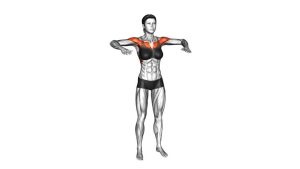
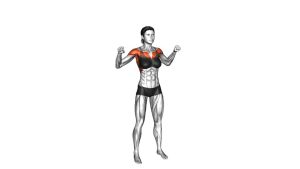
- Open the arms wide: Extend both arms out to the sides around chest or shoulder height with a slight bend in the elbows.
- Set the hand path: Palms can face forward or slightly inward, depending on what feels natural for your shoulders.
- Start under control: Avoid arching the lower back or jutting the chin forward before beginning the rep.
Tip: Think of your arms as long levers. They should stay extended and move through a fly arc rather than turning the exercise into a press.
Execution (Step-by-Step)
- Begin from the open position: Hold your arms out wide and keep the shoulders relaxed.
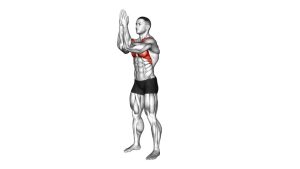
- Sweep the arms inward: Move both arms in a wide arc toward the front of your body, leading with the chest rather than the traps.
- Keep the arms long: Maintain a slight natural elbow bend, but do not noticeably bend and press.
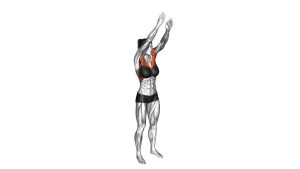
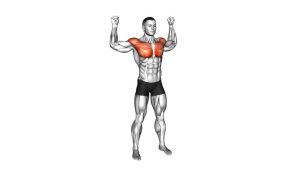
- Raise toward chest-high to slightly higher: Let the hands travel inward and upward until they come close together in front of the upper chest or slightly above it.
- Squeeze the chest: Pause briefly at the top and focus on bringing the pecs together.
- Return with control: Reverse the same arc slowly, opening the arms back out until you feel a light stretch across the chest.
- Repeat smoothly: Keep the torso still and avoid momentum through every repetition.
Pro Tips & Common Mistakes
- Lead with the chest: Think about bringing the upper arms inward rather than just moving the hands.
- Keep the shoulders down: Avoid letting the traps take over by shrugging during the upward phase.
- Use a slight elbow bend: A soft bend protects the joints, but too much bend changes the exercise into more of a press.
- Do not rush the return: The eccentric phase helps build control and improves the chest fly pattern.
- Stay tall: Keep the ribs from flaring and do not lean backward to fake a bigger range.
- Chase tension, not speed: This movement works best with deliberate muscle engagement and clean tempo.
FAQ
What muscles does the Bodyweight Standing Straight-Arm Chest-High Fly work?
The main muscle worked is the pectoralis major. Secondary muscles include the anterior deltoids, serratus anterior, and smaller shoulder stabilizers.
Is this a good chest exercise without equipment?
Yes. It is useful for chest activation, warm-ups, and learning the fly pattern at home. It will not replace heavy chest pressing for strength, but it can improve control and mind-muscle connection.
Should my arms stay completely straight?
Keep them mostly straight with a slight natural elbow bend. Locking the elbows too hard can feel awkward, while too much bending turns the movement into a press rather than a fly.
Where should I feel this exercise?
You should feel it mostly across the chest, especially as the arms sweep inward and you pause near the top. Some front shoulder involvement is normal, but the chest should be the main driver.
Can beginners use this exercise?
Absolutely. It is beginner-friendly because it requires no equipment and allows you to learn chest control with a manageable range of motion.
Recommended Equipment
- Resistance Bands Set — a simple upgrade if you want to turn the bodyweight fly pattern into a more challenging resisted chest fly
- Door Anchor for Resistance Bands — useful for setting bands at chest height so you can mimic a standing cable fly at home
- Chest Expander — a compact option for chest-focused fly and squeeze-style resistance training
- Suspension Trainer — lets you progress into bodyweight fly and press variations with adjustable difficulty
- Push-Up Bars — helpful for pairing this exercise with push-up work to build a more complete home chest routine
Tip: This exercise works well on its own, but adding resistance bands and a door anchor is the easiest way to make the movement feel closer to a true cable chest fly.