Elbow-Closed Arms Pulse: Form, Benefits, Sets, Tips & FAQ
Learn how to do the Elbow-Closed Arms Pulse with proper form to improve chest activation, mind-muscle connection, and upper-body control. Includes setup, execution, sets and reps, mistakes, FAQs, and recommended equipment.
Elbow-Closed Arms Pulse
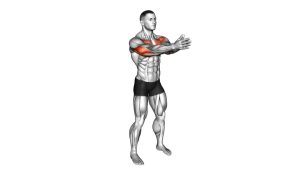
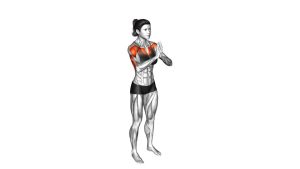
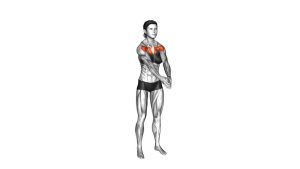
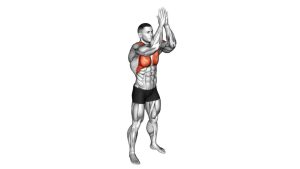
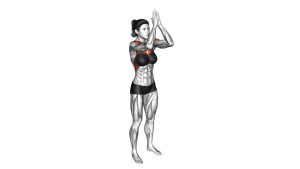
This exercise is all about quality chest contraction, not speed or big movement. The best reps come from keeping the shoulders relaxed, the arms lifted at about shoulder height, and the pulses small enough that the pecs stay under constant tension. When done well, you should feel a firm squeeze across the chest rather than tension in the neck, traps, or wrists.
Quick Overview
| Body Part | Chest |
|---|---|
| Primary Muscle | Pectoralis major |
| Secondary Muscle | Anterior deltoids, serratus anterior, biceps (isometric), core stabilizers |
| Equipment | None |
| Difficulty | Beginner |
Sets & Reps (By Goal)
- Warm-up / activation: 2–3 sets × 15–25 pulses
- Mind-muscle connection: 2–4 sets × 20–30 pulses with slow, deliberate squeezes
- Chest finisher / burnout: 2–4 sets × 25–40 pulses
- Low-impact home workout: 3–4 sets × 20–30 pulses with 30–45 sec rest
Progression rule: First improve control and squeeze quality, then add pulses, slower tempo, or longer time under tension before increasing total volume.
Setup / Starting Position
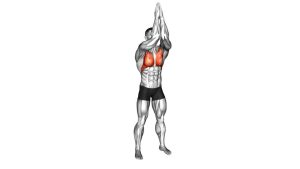
- Stand tall: Place your feet about hip-width apart and keep your torso upright.
- Brace lightly: Tighten the abs just enough to avoid leaning back or flaring the ribs.
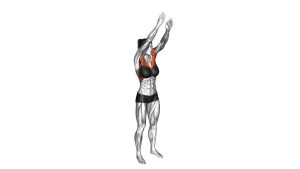
- Raise the arms forward: Bring both arms up in front of you around shoulder height.
- Keep the elbows close: Bring the elbows near each other in front of the body without forcing them together.
- Set the shoulders: Keep them down and relaxed rather than shrugged up toward the ears.
- Neutral neck: Keep your head level and eyes forward.
Tip: Think about creating a “ready-to-squeeze” chest position before the pulses start.
Execution (Step-by-Step)
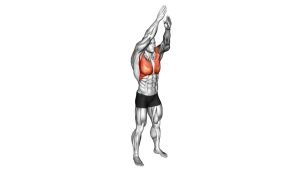
- Lift and align: Hold the arms at shoulder height with the elbows kept close together in front of the chest.
- Initiate the squeeze: Contract your pecs to bring the upper arms slightly inward.
- Use a short range: Perform a very small pulse, then release only slightly without fully relaxing.
- Maintain constant tension: Keep pulsing rhythmically while the chest stays engaged the whole time.
- Control the tempo: Avoid bouncing or swinging; every pulse should come from the chest rather than momentum.
- Finish cleanly: Lower the arms once the set ends instead of letting posture collapse as fatigue builds.
Pro Tips & Common Mistakes
- Think “squeeze,” not “swing”: The movement should come from chest contraction, not arm momentum.
- Keep the range small: Tiny pulses usually work better than exaggerated reps.
- Don’t shrug: Rising shoulders shift tension away from the pecs and into the traps.
- Keep the arms level: Letting them drift too low reduces the intended chest tension.
- Don’t lock the elbows: Keep a soft bend and natural joint position.
- Use it strategically: This drill works best before presses, between sets, or at the end of a chest session.
- Breathe normally: Don’t hold your breath during high-rep pulses.
FAQ
What does the Elbow-Closed Arms Pulse work?
It mainly targets the pectoralis major. The anterior deltoids and serratus anterior also help stabilize the movement, but the goal is to keep the chest as the main driver.
Is this a chest-building exercise or just an activation drill?
It is primarily an activation and tension-based exercise. It can help improve chest awareness and create a burn, but it is usually best used alongside heavier presses, fly variations, or resistance-based chest training.
Where should I feel it?
You should feel a steady squeeze across the chest, especially toward the midline. If you mainly feel the shoulders or neck, your posture or pulse mechanics likely need adjustment.
Can beginners use this exercise?
Yes. It is beginner-friendly because it requires no equipment and uses a very small range of motion. It is especially useful for learning how to contract the chest on purpose.
When should I use it in a workout?
It works well before chest training as an activation drill, between sets to reinforce mind-muscle connection, or after pressing movements as a high-rep chest finisher.
Recommended Equipment
- Chest Resistance Bands — useful for progressing from bodyweight chest activation into light resisted pec work
- Chest Expander — a classic tool for adduction-style chest squeezes and upper-body pump work
- Figure-8 Resistance Band — a compact option for chest, shoulder, and arm pulse-style drills
- Push-Up Handles — helpful if you want to pair this movement with push-up variations for more chest training volume
- Exercise Mat — useful for home workouts, warm-ups, mobility work, and floor-based chest accessories
Tip: This exercise needs no equipment, so these tools are best viewed as optional upgrades for home chest training rather than requirements.