Cable Single-Arm Neutral-Grip Front Raise: Form, Muscles Worked, Sets & Tips
Learn how to do the Cable Single-Arm Neutral-Grip Front Raise with proper form. Discover muscles worked, setup, execution, sets and reps by goal, common mistakes, FAQs, and recommended equipment.
Cable Single-Arm Neutral-Grip Front Raise
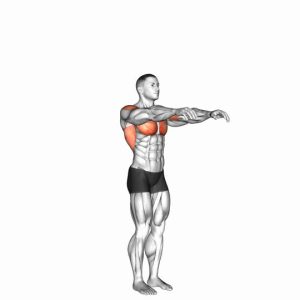
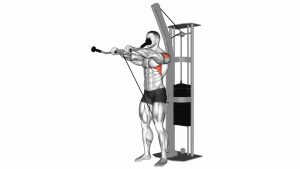
This exercise works best with strict form, moderate range, and steady tempo. The goal is to raise the handle smoothly in front of the body until about shoulder height while keeping the torso still, the wrist neutral, and the shoulder blade controlled. You should feel the front shoulder doing most of the work, not the traps, lower back, or swinging body.
Quick Overview
| Body Part | Front Shoulders |
|---|---|
| Primary Muscle | Anterior deltoid |
| Secondary Muscle | Upper chest, serratus anterior, upper traps (light), core stabilizers |
| Equipment | Cable machine with a low pulley and single D-handle attachment |
| Difficulty | Beginner to Intermediate |
Sets & Reps (By Goal)
- Muscle building: 3–4 sets × 10–15 reps per arm
- Shoulder control / technique: 2–3 sets × 8–12 reps per arm with slower tempo
- Light accessory work after pressing: 2–3 sets × 12–20 reps per arm
- Warm-up activation: 1–2 sets × 12–15 easy reps per arm
Progression rule: Increase reps before adding load. Keep the raise smooth and stop around shoulder height. If the weight forces torso swing or trap dominance, it is too heavy.
Setup / Starting Position
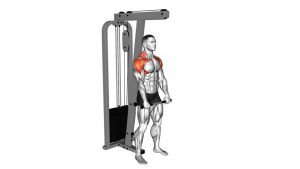
- Set the pulley low: Attach a single handle to the low pulley of a cable machine.
- Stand tall beside the machine: The working arm should be farther from the stack so the cable can travel across the front of the body.
- Use a neutral grip: Hold the handle with the thumb facing up or slightly inward.
- Align posture: Feet about hip- to shoulder-width apart, ribs down, chest tall, and core braced.
- Start with the hand near the thigh: Keep a soft bend in the elbow and the shoulder relaxed, not shrugged.
Tip: A staggered stance can make balance easier and help prevent swaying during the raise.
Execution (Step-by-Step)
- Brace first: Tighten your core and keep your torso still before starting the rep.
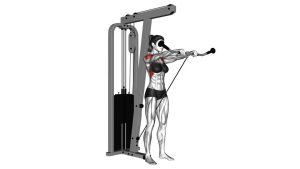
- Raise the handle forward: Lift the arm in front of the body in a controlled arc with the palm staying neutral.
- Stop near shoulder height: Bring the hand to about chest-to-shoulder level without turning it into a shrug.
- Pause briefly: Hold the top for a moment while keeping the neck relaxed and the shoulder down.
- Lower under control: Return the handle slowly to the start without letting the stack yank the arm back.
- Repeat on one side: Complete all reps, then switch arms.
Pro Tips & Common Mistakes
- Lead with the shoulder, not momentum: Avoid dipping the knees or rocking the torso.
- Keep the elbow softly bent: Too much bending turns it into a different movement; too little can feel stiff.
- Do not raise too high: Shoulder height is enough for most lifters.
- Keep the trap out of it: Do not shrug the shoulder toward the ear at the top.
- Control the lowering phase: The eccentric part helps build tension and better shoulder control.
- Use unilateral focus: One arm at a time makes it easier to clean up imbalances and concentration.
- Stay neutral through the wrist: Do not let the wrist fold back as the handle rises.
FAQ
What muscle does the cable single-arm neutral-grip front raise work most?
The main target is the anterior deltoid, which is the front portion of the shoulder. The upper chest and stabilizers assist, but the front delt should do most of the work.
Why use a neutral grip instead of palms-down?
A neutral grip often feels more comfortable on the shoulder joint and can help some lifters raise with cleaner mechanics and less internal rotation stress.
Should I raise above shoulder height?
Usually no. Stopping around shoulder height keeps the front delt working well without encouraging extra trap dominance or unnecessary shoulder irritation.
Is this better than dumbbell front raises?
It is not always better, but it does provide more continuous tension throughout the movement. Many people also find the cable version easier to control at the bottom.
Where should I place this exercise in my workout?
It usually works best after your main compound presses or in the middle-to-late portion of an upper-body or shoulder workout as an isolation accessory.
Recommended Equipment
- Single D-Handle Cable Attachment — the most direct handle choice for single-arm cable front raises
- Resistance Bands Set with Handles — useful for shoulder raises and travel-friendly front-delt work when a cable machine is not available
- Home Gym Pulley System — a practical option for recreating cable-style raises at home
- Wrist Cuffs for Cable Training — can reduce grip involvement and help some lifters focus more on shoulder isolation
- Wrist Wraps — optional support if your wrists get uncomfortable during cable shoulder work
Tip: For this exercise, technique matters more than heavy load. A smooth cable setup and comfortable handle usually improve the exercise more than simply adding weight.