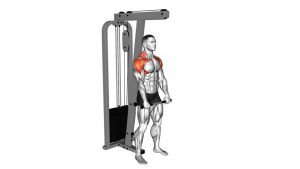
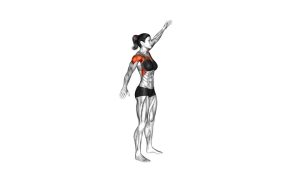
Standing Front Shoulder Tap: Form, Benefits, Sets, Tips & FAQ
Learn how to do the Standing Front Shoulder Tap with proper form. Build shoulder control, upper-arm endurance, posture awareness, and coordination with step-by-step cues, sets, mistakes, FAQs, and equipment.
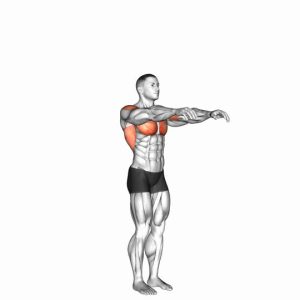
Standing Front Shoulder Tap
This exercise is useful for beginners, home workouts, warm-ups, shoulder activation circuits, and low-impact upper-body training. Because the arms stay raised in front of the body, the shoulders must work continuously to maintain position. Each tap adds a small coordination challenge because one hand moves across the body while the torso should remain quiet. For best results, focus on a controlled rhythm, relaxed neck, steady breathing, and clean posture from the first rep to the last.
Quick Overview
| Body Part | Shoulders |
|---|---|
| Primary Muscle | Anterior deltoids / front shoulders |
| Secondary Muscle | Upper arms, upper chest, serratus anterior, trapezius stabilizers, and core |
| Equipment | No equipment required |
| Difficulty | Beginner |
Sets & Reps (By Goal)
- Warm-up / activation: 2–3 sets × 20–30 total taps with a smooth, easy tempo.
- Shoulder endurance: 3–4 sets × 30–50 total taps while keeping both arms lifted.
- Beginner control: 2–3 sets × 10–20 total taps with a short pause after each tap.
- Posture and coordination: 2–4 sets × 20–40 total taps, focusing on no torso rotation.
- Finisher: 1–2 rounds × 45–60 seconds, only if the shoulders stay relaxed and pain-free.
Progression rule: First improve control and time under tension. Add more reps only when you can keep your arms lifted, shoulders down, core engaged, and taps smooth without swinging.
Setup / Starting Position
- Stand tall: Place your feet about hip-width apart with your weight balanced evenly.
- Soften your knees: Avoid locking the knees. A slight bend helps you stay stable.
- Brace gently: Keep your ribs stacked over your hips and lightly engage your core.
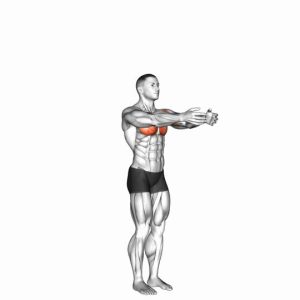
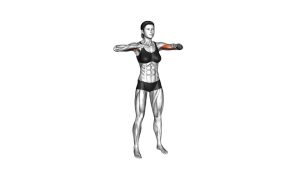
- Raise your arms: Bring both arms forward to about chest or shoulder height.
- Keep elbows soft: Do not fully lock the elbows. A small bend protects the joints and keeps tension in the muscles.
- Relax the neck: Keep your shoulders away from your ears and your chin neutral.
- Set your gaze: Look forward and keep your head aligned with your spine.
Your starting position should feel stable and athletic. The arms are active, the torso is quiet, and the neck stays relaxed before the tapping begins.
Execution (Step-by-Step)
- Start with both arms forward: Keep your arms lifted in front of your chest with the palms relaxed and elbows slightly bent.
- Move one hand across the body: Bring one hand toward the opposite front shoulder in a controlled path.
- Tap lightly: Touch the opposite shoulder without slapping, pulling, or collapsing the chest.
- Keep your torso still: Do not twist your ribs, lean backward, or shift your hips to help the arm move.
- Return to the front position: Move the hand back to its starting position with the same control used during the tap.
- Switch sides: Repeat with the other hand, alternating left and right in a steady rhythm.
- Maintain tension: Keep both arms lifted throughout the set instead of dropping them between reps.
Pro Tips & Common Mistakes
Pro Tips
- Think “tap and return”: The tap is light. The return should be controlled, not dropped.
- Keep both arms active: The non-tapping arm should stay lifted instead of relaxing.
- Breathe naturally: Exhale during the tap and inhale as the hand returns.
- Use a steady tempo: A slower rhythm increases shoulder control and endurance.
- Stay tall: Imagine your head reaching upward while your ribs stay down.
- Control the shoulders: Keep the shoulders broad and avoid shrugging toward the ears.
Common Mistakes
- Swinging the arms: Fast, loose reps reduce shoulder tension and control.
- Dropping the arms: Lowering the arms between taps removes the endurance challenge.
- Twisting the torso: The arm should move across the body while the trunk stays stable.
- Shrugging: If the traps take over, relax the neck and lower the arms slightly.
- Locking the elbows: Keep a soft bend to reduce joint stress.
- Overreaching: Tap the shoulder comfortably. Do not force the hand across your body.
FAQ
What muscles does the Standing Front Shoulder Tap work?
The main muscle worked is the anterior deltoid, or front shoulder. The exercise also uses the upper arms, upper chest, serratus anterior, traps, and core to help stabilize the body and keep the arms lifted.
Is the Standing Front Shoulder Tap good for beginners?
Yes. It is beginner-friendly because it uses no equipment, has a small range of motion, and can be performed at a slow pace. Beginners should focus on clean posture, light taps, and controlled arm movement.
Should I feel this exercise in my neck?
No. You may feel some upper-body effort, but the neck should not feel tense or painful. If your neck tightens, lower your arms slightly, relax your shoulders, and slow down the movement.
Can I use this exercise as a warm-up?
Yes. It works well before shoulder workouts, upper-body circuits, push-ups, pressing movements, or mobility routines. Use a moderate pace and avoid fatigue before heavy training.
How do I make the Standing Front Shoulder Tap harder?
You can increase the time under tension, slow the tempo, add a pause at the tap, or hold very light wrist weights. Do not add load if it causes shoulder shrugging, swinging, or discomfort.
Recommended Equipment
- Light Wrist Weights — useful for adding very light resistance once bodyweight reps feel easy.
- Light Adjustable Dumbbells — helpful for progressing shoulder endurance drills carefully.
- Resistance Bands Set — great for pairing this exercise with rows, pull-aparts, and shoulder warm-ups.
- Exercise Mat — provides a comfortable training area for home warm-ups and upper-body circuits.
- Posture Corrector Brace — can be used as a light awareness tool for shoulder position, not as a replacement for strengthening.
Tip: This exercise does not require equipment. Add tools only when your form is already clean and your shoulders stay relaxed during the full set.